
In the style-obsessed 80s, no agency was more obsessed than BBH.
Everything that came out of the place reeked of it.
Including the staff.
Their men’s toilets were stocked with tubs of hair gel (What? It was the eighties!)
Their AAR reel, a tool for agencies for clients to compile pitch lists, didn’t follow the template the rest of the industry did (pasty faced public schoolboys using big words, diagrams interspersed with clips from their ads).
BBH’s simply showed ending with the title ‘We don’t sell. We make people want to buy’.
Arrogant maybe, but undeniably but true.
In their first year, they turned a cheap, old-fashioned fashion brand a nondescript car into design classics. (Levi’s and Audi seem to have slid back to their pre-BBH positions since leaving the agency.)
A large chunk of their work during this period was produced by their Head of Art and Founding Partner Graham Watson.
‘Blogcast’ isn’t a typo by the way, unusual for me.
#1 Graham has written a pretty comprehensive walk through of his career.
#2 Is a podcast Graham and I recorded.
BRADFORD COLLEGE OF ART.

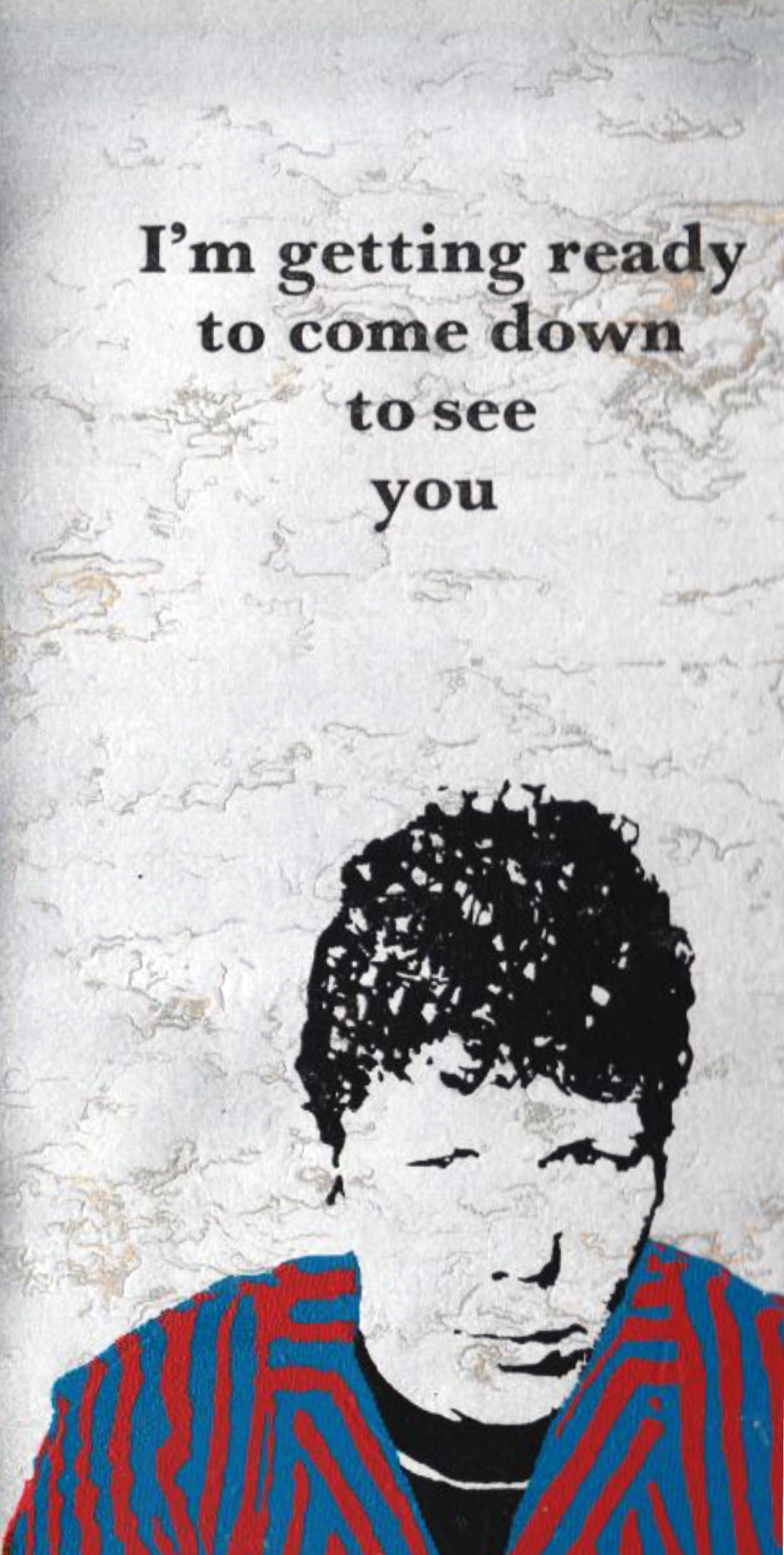
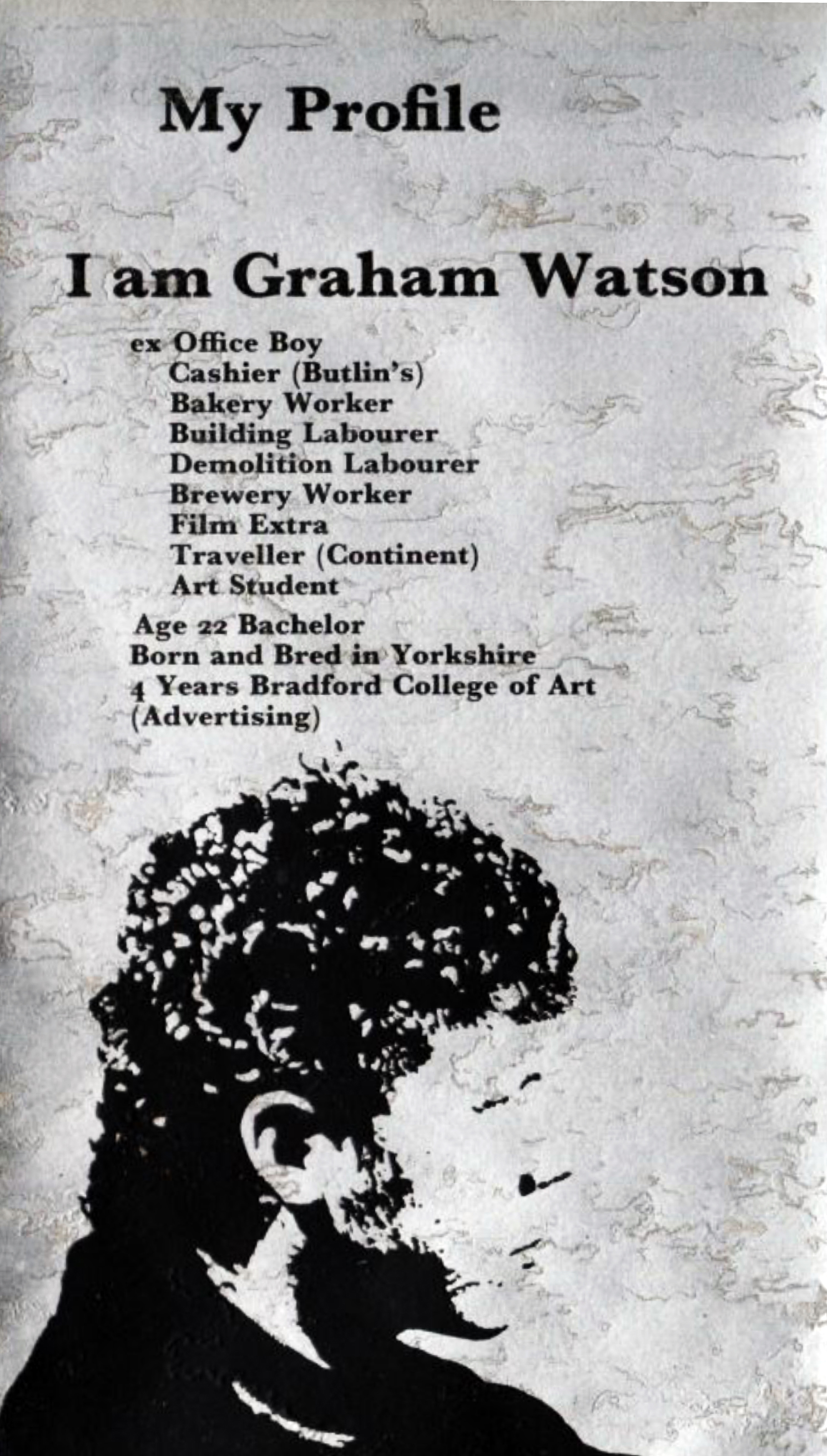
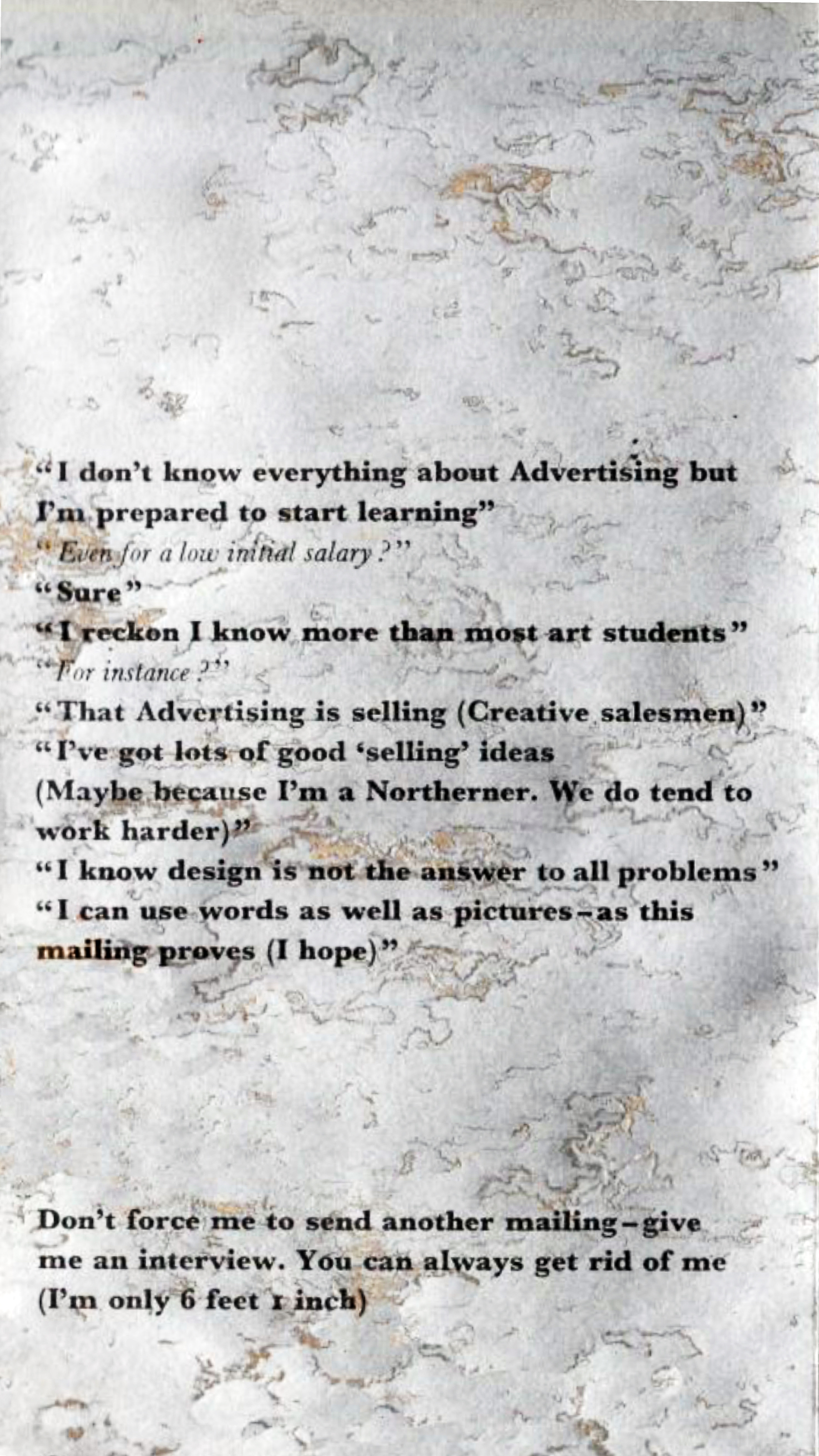
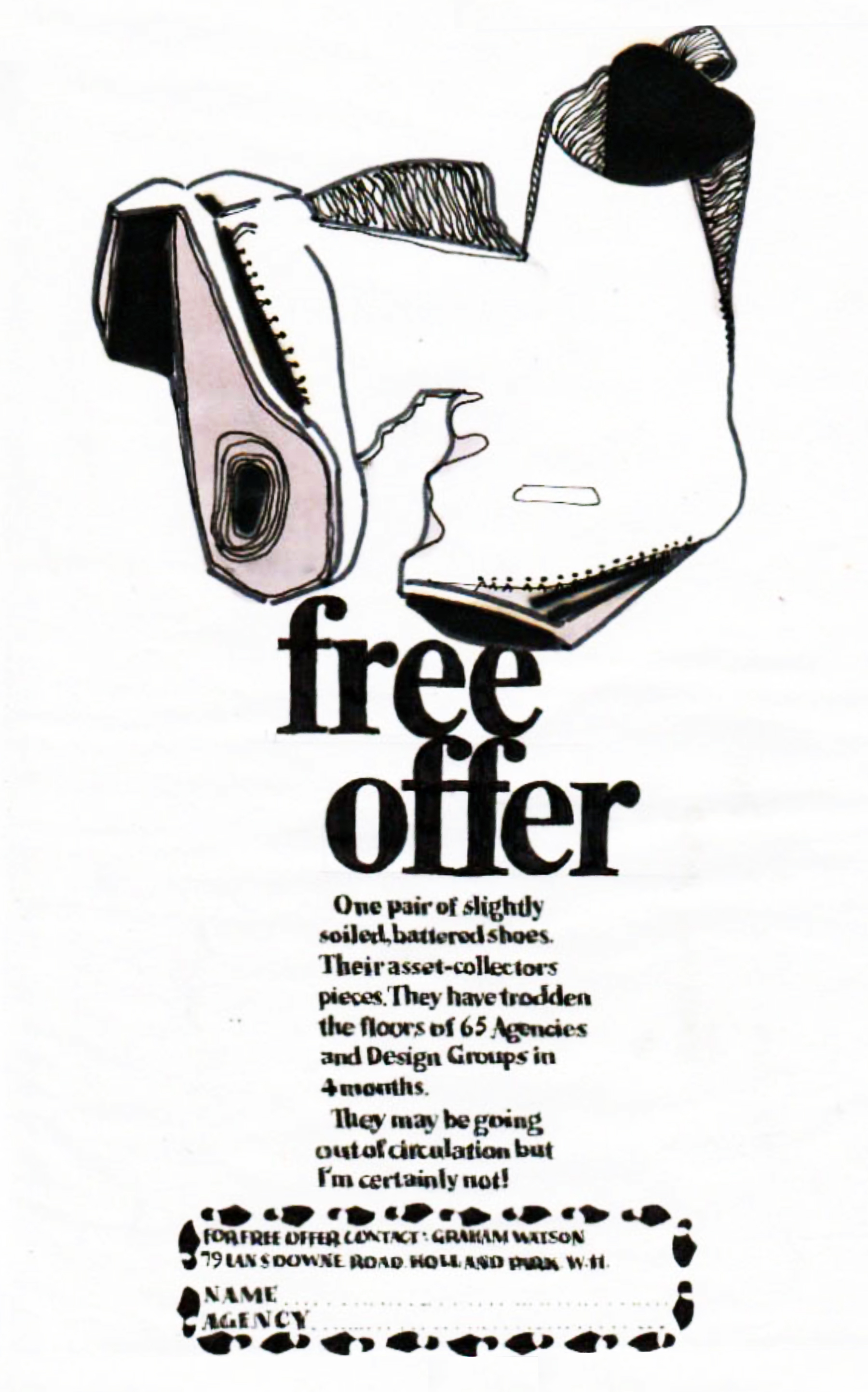
GARLAND-COMPTON.
‘‘I started at Garland-Compton in December 1968 as a junior visualiser, you rarely saw a copywriter in those days, except when you were given some copy.
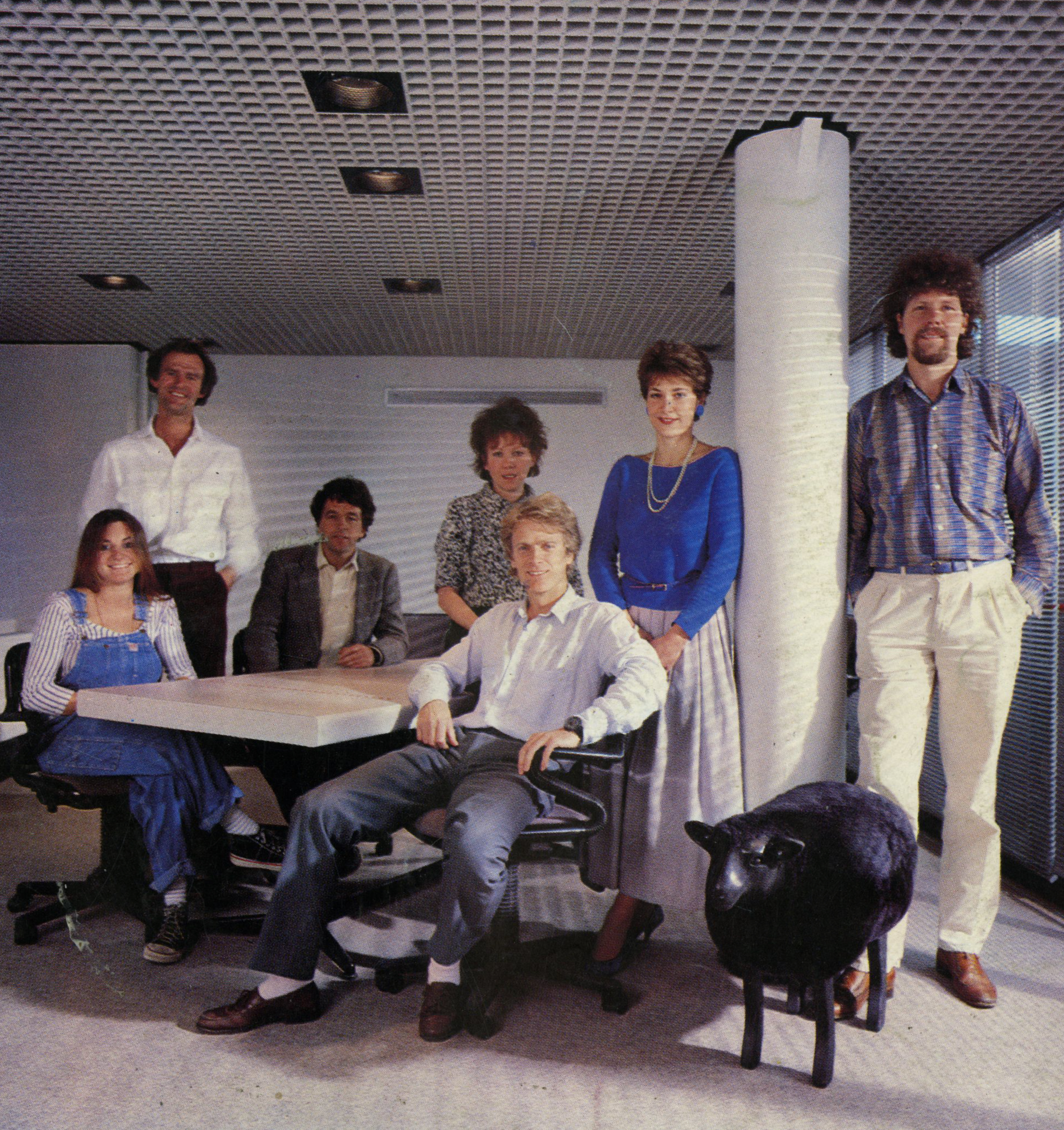
That probably explains the photo – The Garland-Compton Creative Department sans writers!

And one of the first jobs I worked on was the Guardian pitch. One of the jobs was to warm-up the Masthead with a more friendly typeface.
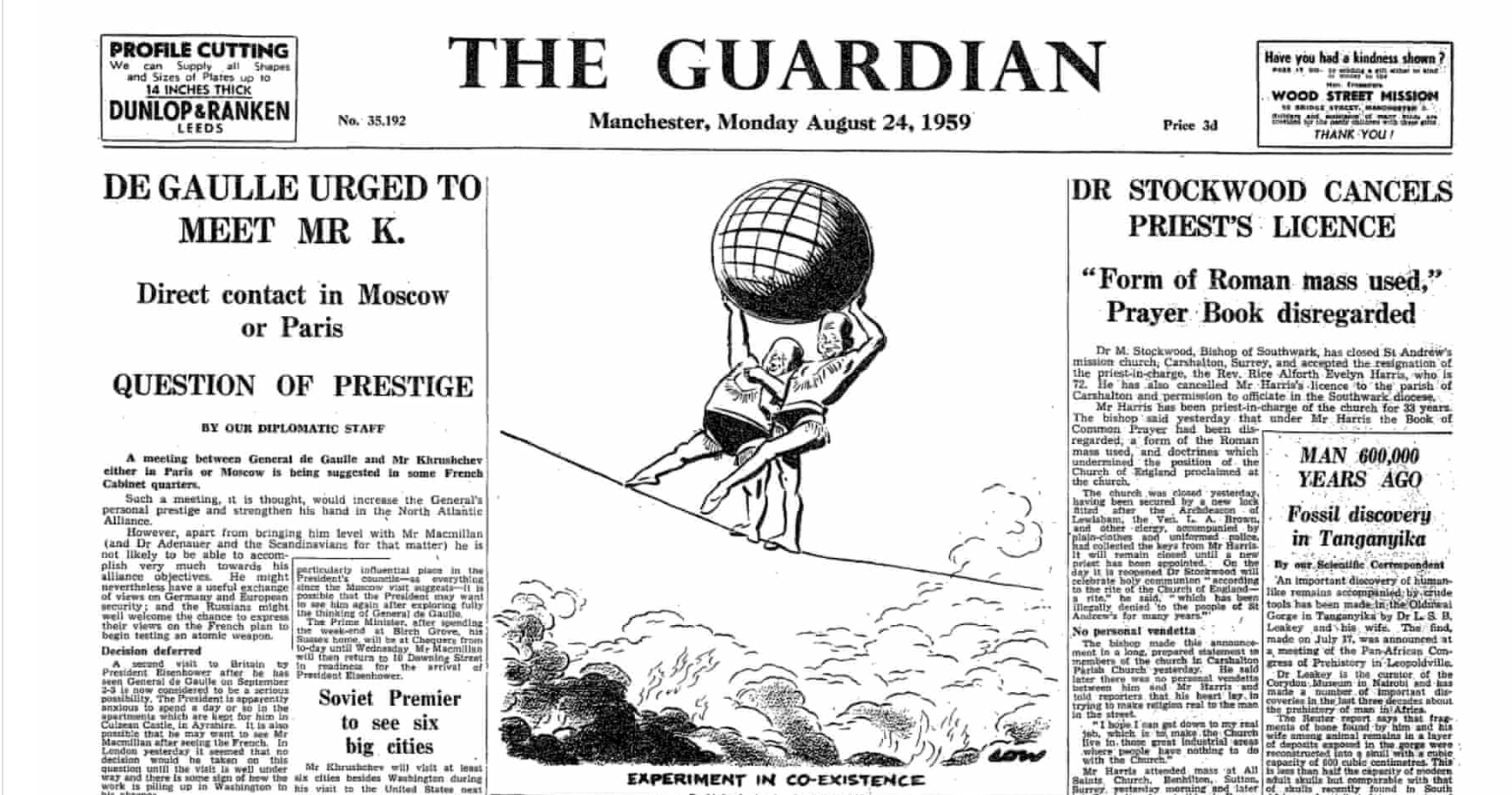
I was working with Letraset and chose one of their faces – Bookman.
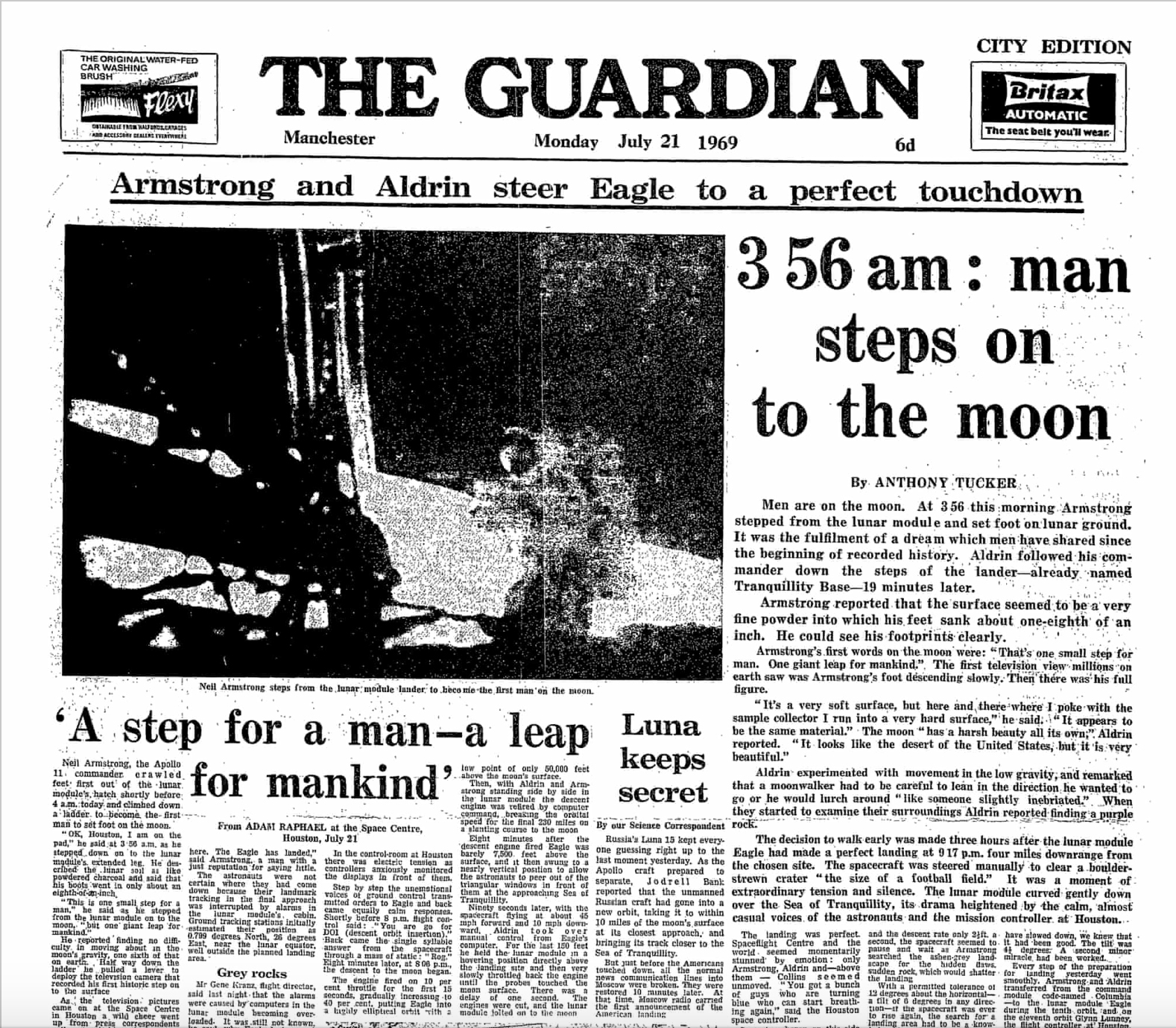
So, ironically I was designing in advertising! That masthead lasted until 1988, when David Hillman did a new look.
Alan Midgley stills prefers mine.
To be honest, I can’t remember if we won the business. But they were a nice set of posters.
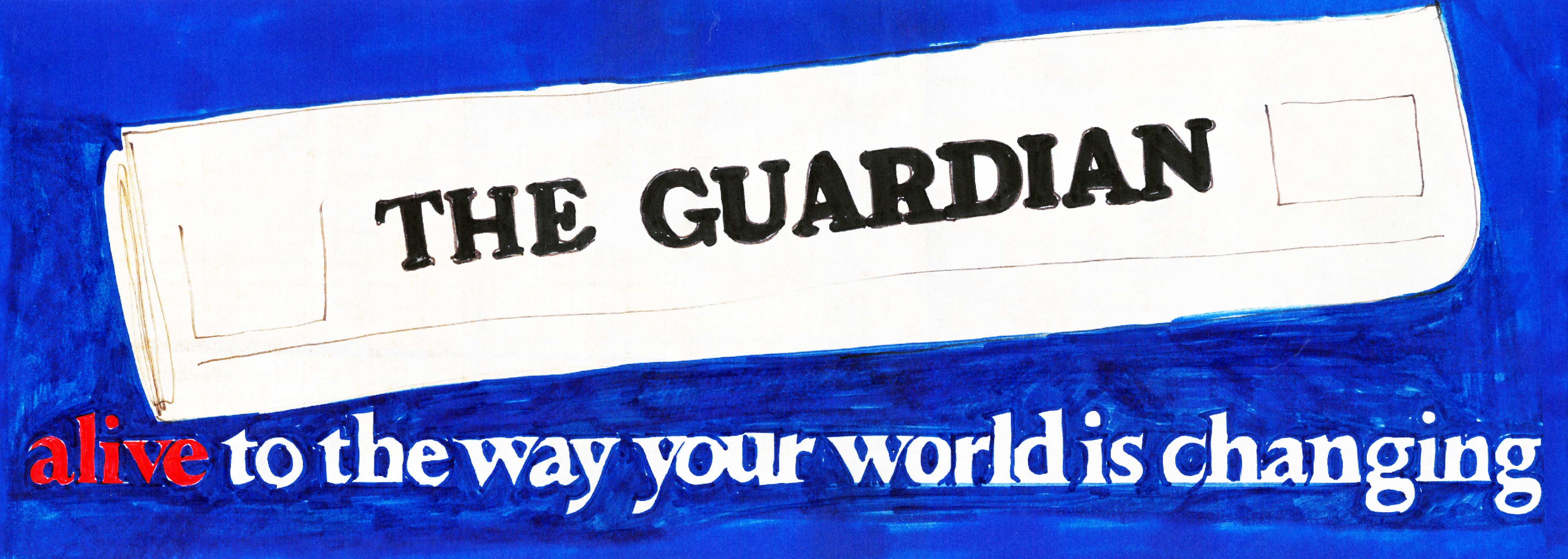
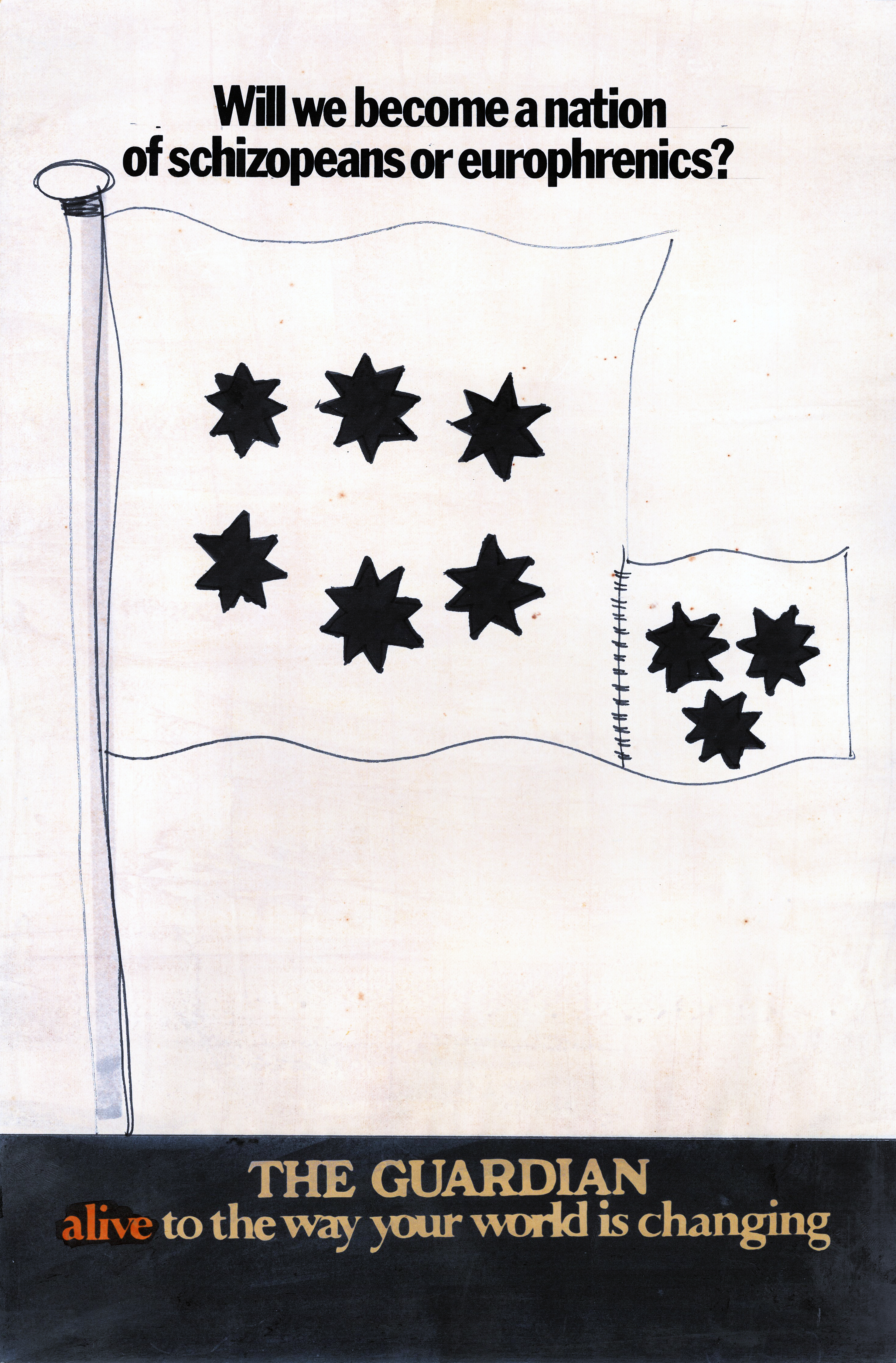
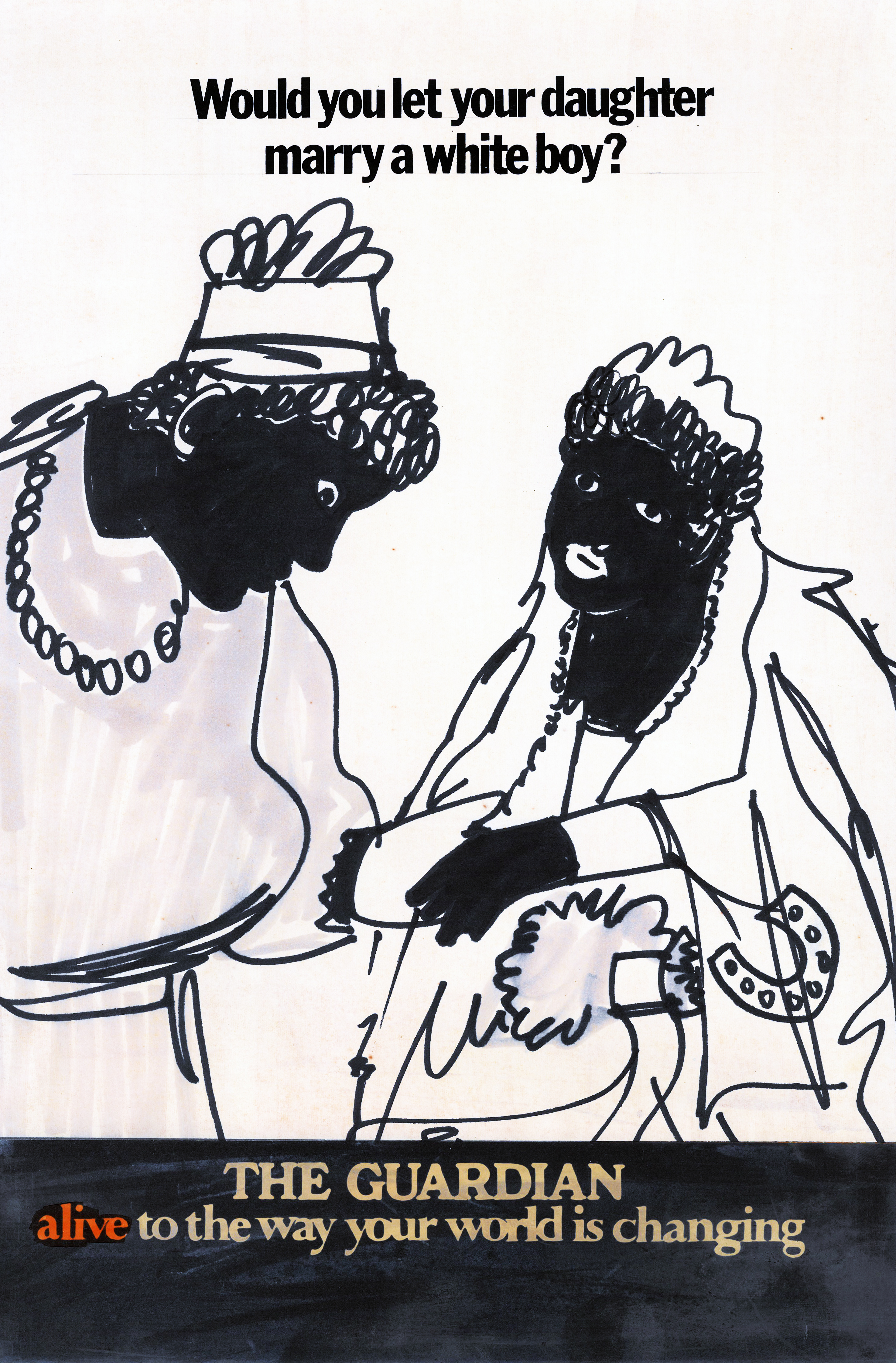
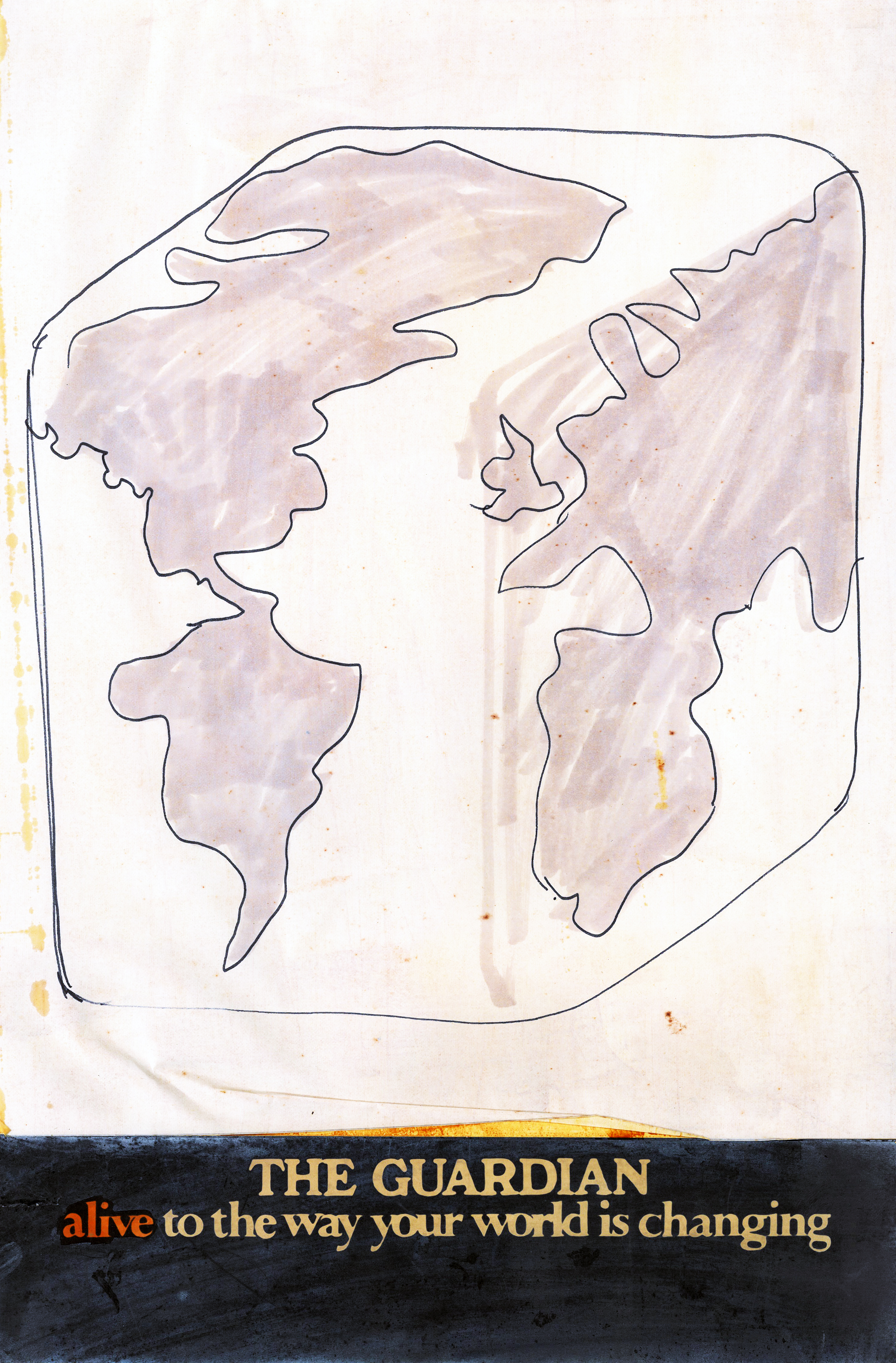
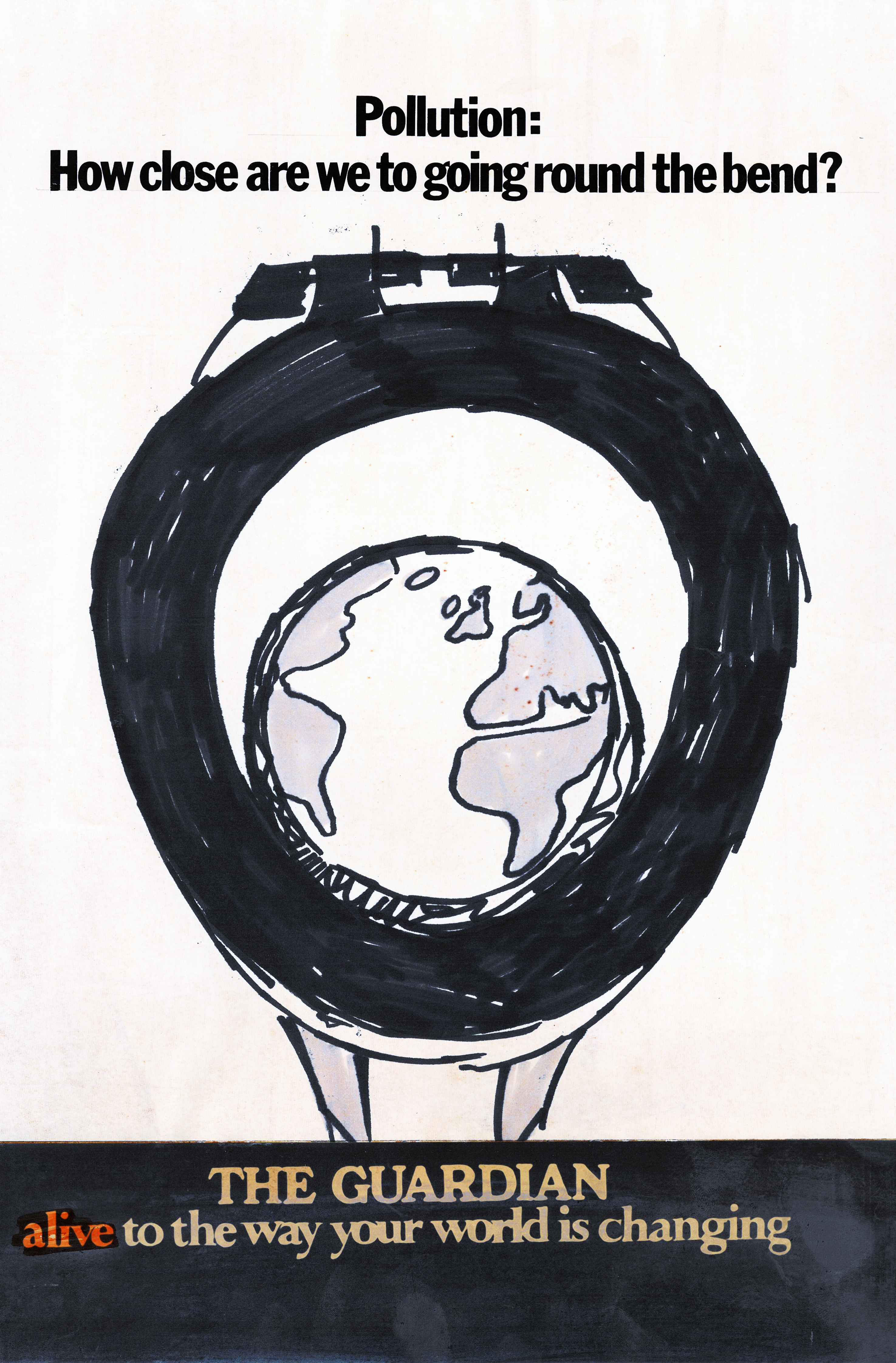


 To be honest, I can’t remember if we won the business. But they were a nice set of posters.
I was then promoted to a junior art director, and that’s me in my workstation, surrounded by the tools of my trade. I think I was addicted to the smell of magic markers. I can’t believe we used to light the cow gum and makes bombs with it in the office! 
In between, I did a bit of work on Wharfedale Hi-Fi (a nice Yorkshire name).


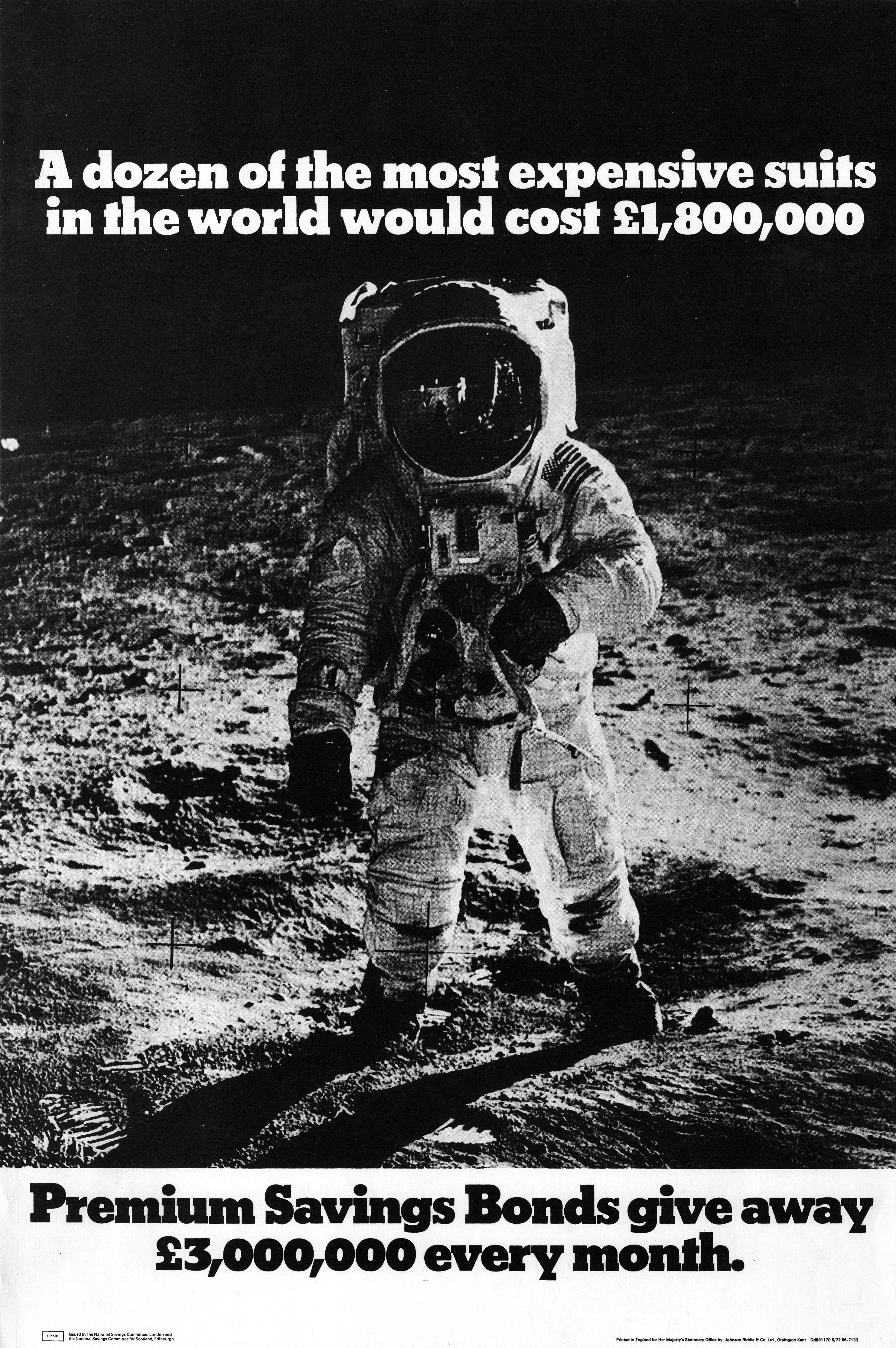
Also a Premium Bond poster.
Here’s my Compton payslip from 1970, not much spare to live on.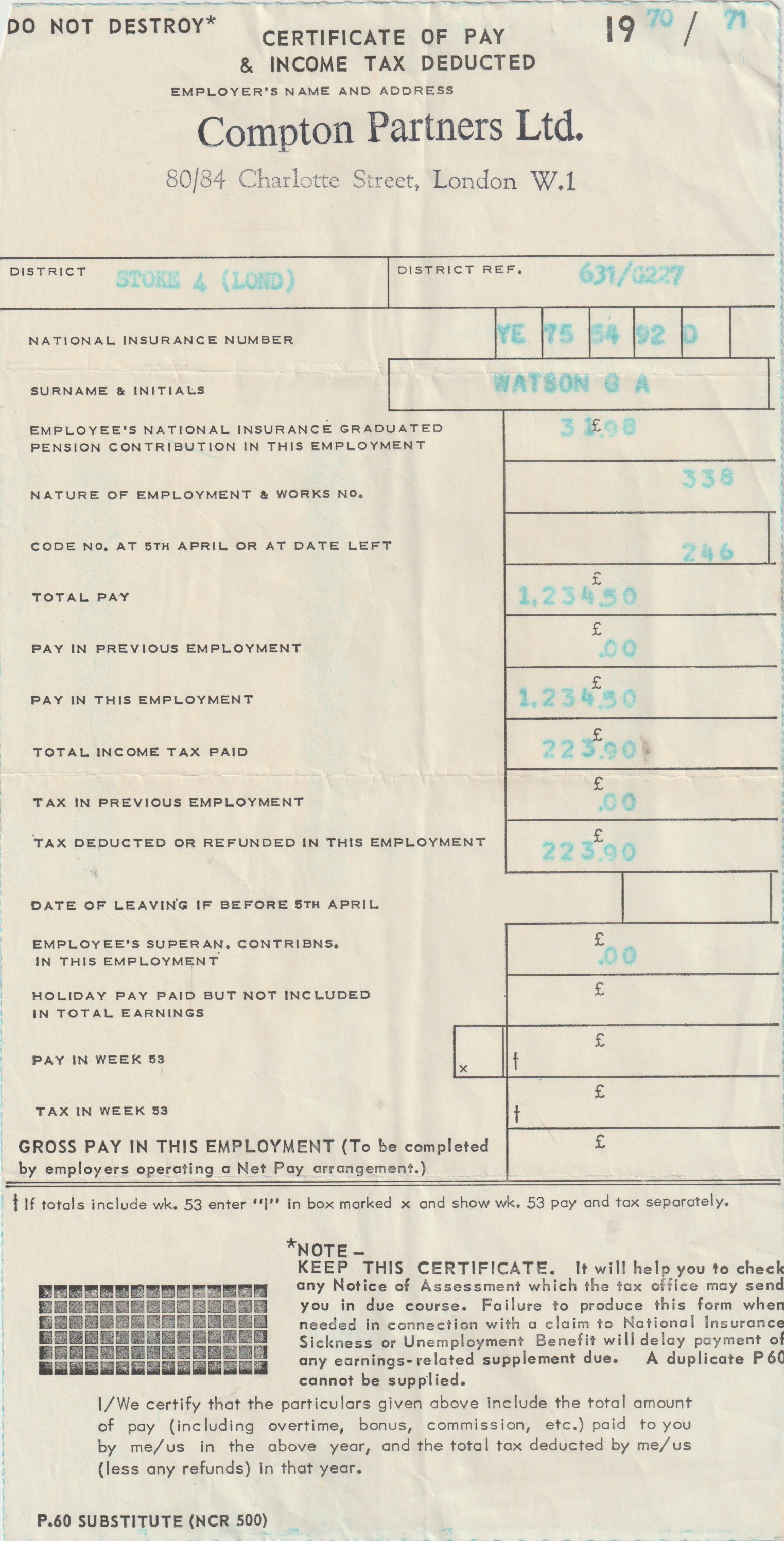
I was also locked away in a room by myself working on a highly secret pitch for the Conservative Party.
The day before the presentation, then Creative Director, Bob Bellemy, came in to inspect the work, and spotted that I had spelt Conservative without the ‘r’.
That must have been my Labour upbringing! We had to re-do it overnight.
I don’t think we won the pitch, but it must have laid a bit of groundwork, because Saatchi & Saatchi did get the account later, after they took over Comptons.
I even had time to do a freelance job (what do you expect on that salary!).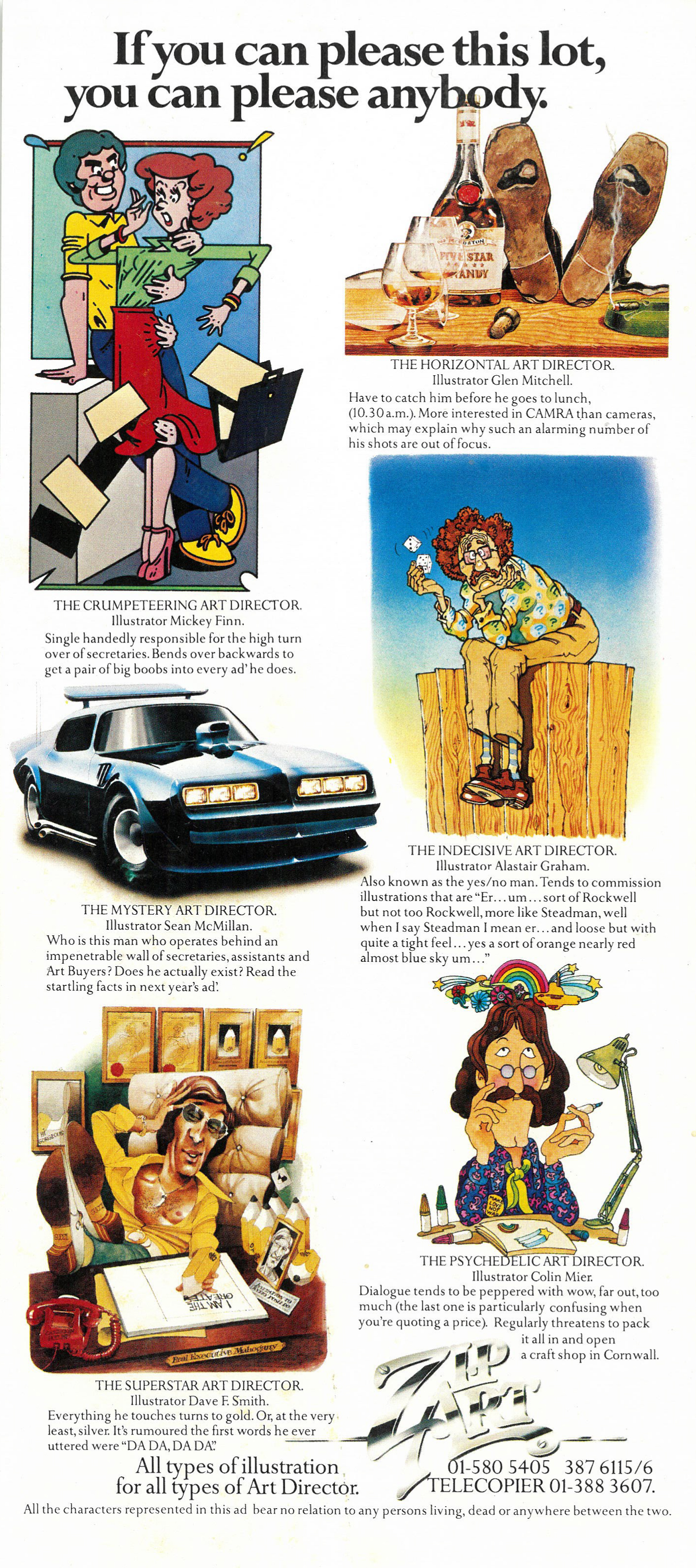
Then I started on the New Zealand cheddar account.
I produced the roughs for the poster campaign in late ’72, the client liked them so much I had to commission photography for two of them.
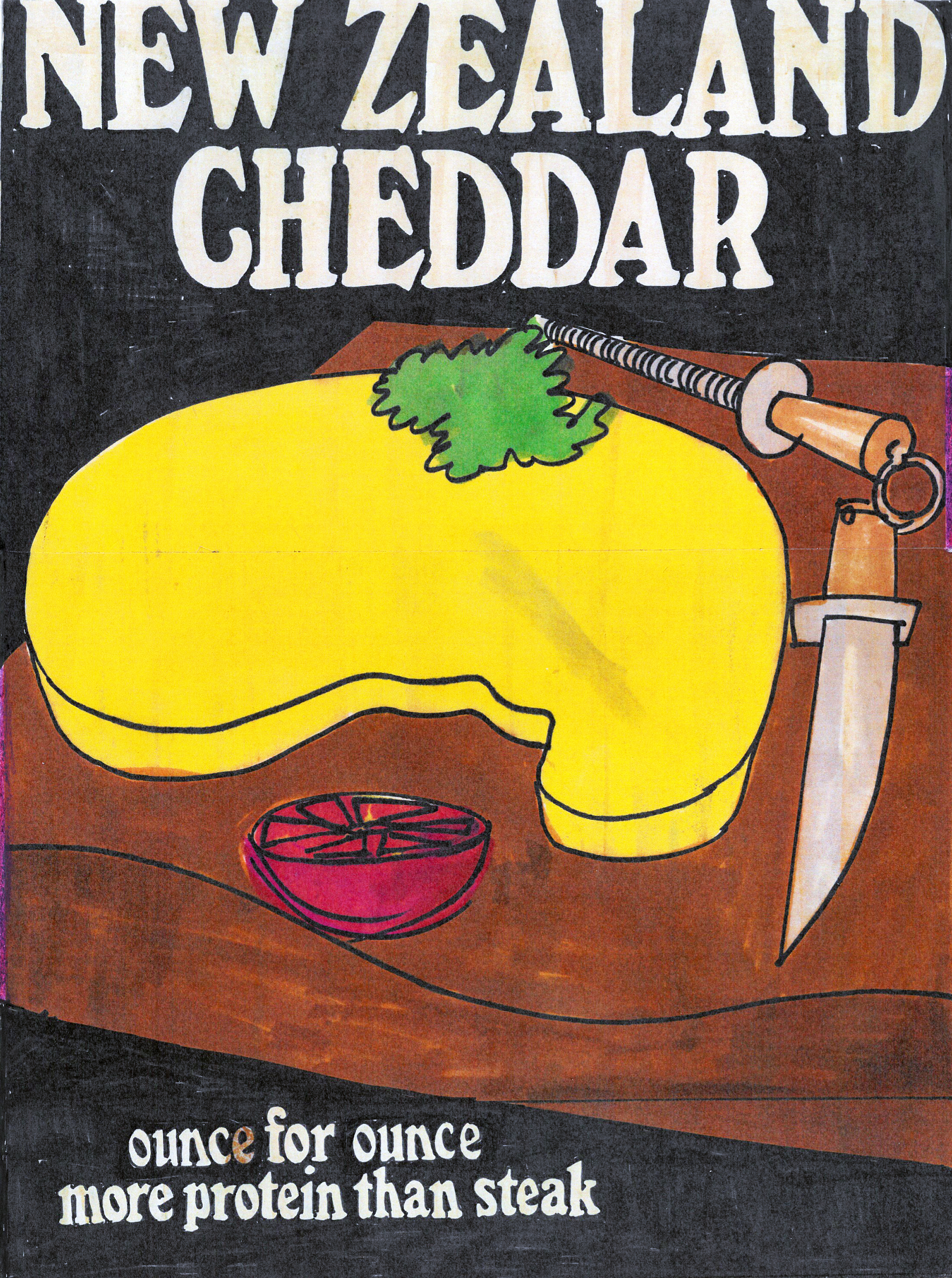

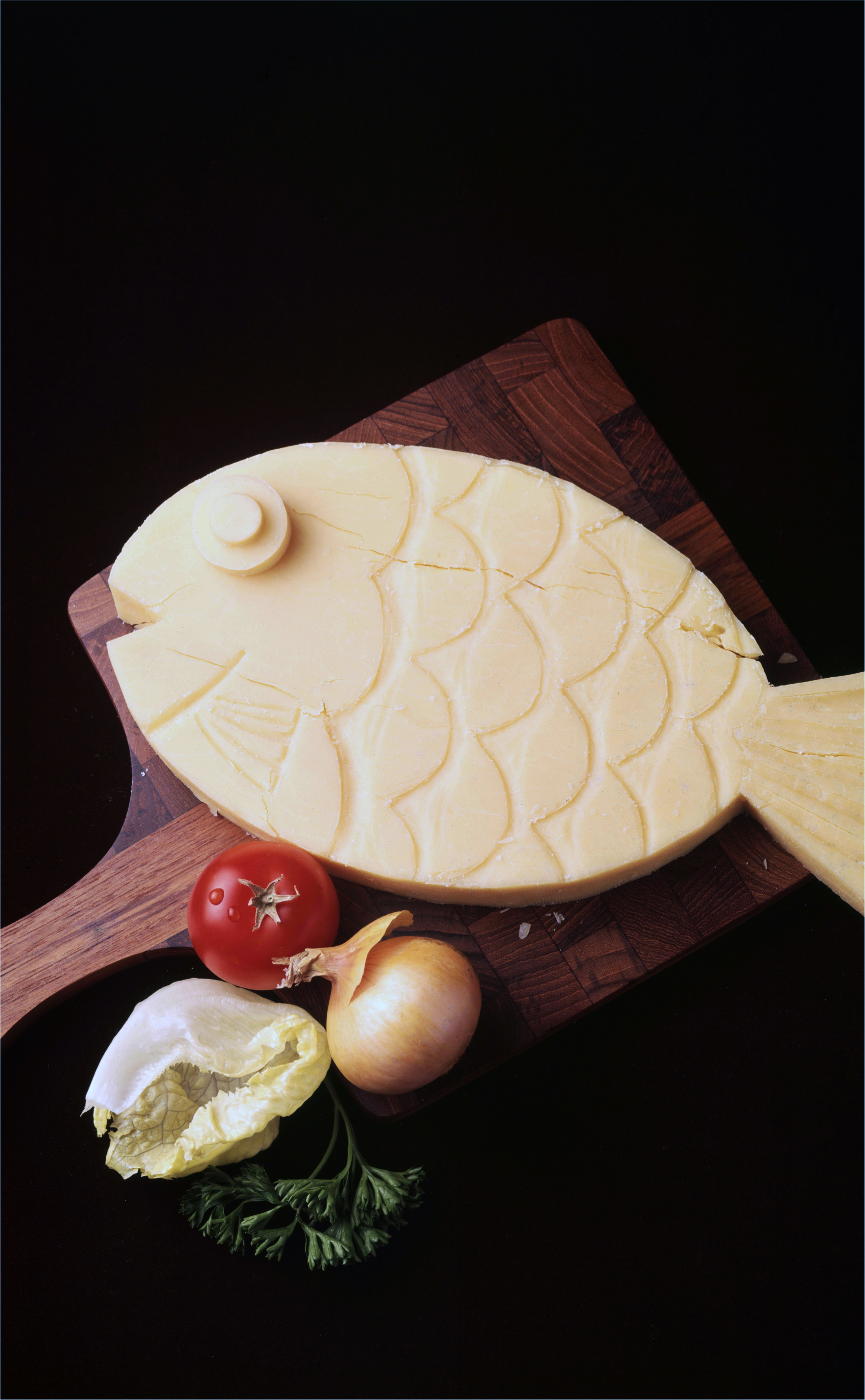

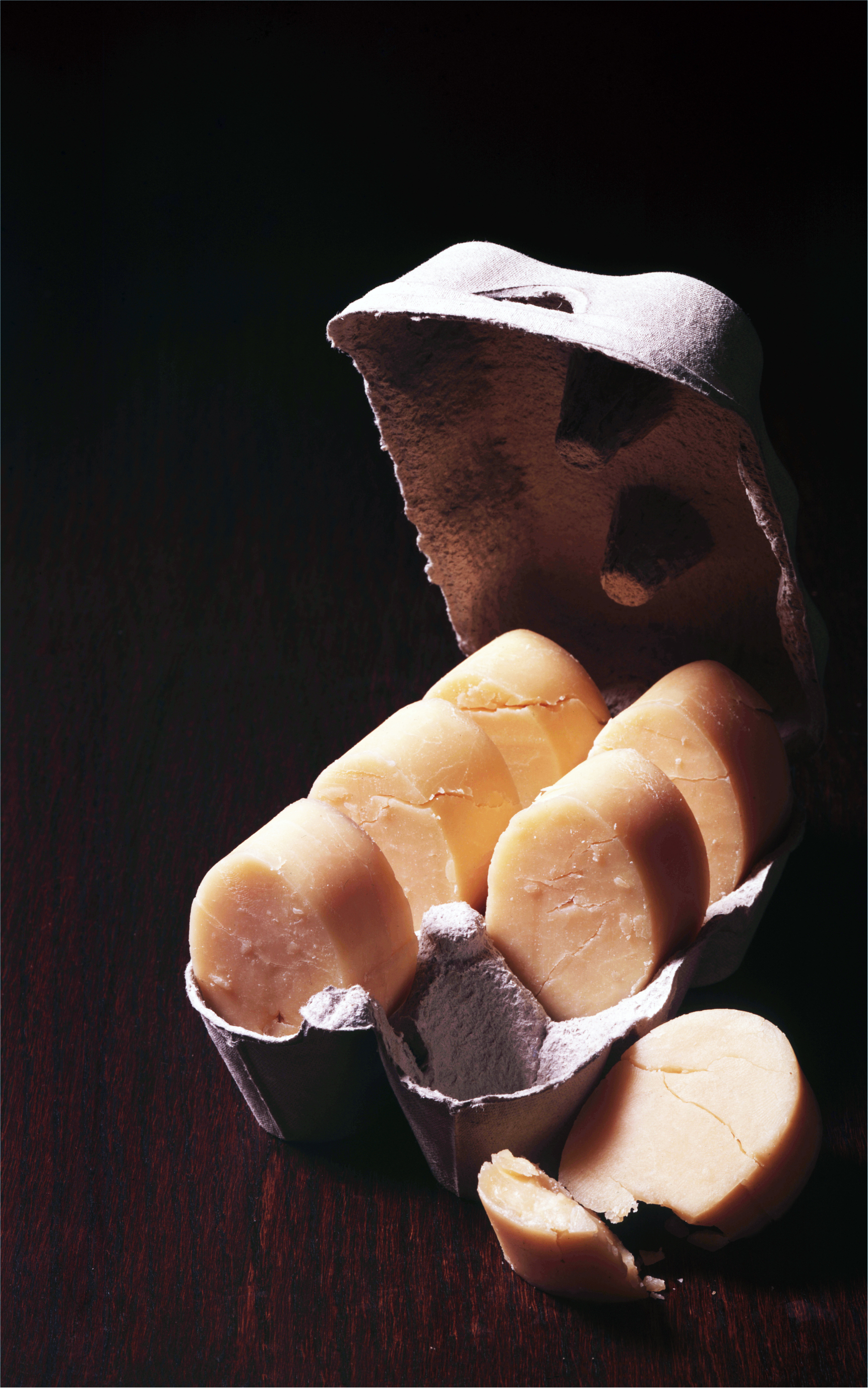
Then Britain joined the EU on the 1st of January 1973, and the EU banned the importation of large slabs of cheese. So New Zealand Cheddar could only be imported in pre-packed cheese version.
Back to the drawing board for me and another design job – the Anchor pack!

I then started looking around for a move, mainly to get some more money. And a couple of agencies were really taken with my NZ Cheddar campaign, and someone copied it, but I’d got a job at CDP by that time, so I wasn’t too bothered.
COLLETT DICKENSON PEARCE.

I joined in August 1973, receiving that employment letter was a bit of a game changer for my career.
At last a proper, creative agency where you were encouraged to do great work.
I was teamed with a writer called Ian Green, who had just left Manchester Art School with Bill Thompson.
We were in Geoff Seymour and Phil Mason’s group and were given lots of small stuff to work on: Ford dealer ads, Whitbread, even Fine Fare, where Geoff Seymour had created a ‘talking purse’ campaign.


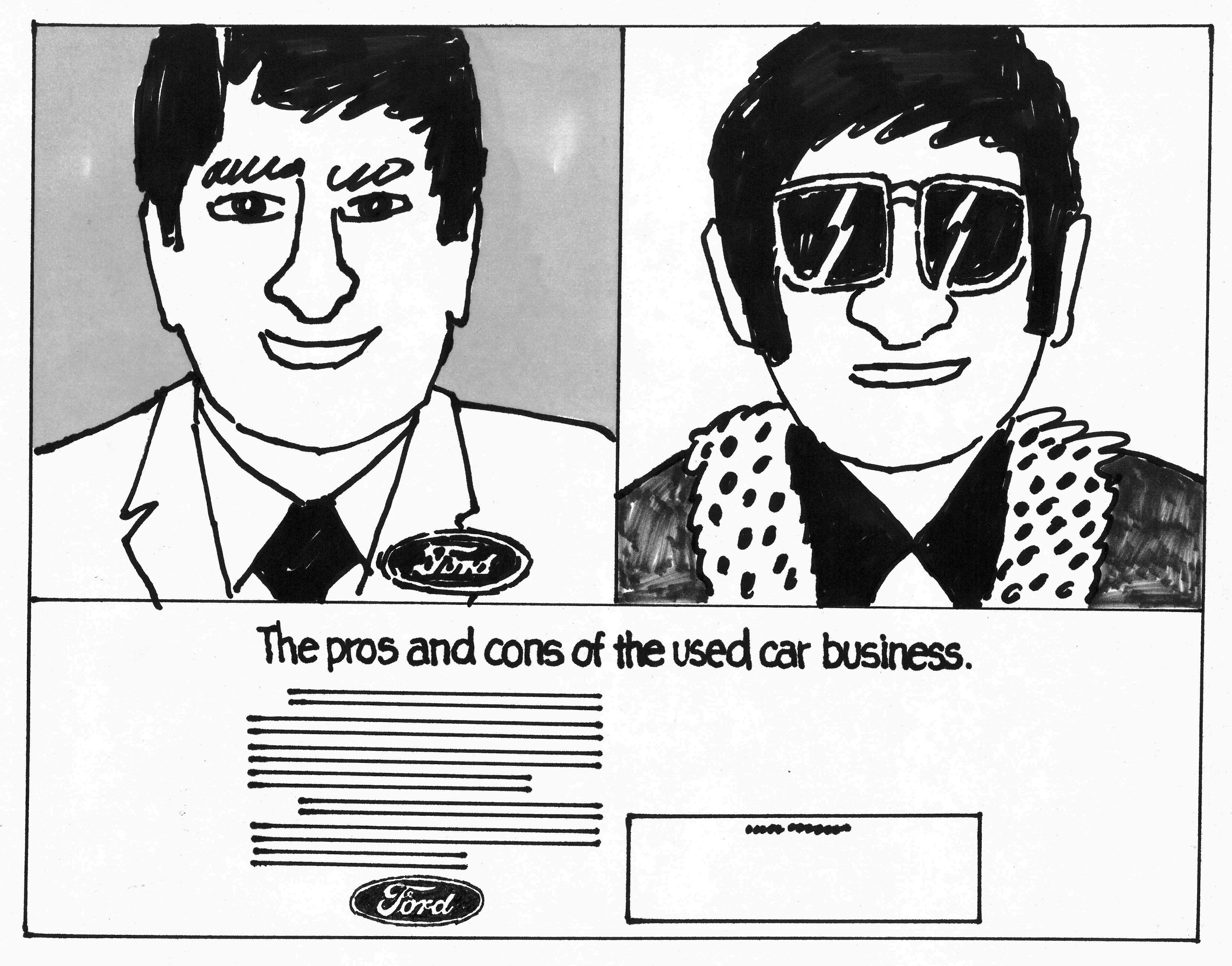

Phil Mason was so helpful and generous.
I did my first T.V. commercial with him and Ian – a Hamlet commercial called ‘Snowman’. 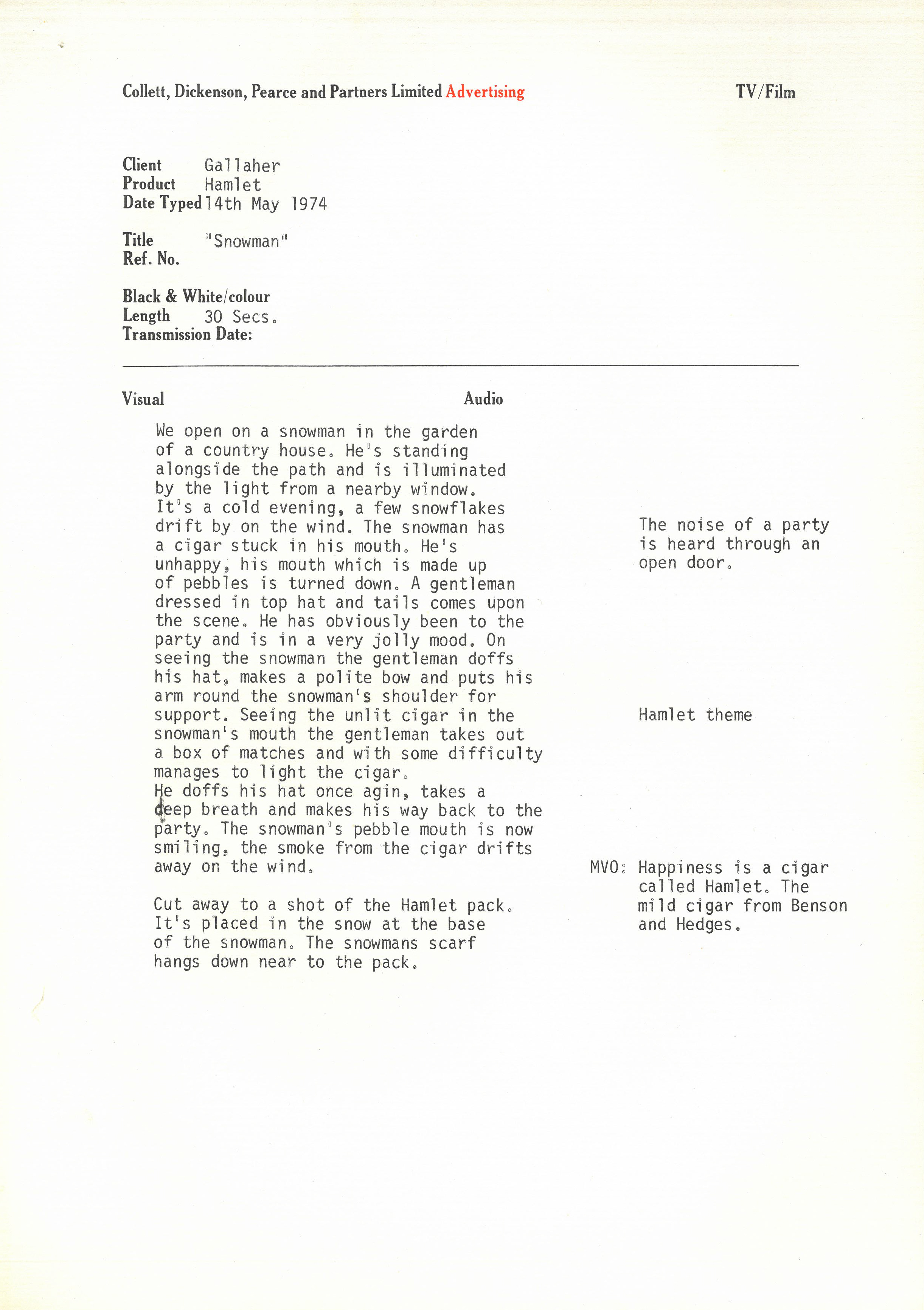

Alan Parker directed it, but on the day of the shoot we had to re-write it because we were using an inebriated guest to light the cigar in the Snowman’s mouth, and the ITCA had problems with this, so part of the fun of the sketch went out the window.
Ian and I did a lot of speculative work on Birds Eye, but never got anything made.
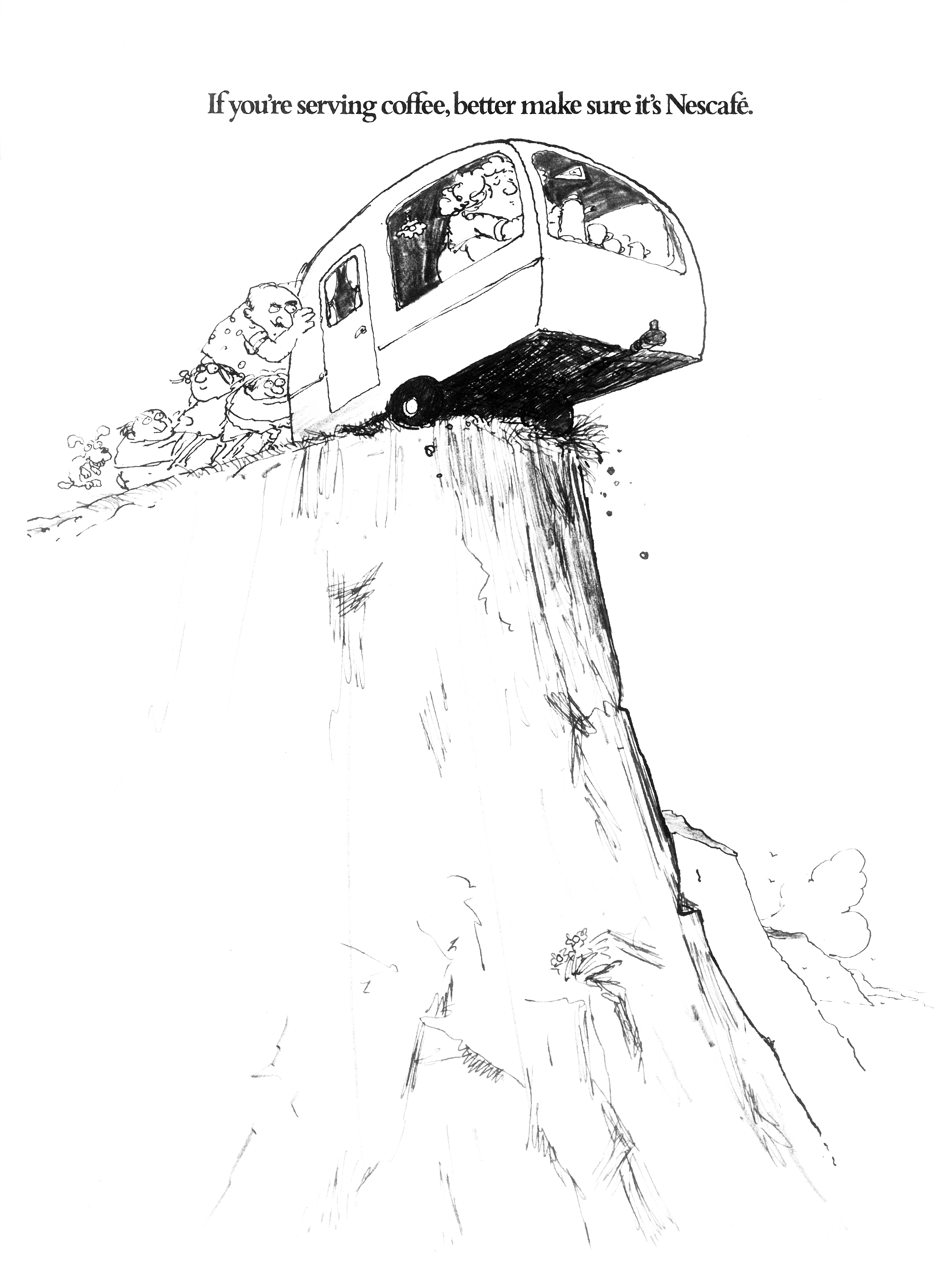
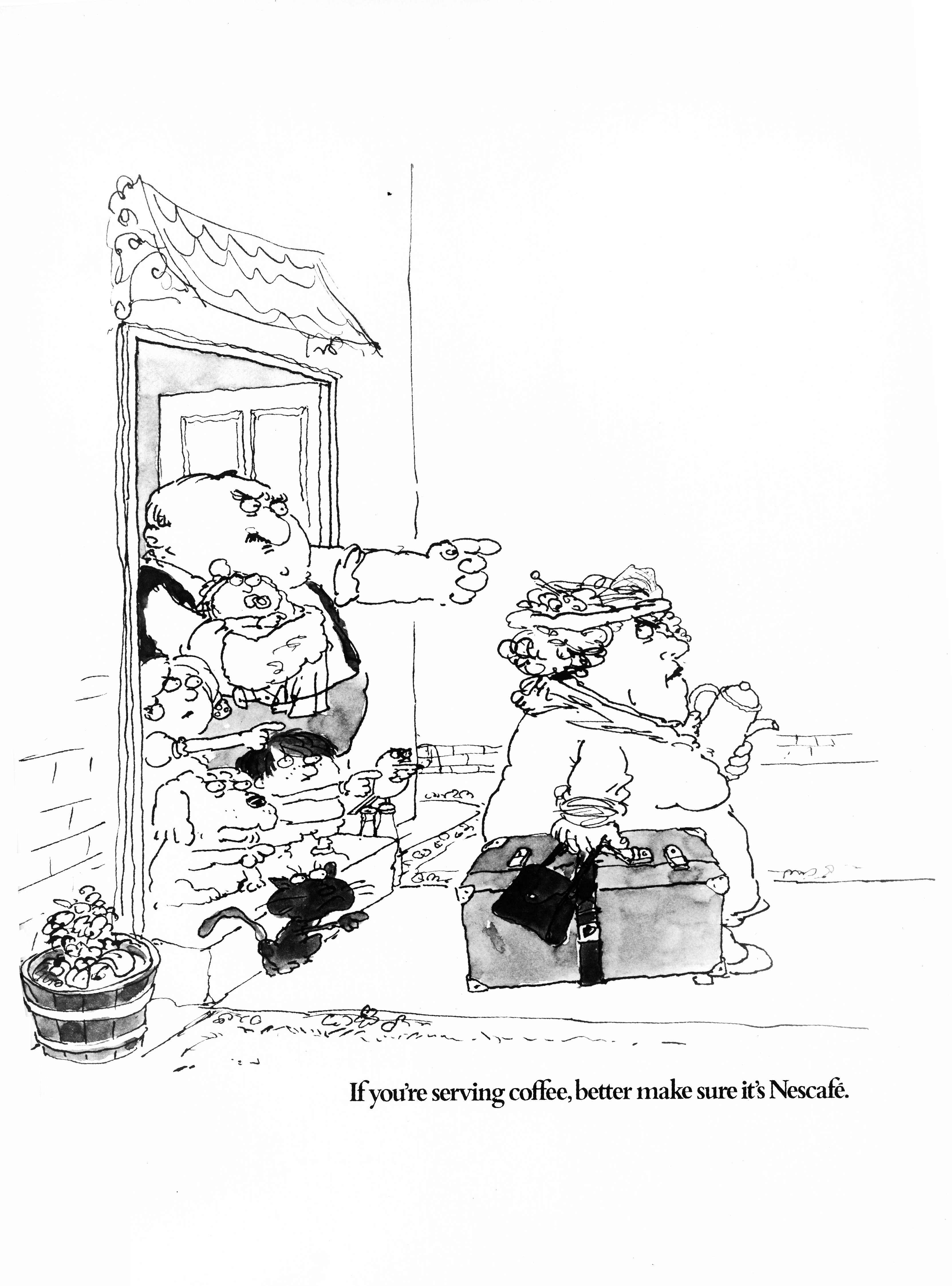
Then I art directed the Nescafe campaign with Phil.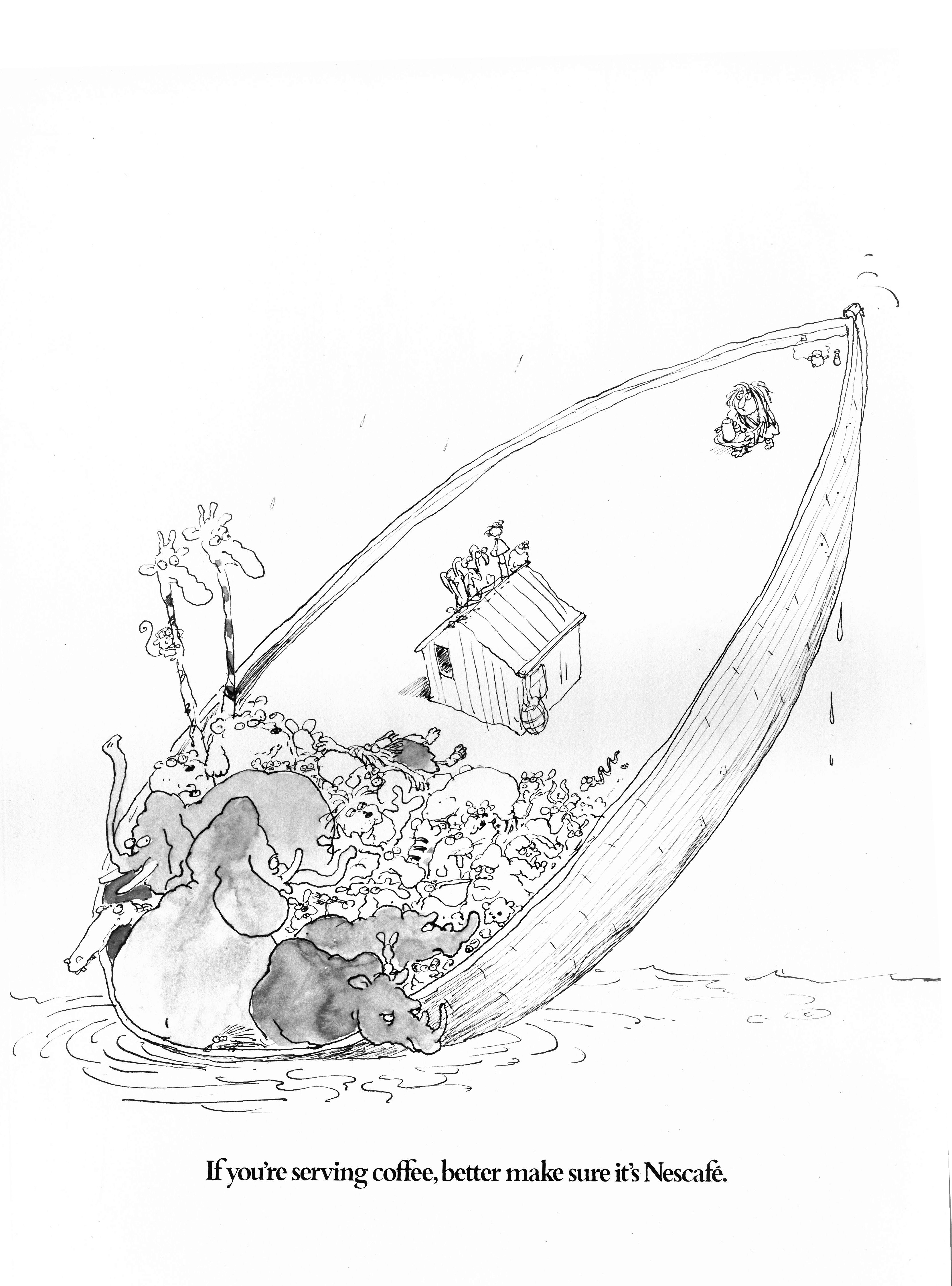

 Ian decided there were richer pastures at BBDO and left to work with Peter Gibb.
I teamed up with John O’Donnell and we were put in the office next to Paul Weinberger and Tony Kaye – which was interesting. (I used to live near Tony in Harrow-on-the-Hill and we got on well.)
Nigel Rose and Linda McDonnell were across the corridor, I remember Nigel coming in when we got the Fiat account to say him and Linda had been given a company car each – A Lancia Beta. I went straight into John Salmon’s office and asked if I could have one too, he said okay. I got a Fiat 500.
But I had a problem, I couldn’t drive. John agreed to pay for driving lessons for me.
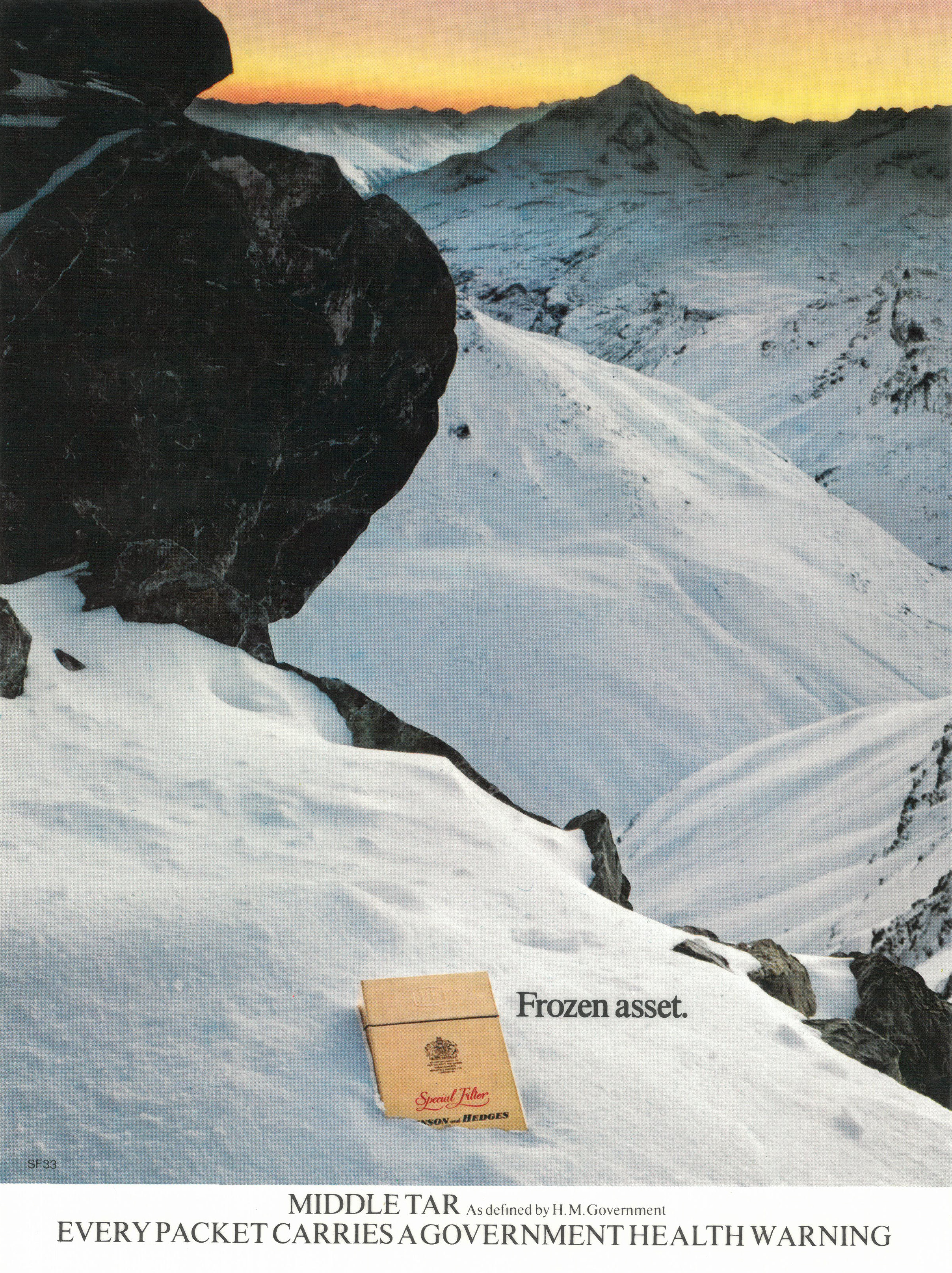
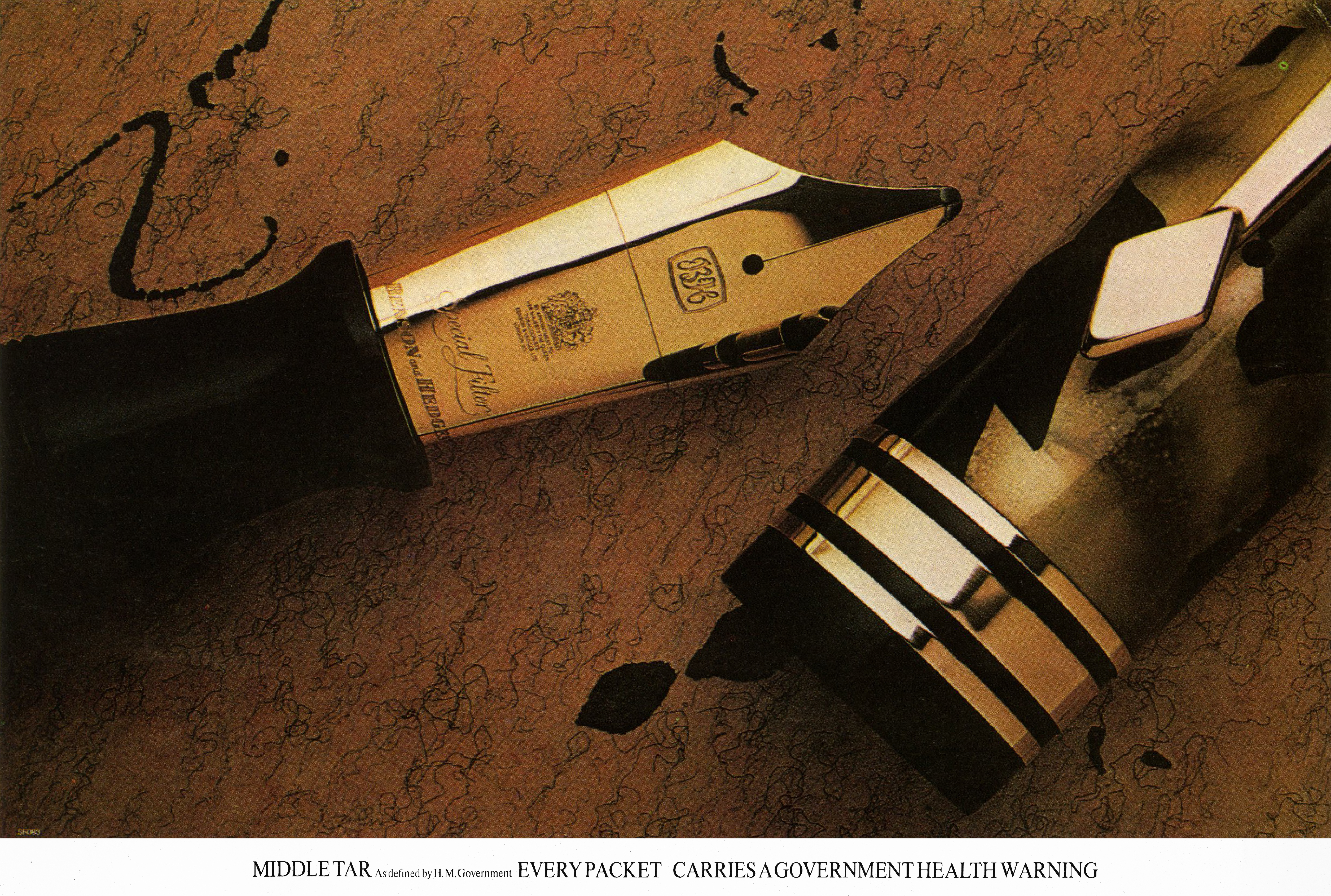
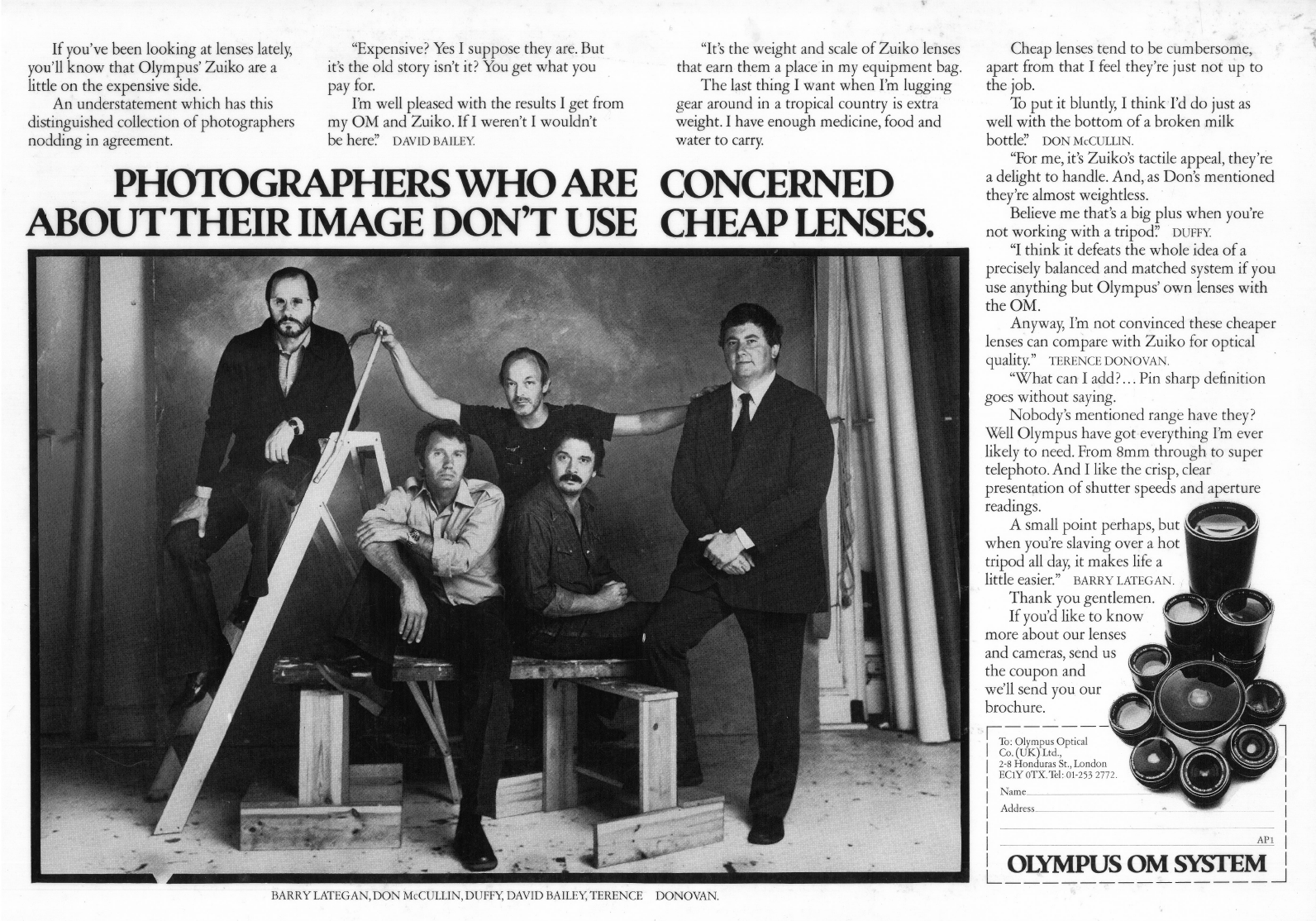
John and I then moved into Terry Lovelock and Alan Waldie’s group. And we started getting some nice work to do – Pretty Polly, Loveable Bras, Olympus cameras and the old Benson & Hedges gold box campaign.
‘A chip of the block’ was my first one.
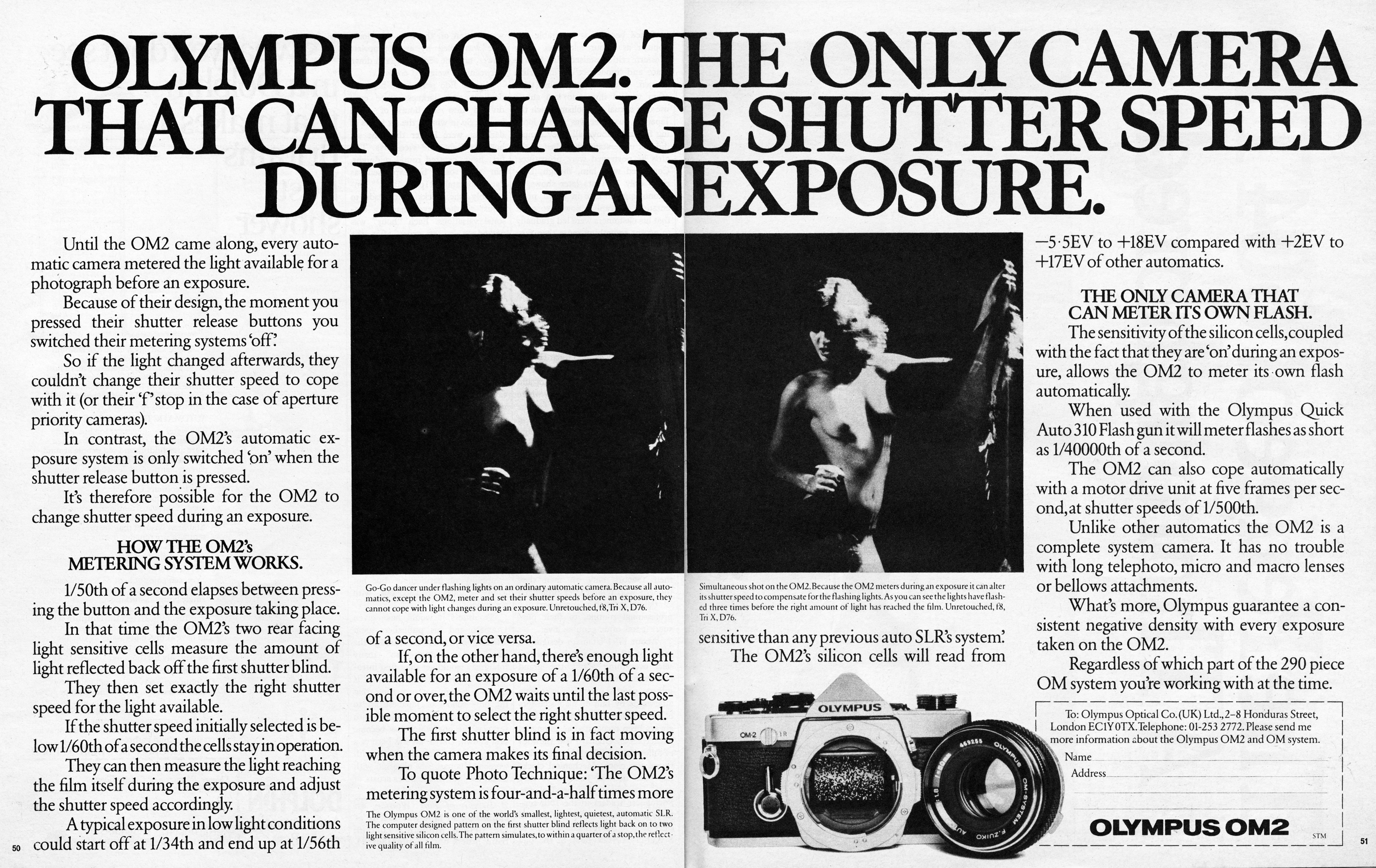
‘Moonshine’ and the Olympus ‘Exposure’ ads were the first ads I got into D&AD, in 1977.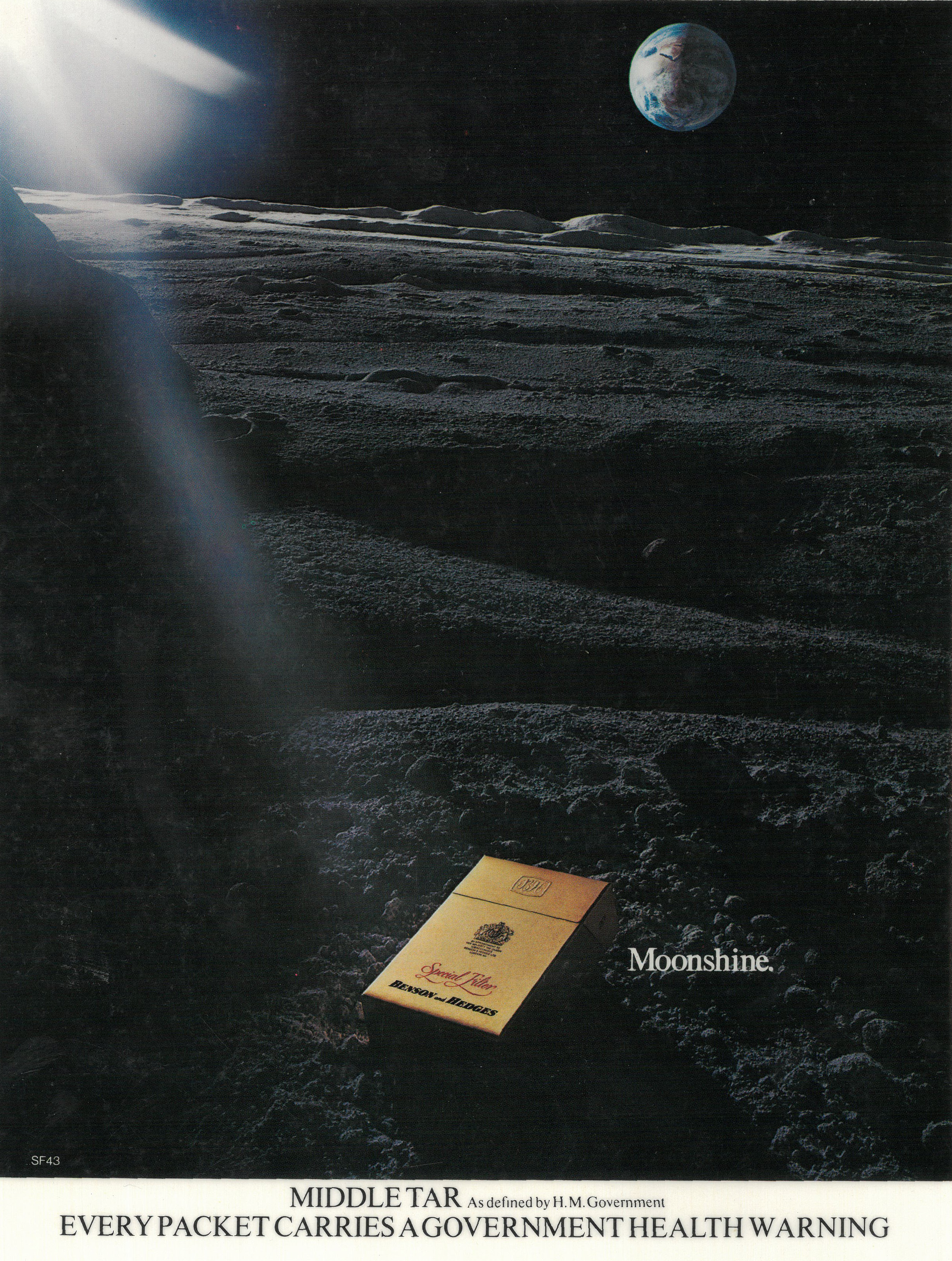

We also got some TV with the Barclay’s Bank ‘Marriage’ commercial starring Eric Sykes and Deryck Guyler. Terry always said I was cleaning the windows at CDP and I fell in and that’s how I got my job!
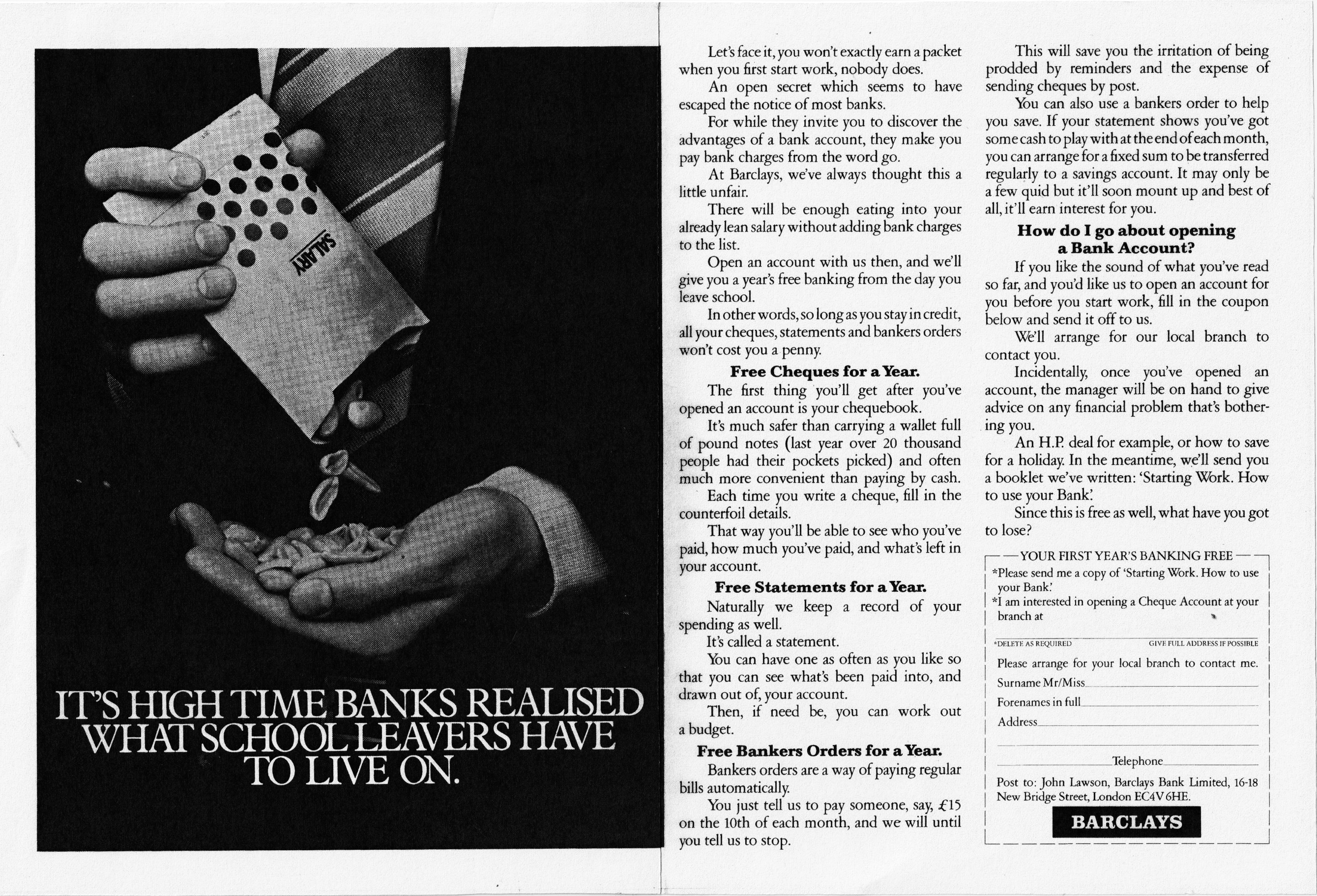
We then joined Alan Waldie and Mike Cozens’s group, while they were trying to crack the B&H ‘Surreal’ campaign.
We’d written a script in the old campaign that was about to go into production on it.

We’d had a meeting on it with Ridley Scott, but it was canned when ‘Swimming Pool’ was written.
With a bit of help from Magritte, the Surreal campaign was up and running and we were called in to help out with concepts.
One day Waldie phoned me from Duffy’s studio to ask if I would call in. When I arrived, they were struggling with the ‘Bird Cage’ photo – they couldn’t work out how to get the shadow cast on the wall.
I suggested they take a photo of the bird in the cage and project it on the wall. Bingo!
Waldie was one of the best photographic art directors I’ve worked with. He was straight out of the ‘Madman’ series. The stories were legendary.
I had a night out with him on a shoot for Fine Fare in Manchester, where we ended up at The Millionaires Club. I had massive hangover the next day, he was his normal self!
Even when he had to give up the drink, it didn’t seem to make any difference, he came on one of our painting trips to Mallorca one year, and he was still a character, even trying to find a bookies to put a bet on the horses!
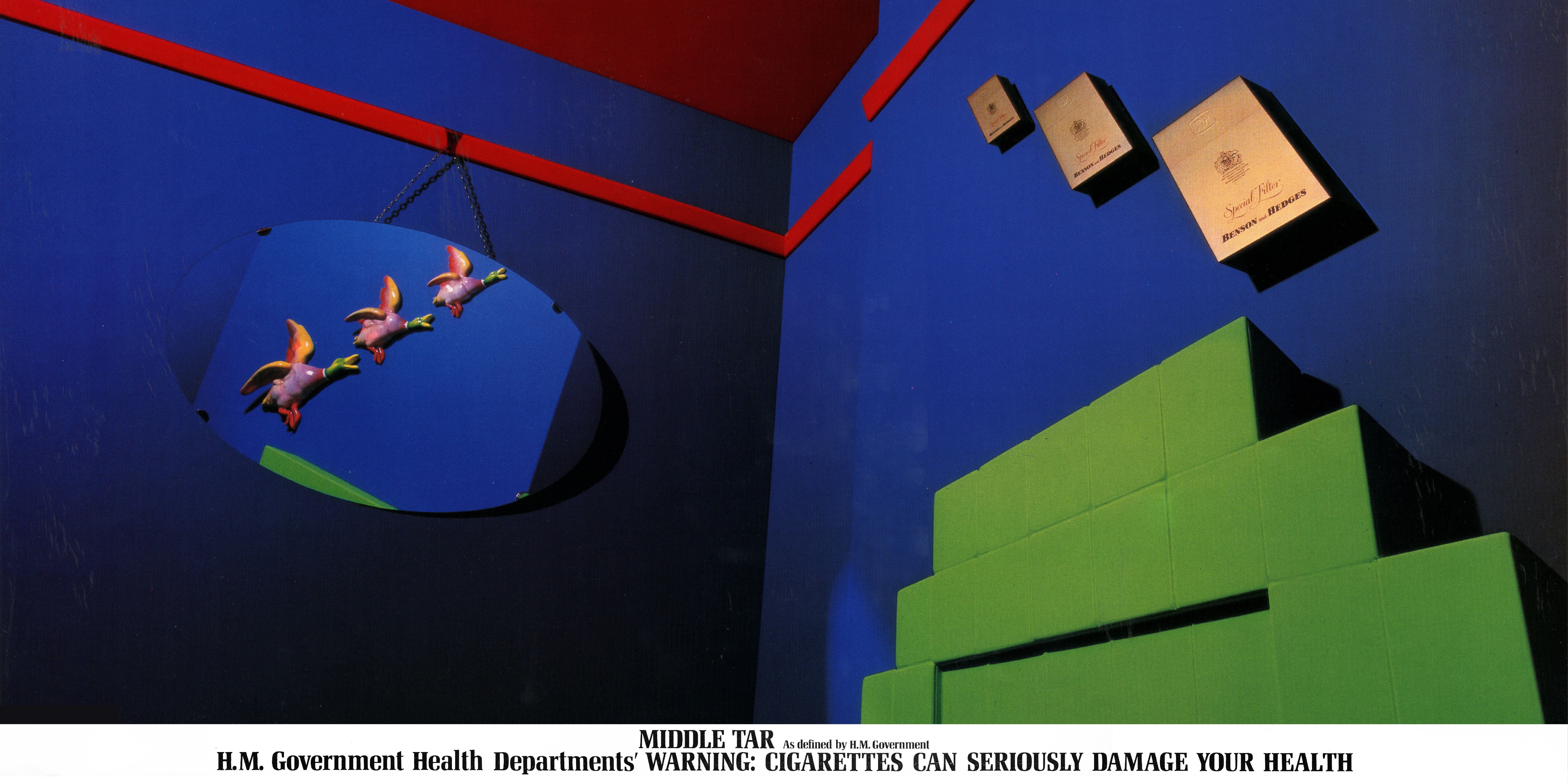
I won my first D&AD Silver for the B&H ‘Flying Ducks’ poster, shot by the master photographer: Adrian Flowers. (He once caused a black-out near his studio in Chelsea, when he used so much power for a Martell shoot, that he blew the power supply of his neighbourhood.)
I had no qualms working on cigarettes, because we were doing such great work (I’ve never smoked).
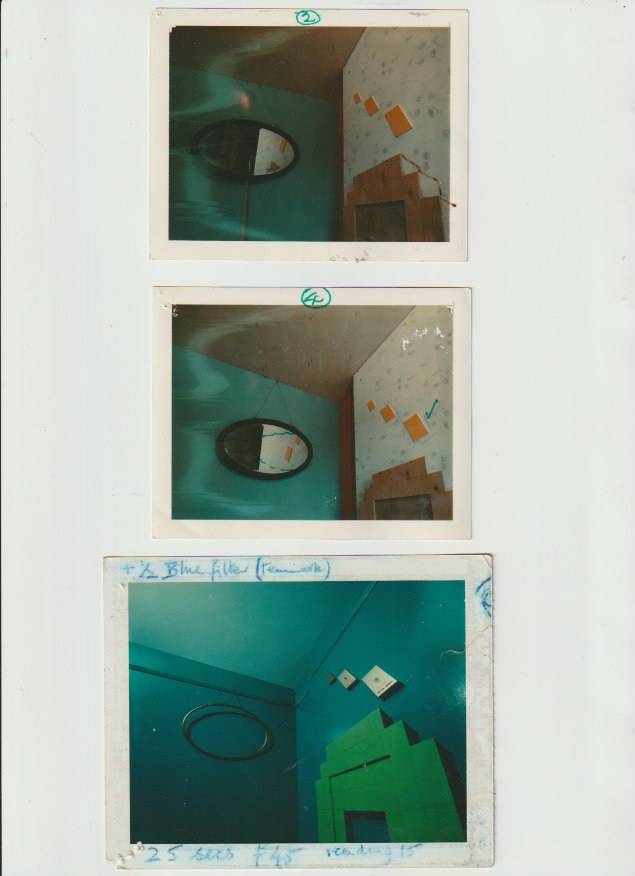
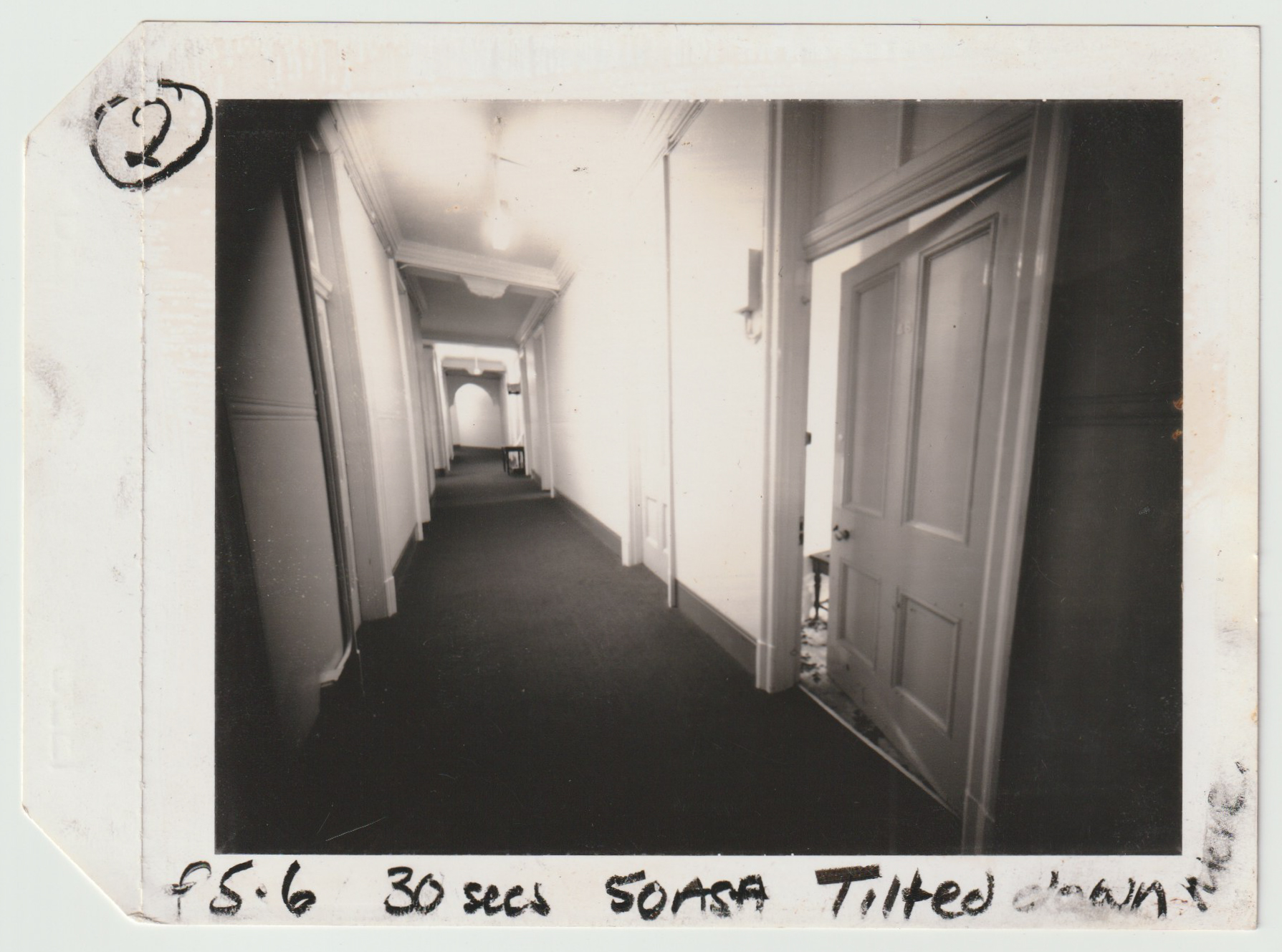

One of the benefits of working on beer accounts was that I got two of my sons in a Brewers School – Dame Alice Owen in Potters Bar.
My work with brewers spanned three agencies; CDP- Whitbread, TBWA – Banks and Hanson and BBH – Whitbread again.
There were a lot of talented people at CDP and a quite a few eccentrics.
I remember one day, we had an urgent deadline (yes, even at CDP), and John Salmon was away, so we had to present a concept to Tony Brignull.
He was really busy, so we thought we would try and get him at lunchtime. We knocked at his office door and heard him say ‘come in’. He was in the Yoga position on his head and we had to turn the concept upside down so he could read it.
It was approved.
I never had to present any work to Colin Millward, so I never saw the dark side of him that people talked about. But used to travel on the underground together, He used to live just up the road from me when I was in High Barnet (he was in Hadley Wood).
I went round to his house for tea one day and he had the full David Hockney’s ‘Rake’s Progress’ down his corridor. A fellow Yorkshireman. He was a good artist too.
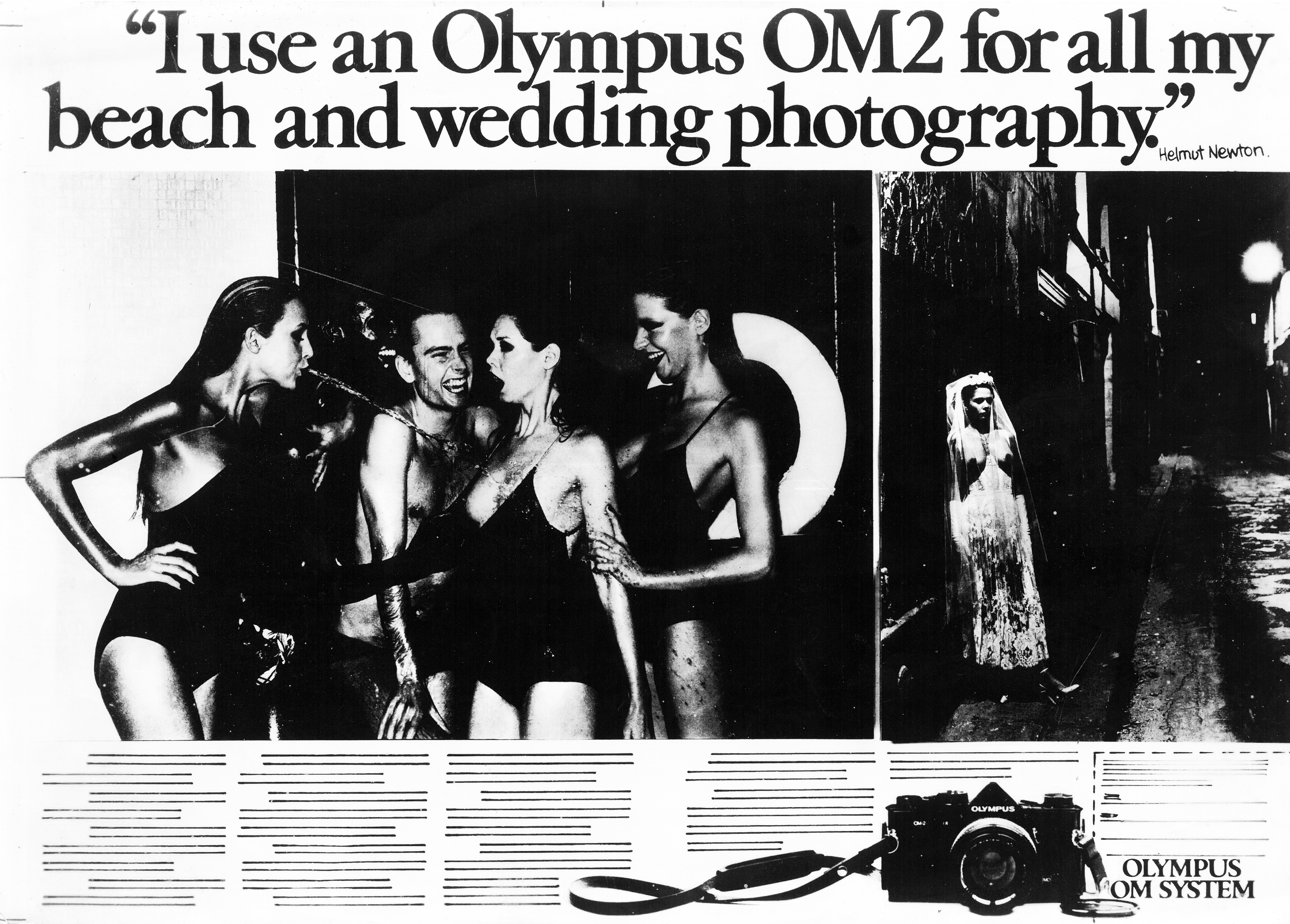
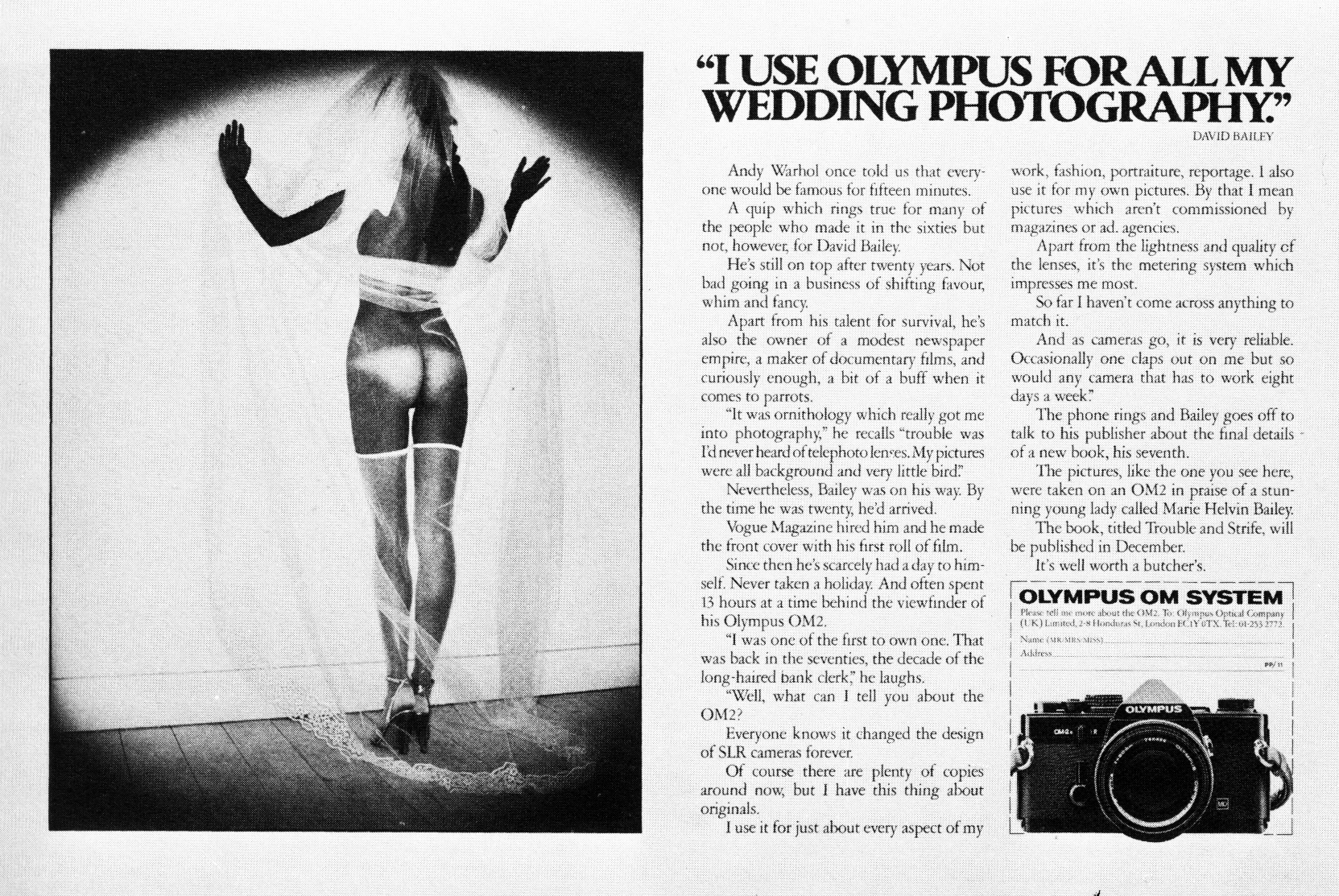
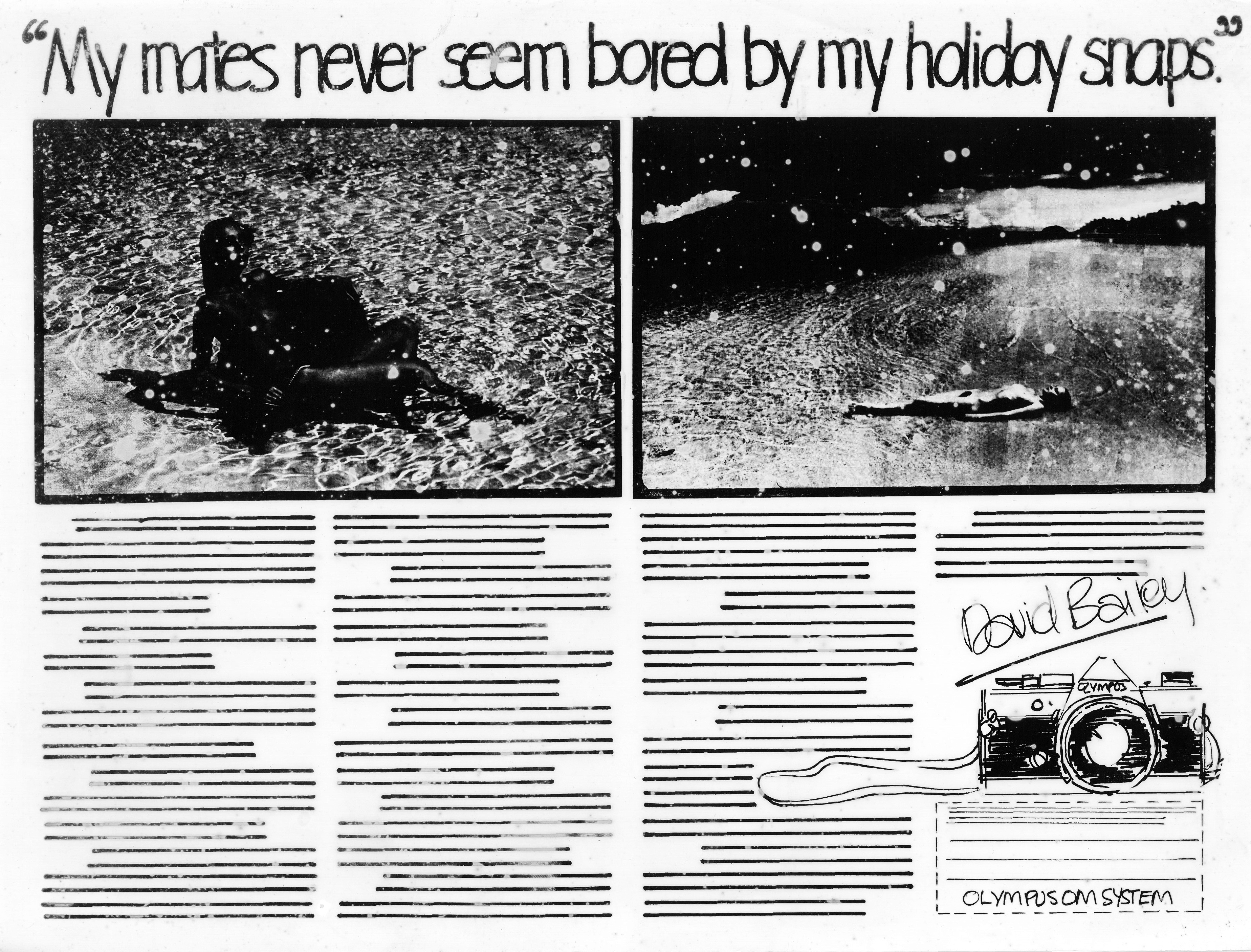
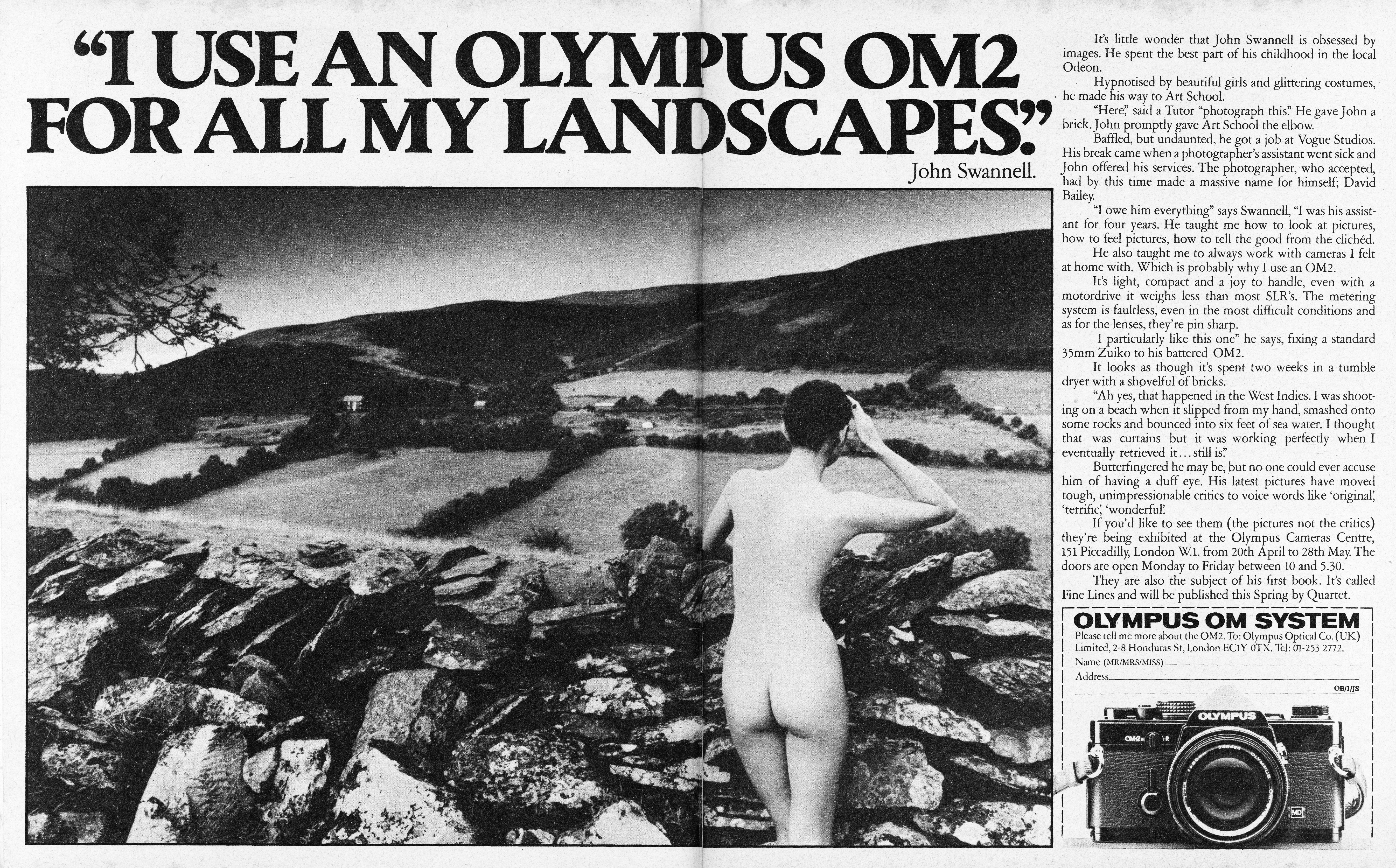
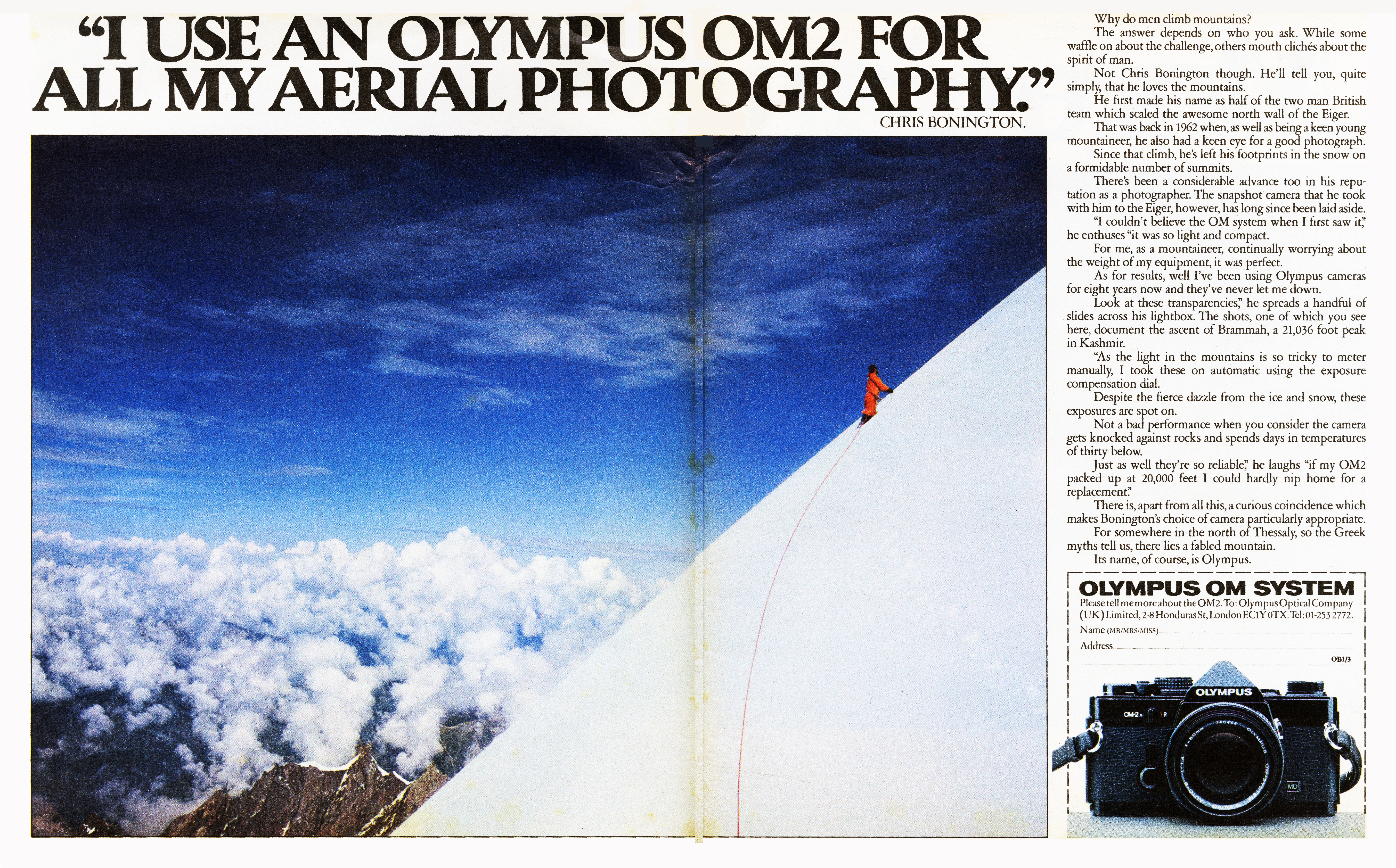
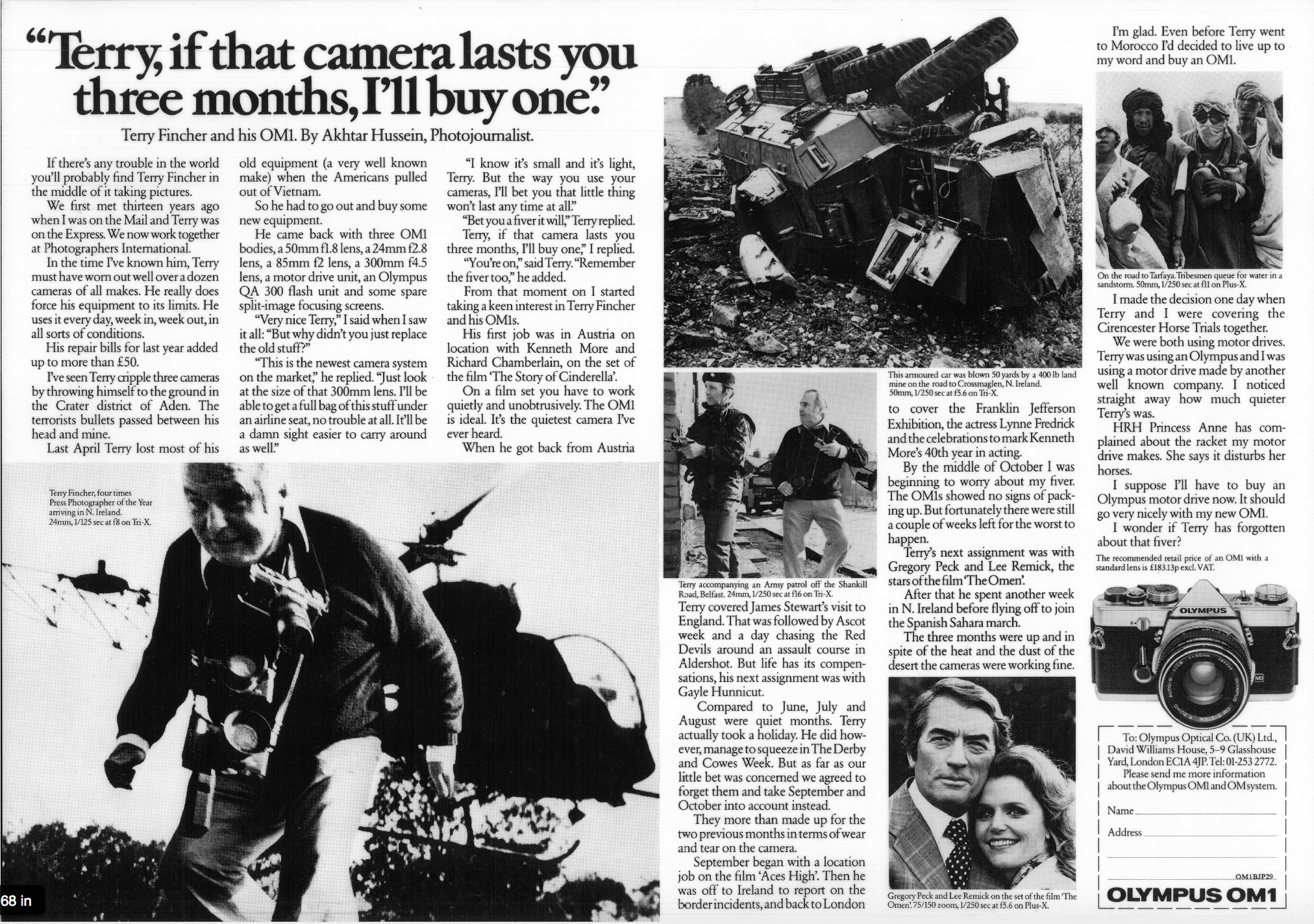
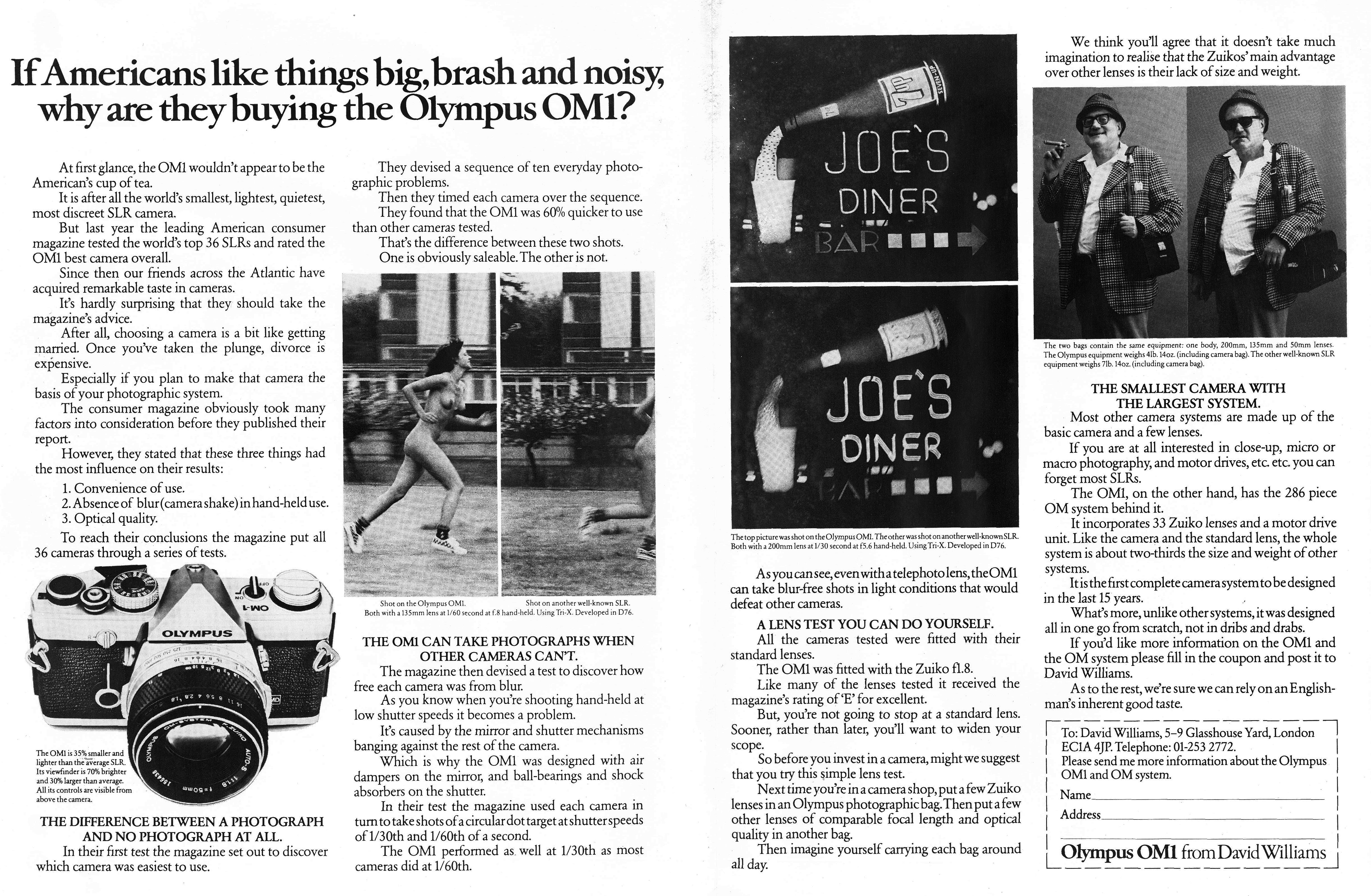
One of the last campaigns I did with John O’Donnell was a series of ads for Olympus cameras, based on wedding photographers, bar mitzvah photographers, etc, taking the piss out of them.
On one of them, John and I went over to Paris for lunch with Helmut Newton and his wife June (who was Australian, her professional name was Alice Springs!).
We were trying to persuade him to let us use his photo of a Parisian prostitute, who used to dress skimpily in a wedding outfit.
I left CDP shortly after that, and Graham Cornthwaite took over and used a David Bailey photo instead.
The ad got in the book, with no credit for me.
I never found out why he didn’t use the Helmut Newton shot.

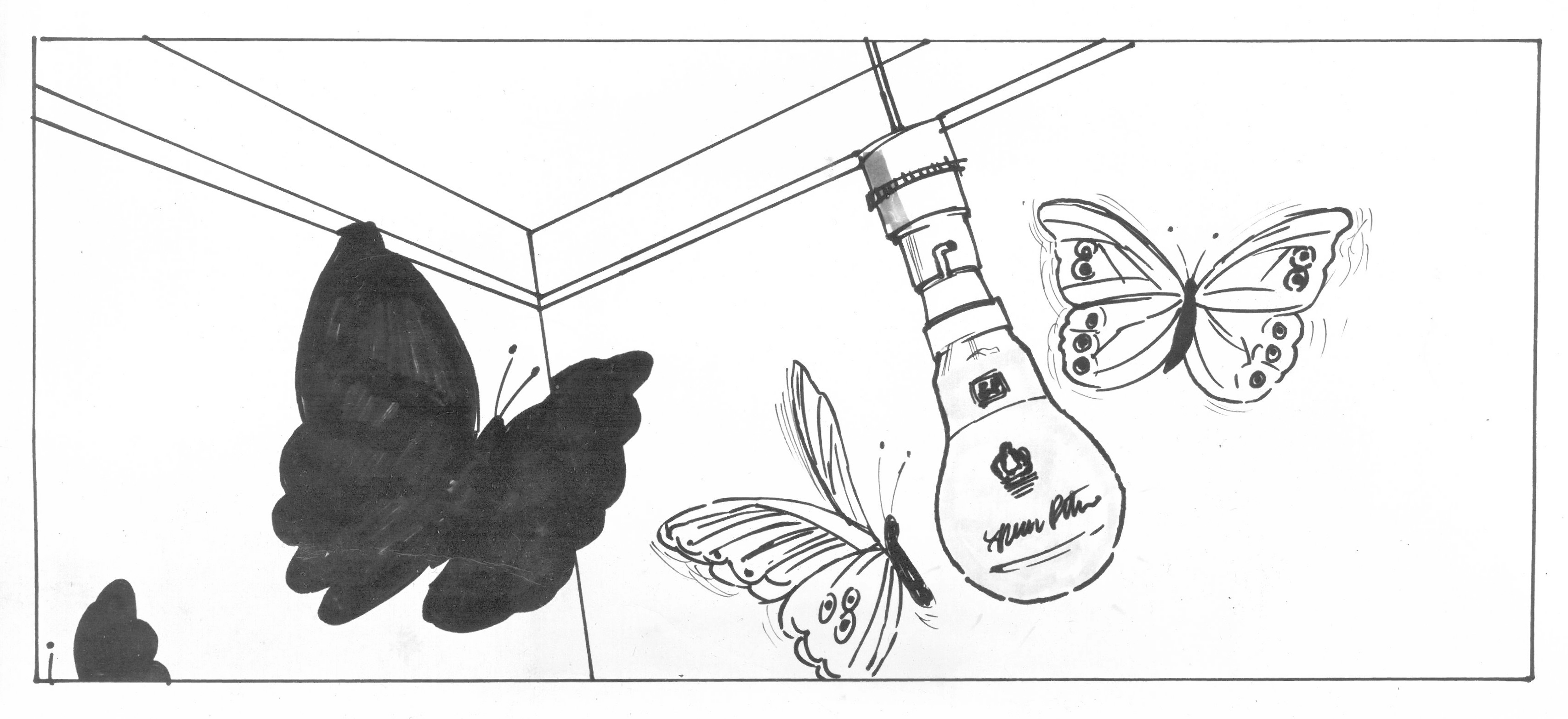
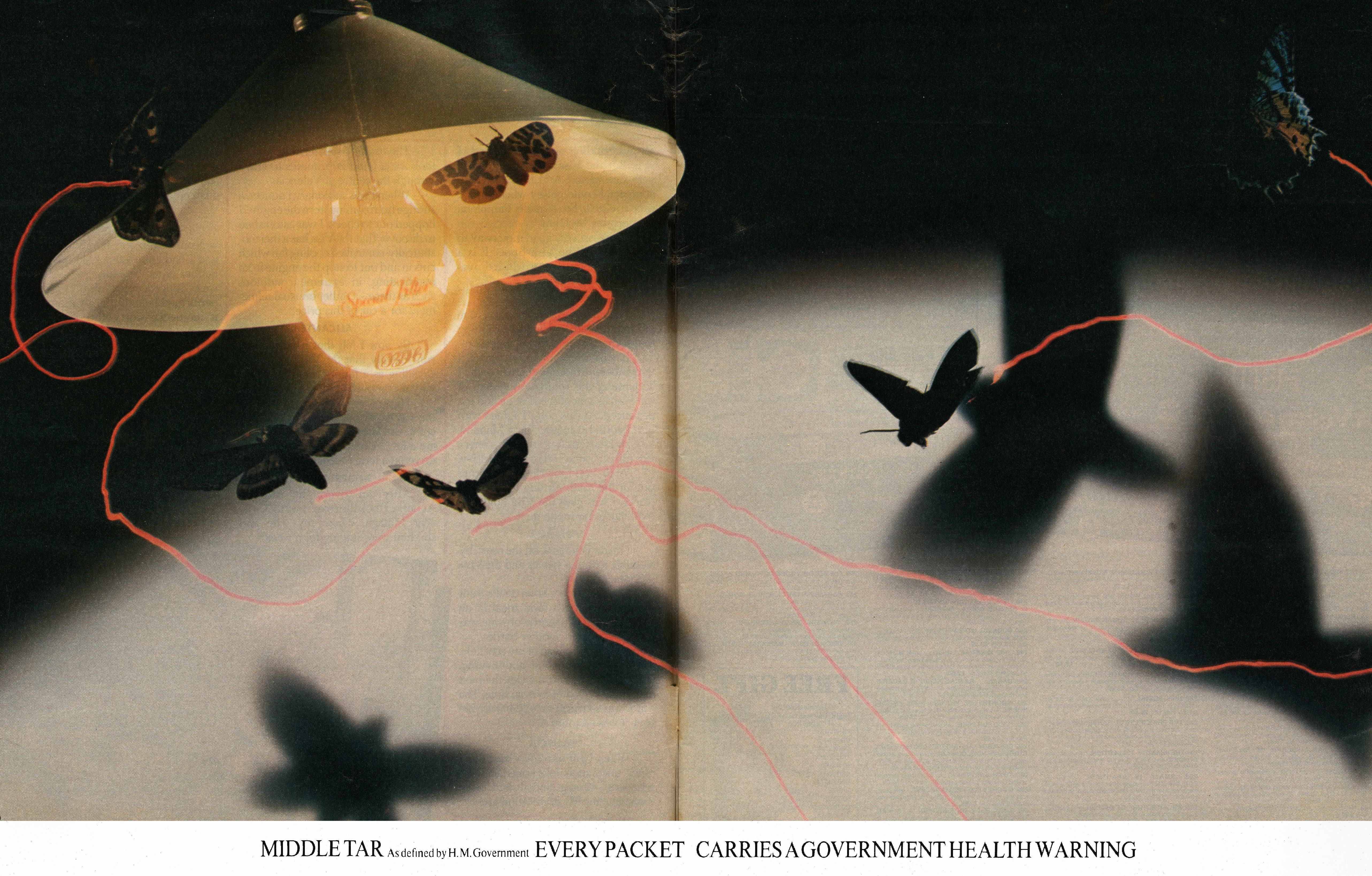
18 months after leaving I got a phone call from the Art Buyer at CDP asking if I would like to go on the shoot with Neil Godfrey for an idea I had conceived a couple of years before – the B&H ‘Moths’ poster.
That got in the book too, but at least I got a credit on it.
Pretty Polly.


John Hegarty phoned me one day and offered me a job at TBWA.
A mutual friend, Lyndon Mallet, who had worked at TBWA and went off to run the Advertising Course at Buckinghamshire College of Art, had recommended me.
I told John I would come, but only if I could bring a copywriter with me. The next night I was having a drink with Mike Cozens in the CDP bar, and I mentioned it to him. He turned and said, ‘I’ll do it’. He was going through a bit of a torrid time with Alan Waldie over credits on the B&H campaign and he was a bit pissed off.


That was my contact at TBWA. It was only later that I found out that Mike had also negotiated a video player!
After doing no pitches at CDP, and never meeting the client, we were put straight on a pitch for Knorr (which we won).
We were then starting to do briefs on Lego, a couple of press ads, which got in the Book. 
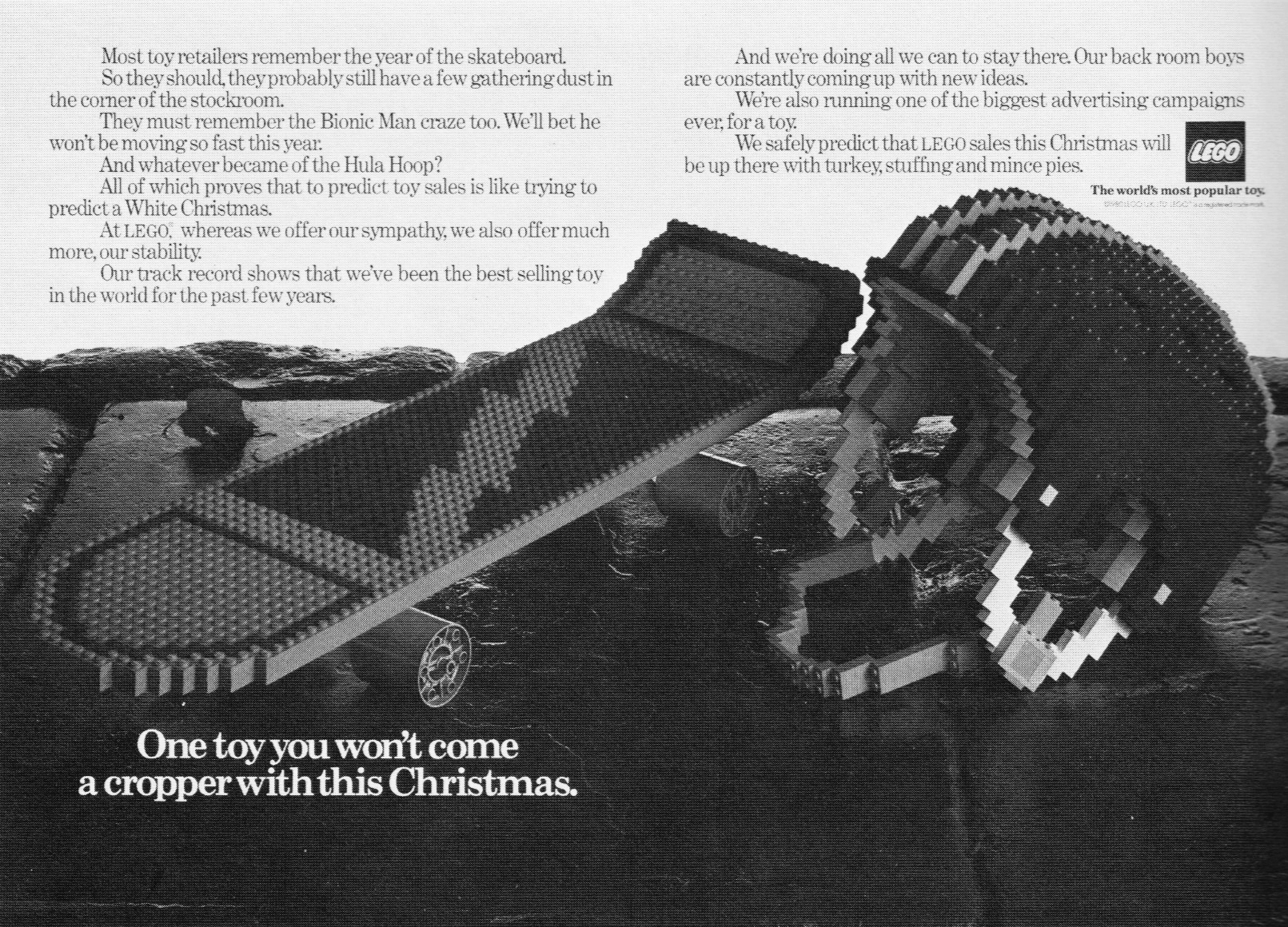
And then we were briefed on the TV.
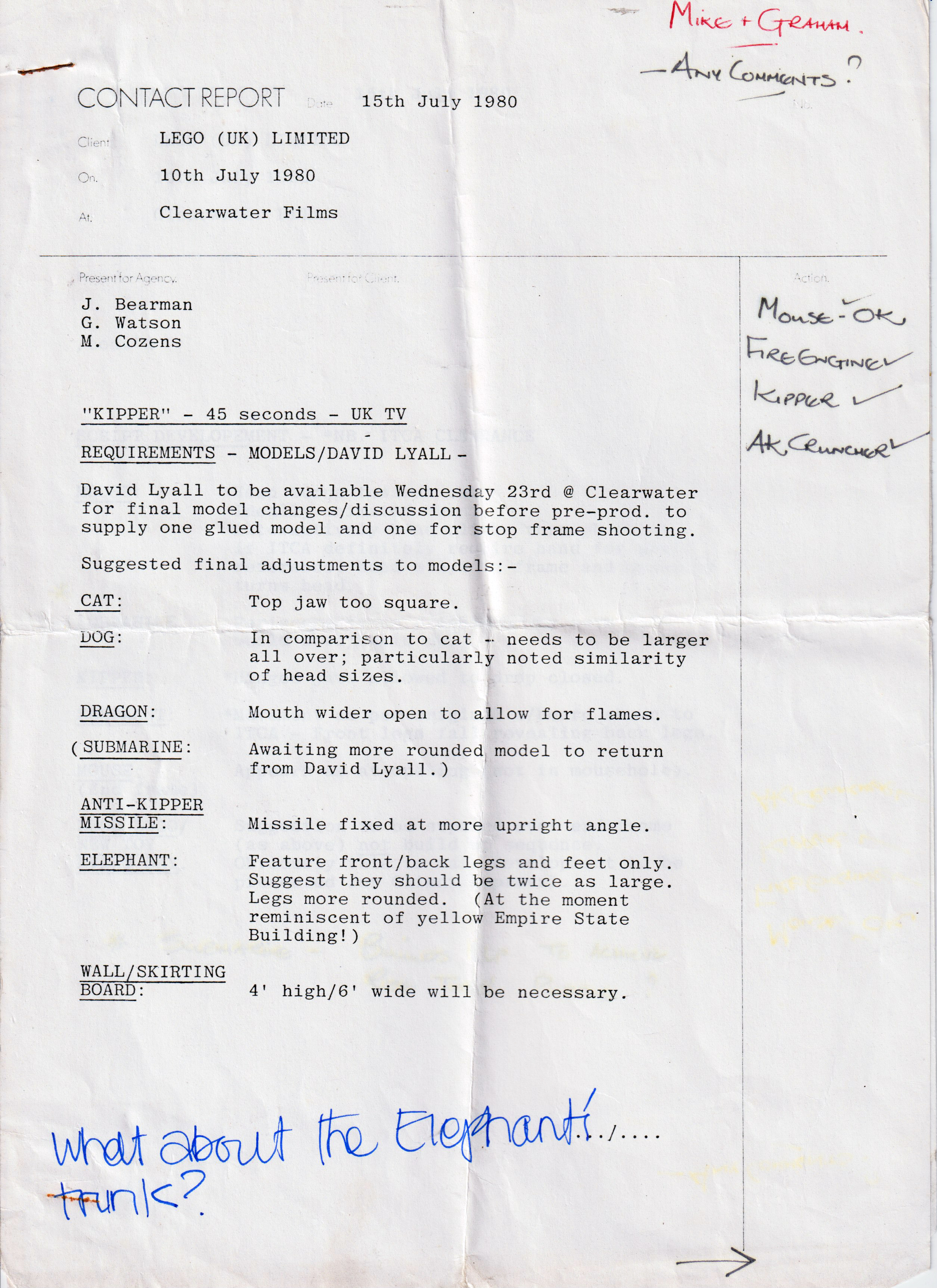
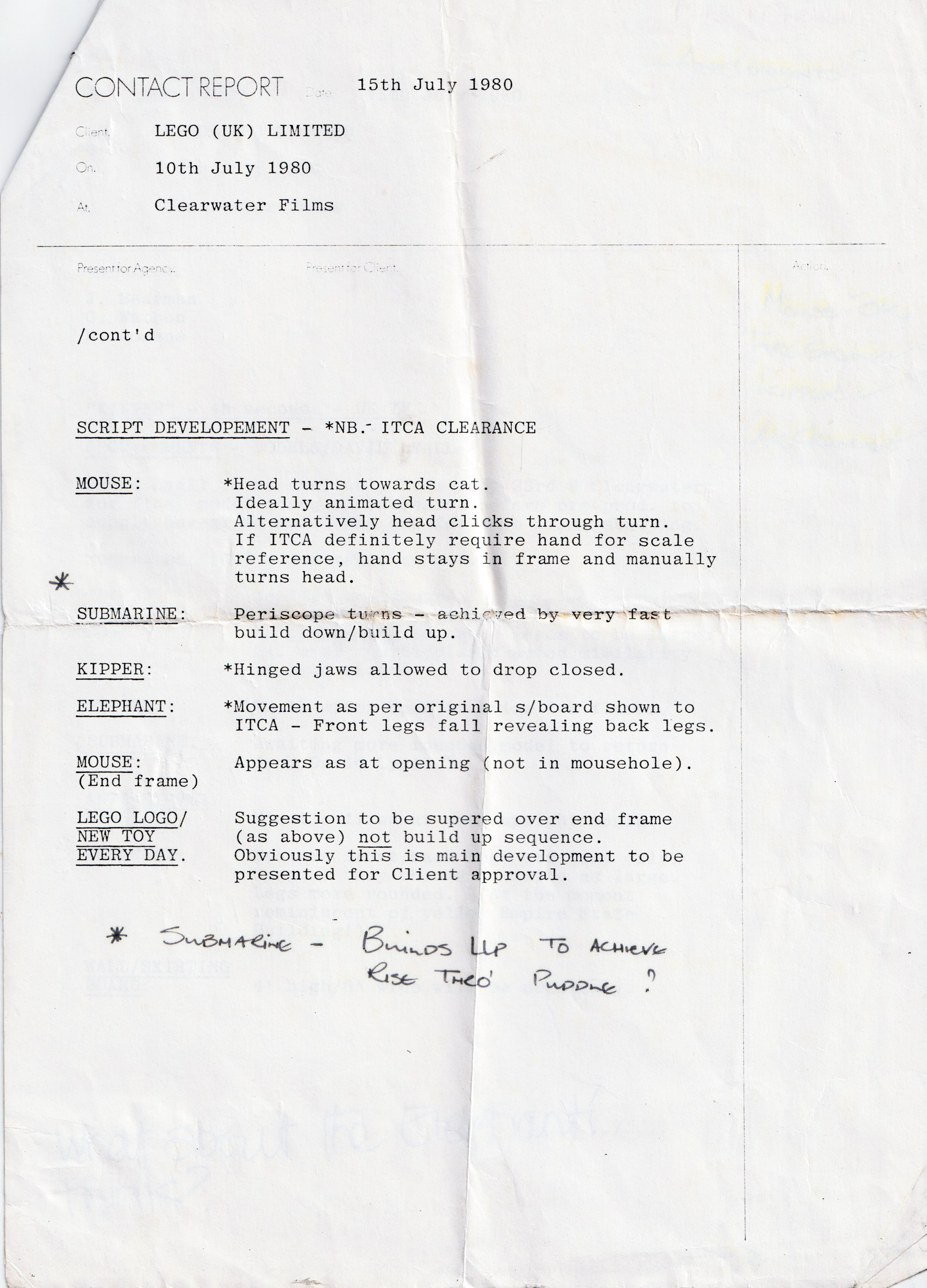
That meant eventually a 17 day shoot in a studio.
It was like watching paint dry! 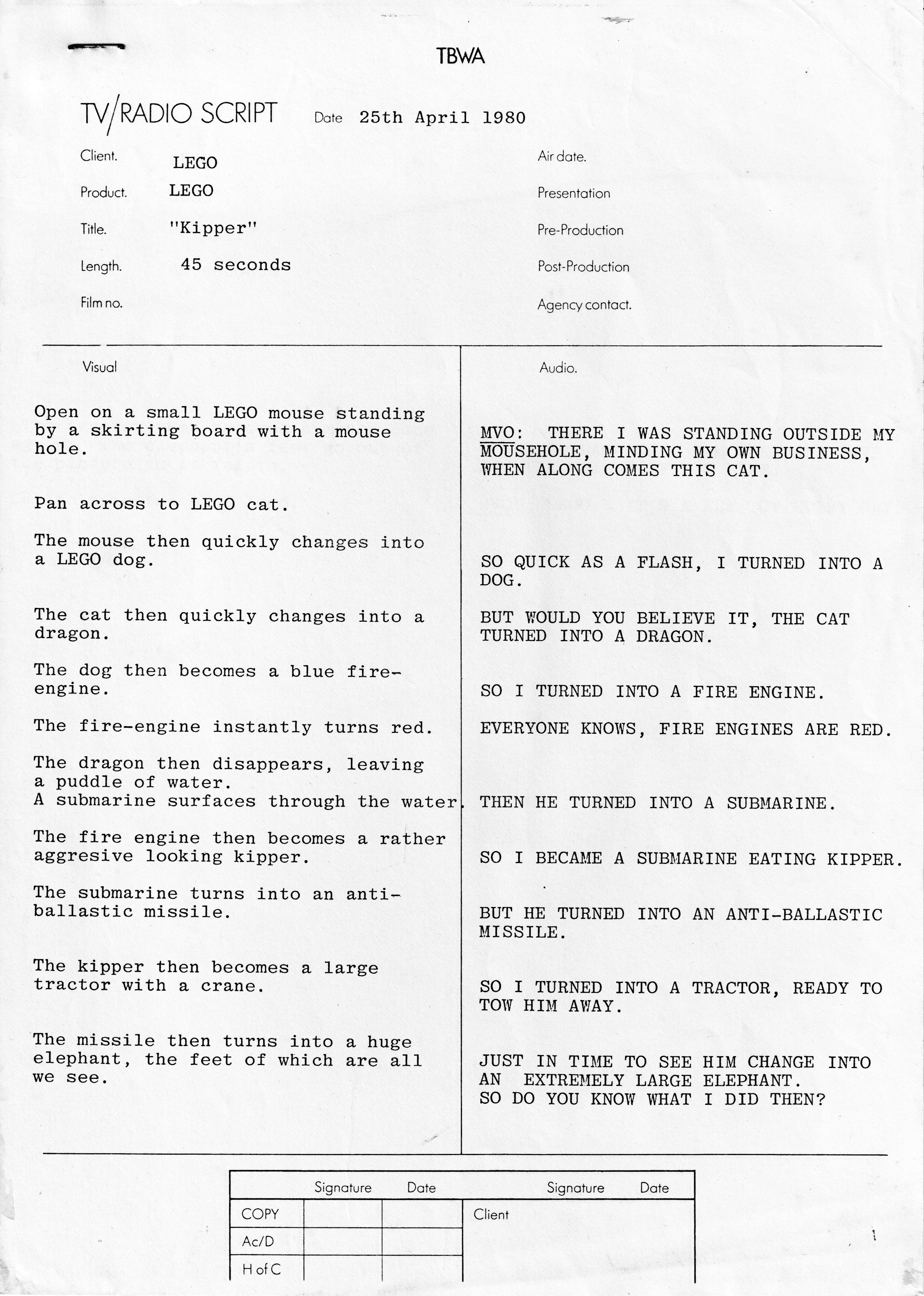

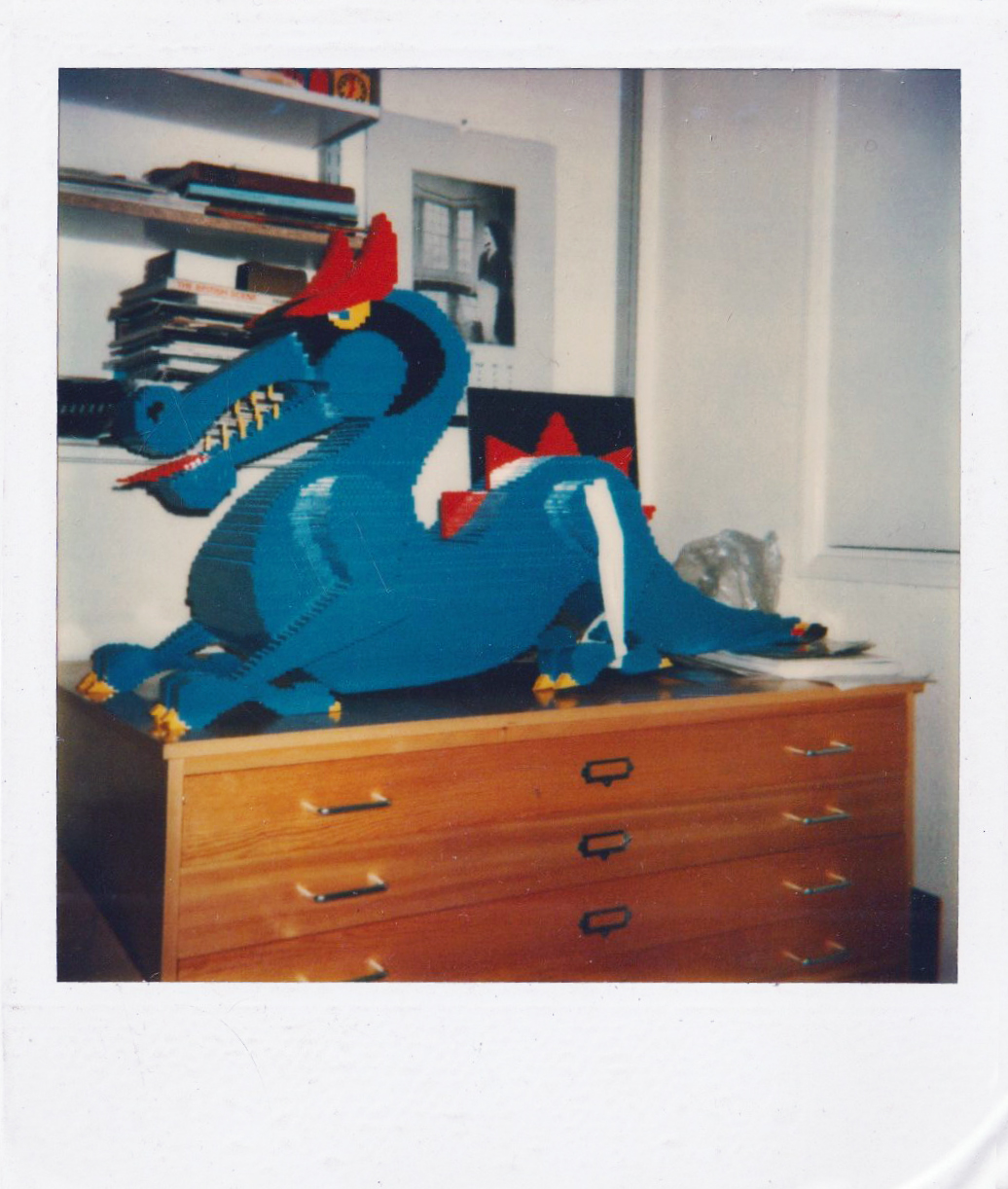

Then we got the opportunity to travel. A script from our pitch for Knorr was approved, featuring a Desert Island.
Previously, at CDP, the furthest I’d got was Belfast, for an Olympus ad shot with the Daily Express war photographer – Terry Fincher.
We went down the Shankill Road at the height of the Troubles, I couldn’t wait to get back to England. Pretty scary. I didn’t even tell my wife I was going!
The only other opportunity, was a B&H stills shoot in Kenya. I didn’t know until Waldie had set off, that he was making his trip worthwhile by shooting two concepts, one of his and one of mine!


Anyway, off we went to the Bahamas to shoot with Tony Scott.
It never ran because the UK entered a three day week and the client wouldn’t condone an exotic commercial.
I don’t even have a copy of it.
At the time, TBWA was trying to build an International network and they were trying to set up an office in New York.
We were in Miami to see the rushes and decided to go up to New York for the weekend, to check things out.
John Hegarty had mooted the idea of us running the New York office, it was ours if we wanted it.
But we were very happy in London.
After that, Lego ‘Kipper’ started winning big and it was great publicity for TBWA. ‘Kipper’ had just won the best TV commercial in the world at some obscure Hollywood event, which none of us knew about. (
The award was picked up by someone from JWT, who happened to be the only Brit there!)

That’s where the story of me ‘stuck in St. Moritz’ came about.
We were shooting a Range Rover ad with Barney Edwards, ‘4 in one, one in 4’, and Mike and I had to drive two Range Rovers to St. Moritz for the product shot.
A day into the shoot, we got a call from the agency saying we had won a One Show Gold for ‘Kipper’ and needed to be there to pick it up in New York.
We hadn’t finished the shoot so I was stuck in St. Moritz, whilst Mike got to go to New York. Bummer!
I did go to Chicago a few months later to pick up an award for ‘Kipper’ though.
We did also make a trip to Cannes to pick up the Grand Prix for ‘Kipper’.
On the Range Rover shoot, I said to Mike it would help another concept we had if we got a personality chauffeur.
Somehow, I managed to contact ‘Oddjob’ from James Bond (who was now the Tourism Manager for Hawaii).
We didn’t have much money, but a trip down memory lane for him was too good to be refused.
I used to play a lot of snooker in those days with Bill Thompson, and we managed to get in the final of the media snooker tournament against the Daily Express.
We had no chance, but I managed to persuade ‘Oddjob’ to get dressed up in his outfit, we had a false ball made which he crushed in his hand as the Express team arrived.
It didn’t help, we still lost!
‘‘The Range Rover ‘Wedding’ ad was a topical ad for Charles and Di’s wedding, which we managed to make over the week before the ceremony.’’


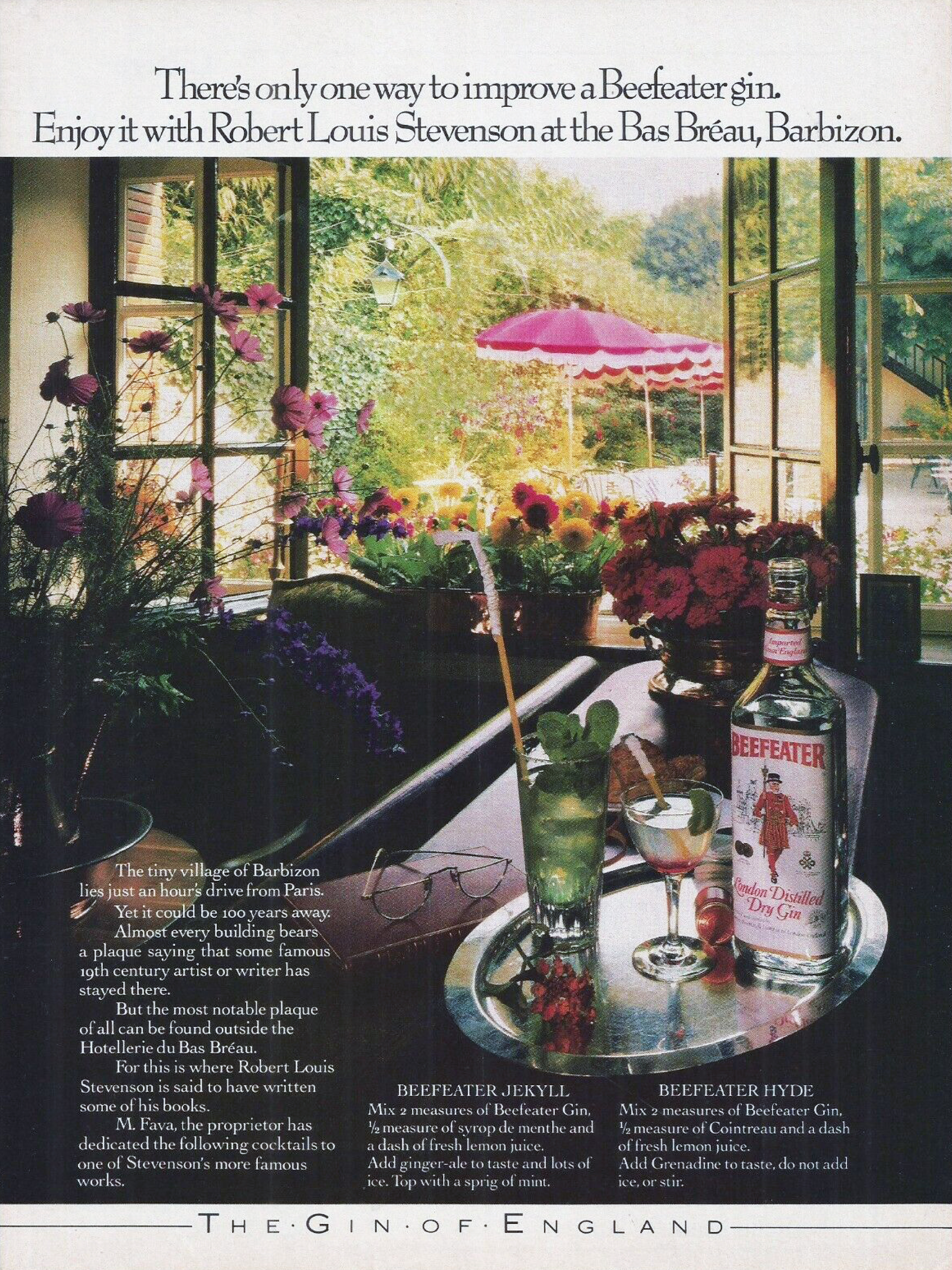
We then came up with an idea for Beefeater Gin – ‘great bars of the world’ and the cocktails made in them.
Mike had to come on the shoots to write-up about the making of the cocktail!
We started in the bar that Ernest Hemingway used to frequent in Pamplona. It was my first time I’d been back in Spain since I’d been put in jail in San Sebastian, when I was a student in about 1966, and it was a bit close for comfort.
They were nice ads, but the client could only afford single pages, they would have been better as DPS’s.
I also managed to fit in a location shoot in the Maldives with photographer John Claridge, for Nivea suntan lotion, because of the budget we had to take a package tour for a week. Life was hard in those days.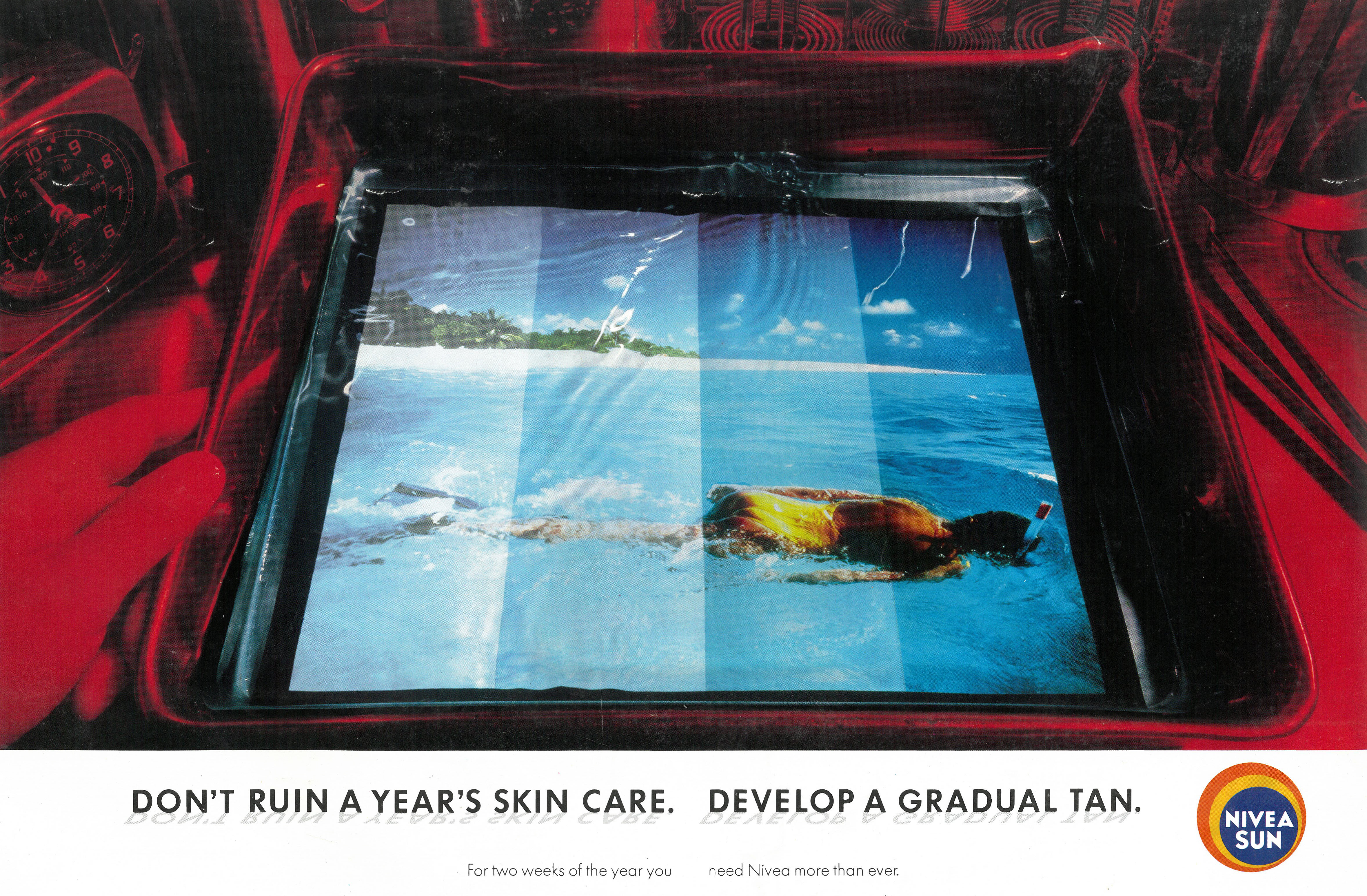
Mike and I were also asked to help out at the TBWA Paris office for a couple of weeks, to save their Evian account.
We were successful so they paid for a weekend in Paris with our families.
My accountant at the time, said if you were out of the country for a certain amount of time, you could claim the tax back.

Then we got the mysterious phone call over a weekend from John Hegarty to meet at the Hilton Hotel in Central London.
BARTLE BOGLE HEGARTY.
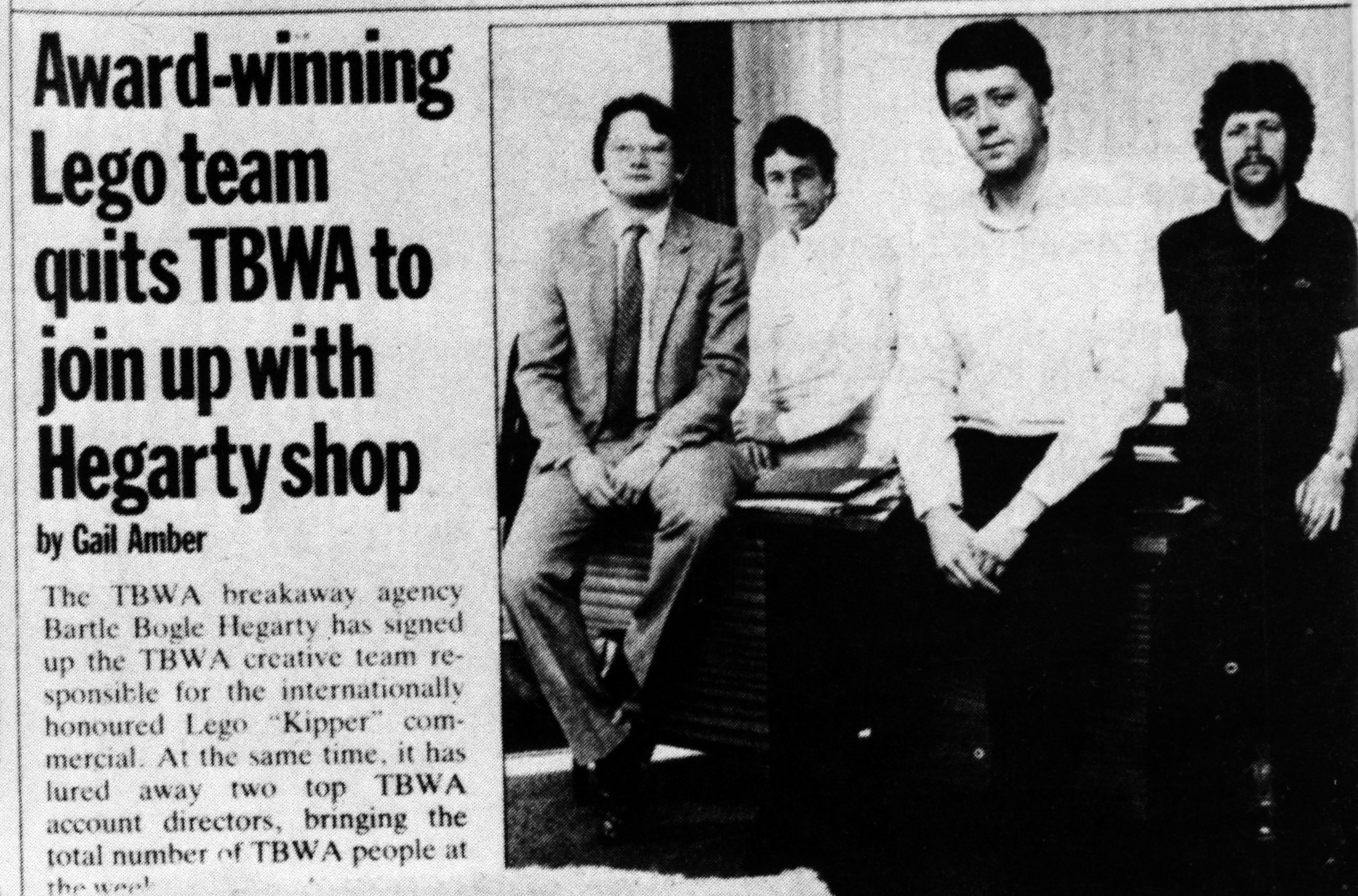
So we started an agency from scratch, and Mike and I became founding partners, and we had to take a pay cut!
Just like CDP, BBH’s philosophy was that we didn’t do creative pitches. We wanted to learn about the client’s business thoroughly before we could take it on. That’s why we had so many factory visits, so we could investigate the product and work out the correct messaging.
But first of all we had to get some business, so Mike and I spent about 6 weeks twiddling our thumbs at home (in my case a bit of DIY).
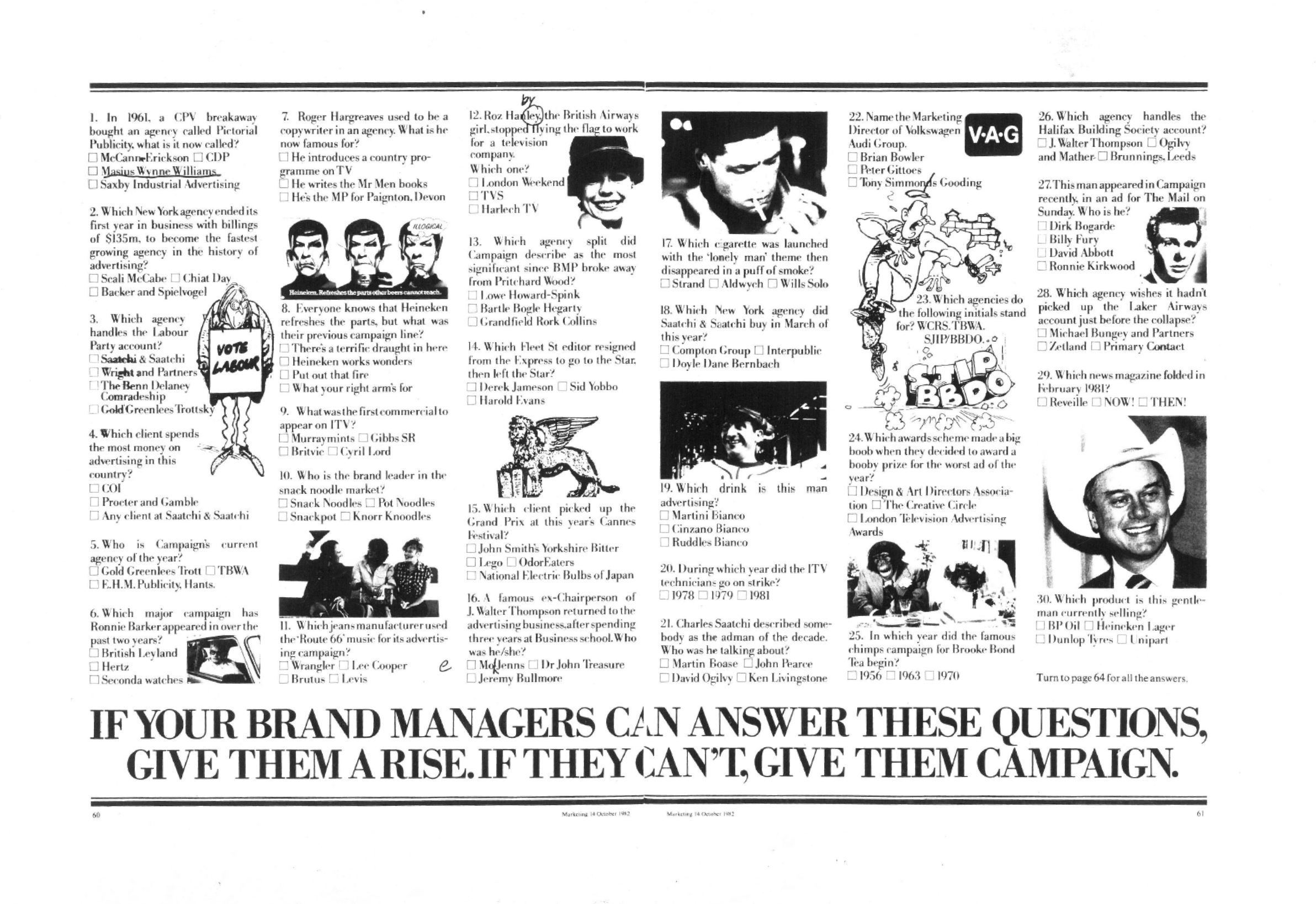
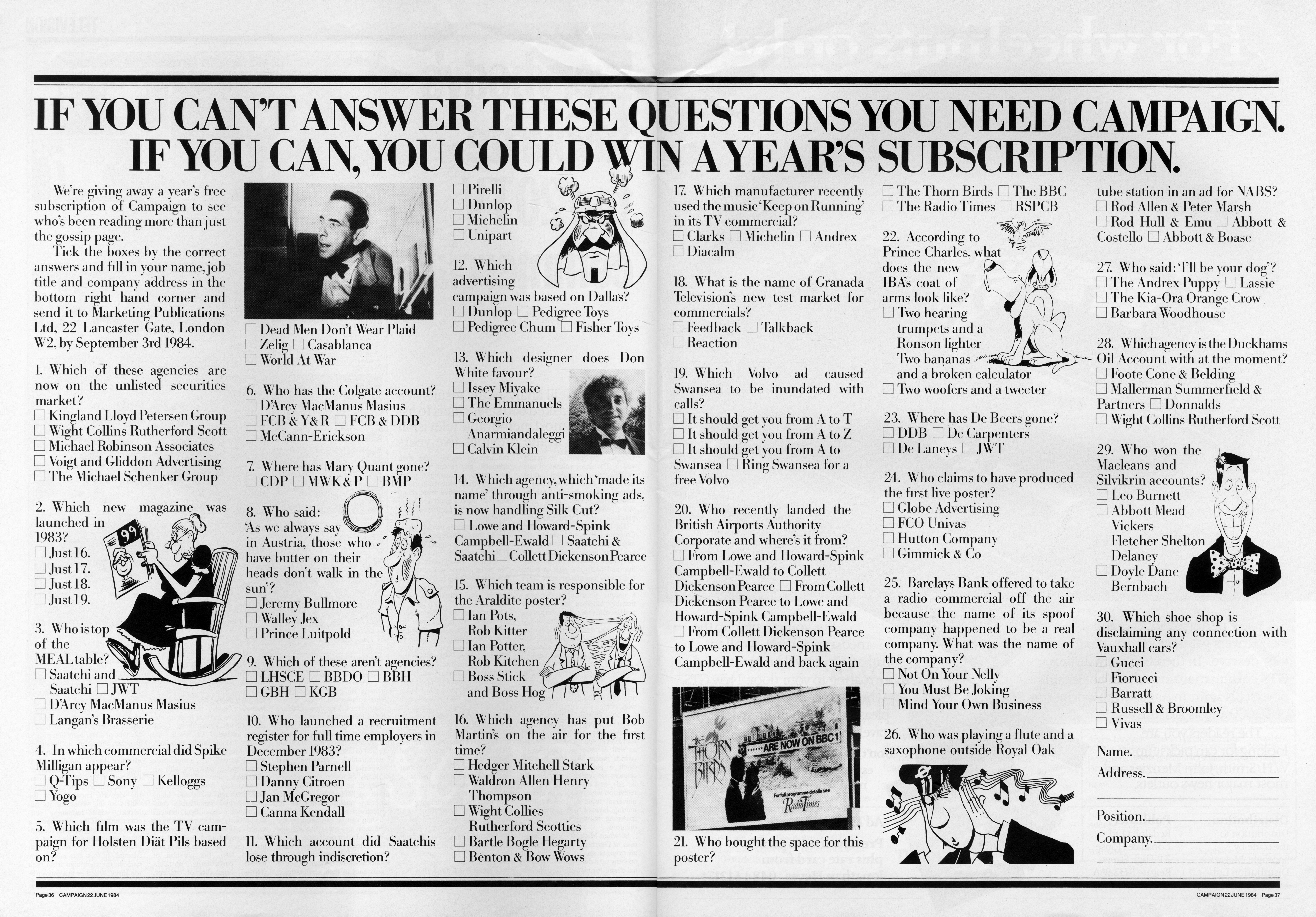
With the occasion foray into the West End to have a catch-up lunch. Over one of them we did the BBH ‘First House’ ad. We also did some ads for Campaign Magazine at the same time, which John Hegarty had organised. We were their agency of choice for a while and I suppose our first client!
Then, suddenly, bang, bang, bang, we had three new clients: Audi, Levi’s and Whitbread.
John then hired himself a writer: Barbara Nokes, and also David Watkinson as a spare writer.
A trip was organised to the Levi’s factory in Bergamo near Milan in Italy, where they made their denim.
This was so automated that there were only about four workers – robots did the rest. It reminded us of the Fiat Strada ‘Built by robots’ commercial.
A trip to Audi was also arranged to their factory in Ingolstat in Germany, where we saw the enormous sign above the main building saying; ‘Vorsprug Durch Technik’.
Mike and I weren’t all that keen on using it as an endline, we thought it spoilt the scripts, but research came in that found consumers thought Audi was built in Belgium, so it then made perfect sense.
Mike and I became almost telepathic. They say that one and one make three, in our case it did.
We started off doing a couple of press ads for Audi, then took over the TV from John and Barbara and managed to get nominated for a D&AD silver for the campaign directed by Barry Kinsman and produced by Alan Taylor.
Mike had the idea of using Geoffrey Palmer has the voiceover, which was a stroke of genius.
We’d started the ‘Chalet’ shoot in Moulin in France, where we had dined at Roger Verge’s restaurant: Moulin de Mougins, then on to Verbier, where there was a rumour that Jerry Judge (accountman) had got off with Sarah Ferguson at the local disco… So from a royalty of Nouvelle Cuisine to a soon to be English Royalty!
Shortly afterwards, we started on the Levi’s brief. At the time, Levi’s had launched a range of Terylene cloths, which really sent them down market.
So we decided they needed to resurrect their original denim jeans story. They were so well made, and we concentrated on bringing this product quality alive.
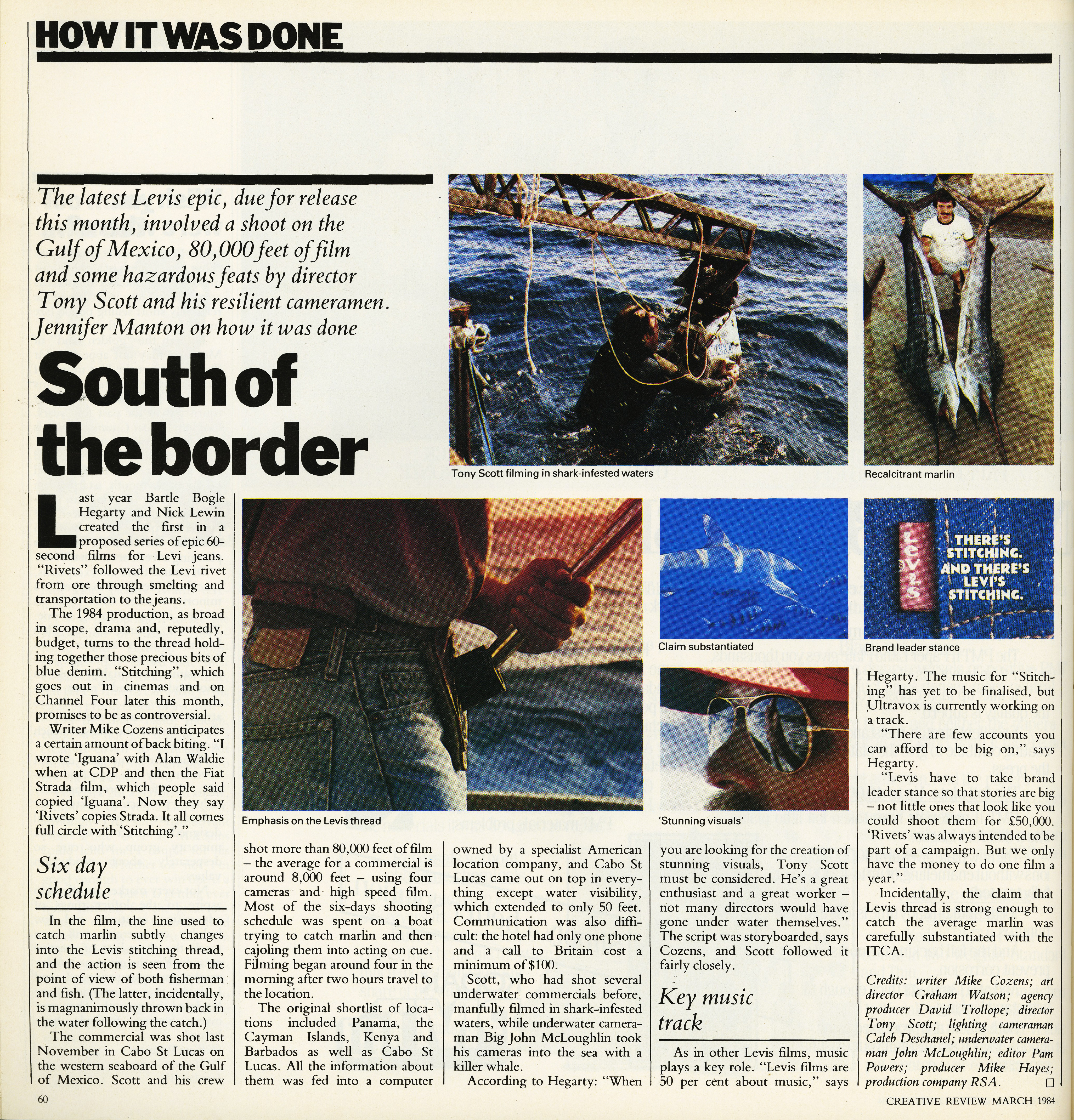
We first featured how well their rivets were made, then followed it up with a story about their stitching.
Mike had a mate who was a fisherman, and we found out the breaking strain of the Levi’s thread was 120lb. Strong enough to catch a marlin.
We filmed ‘Rivets’ in Silver City in New Mexico with Nick Lewin and then ‘Stitching’ in Cabo St Lucas on the Baja Peninsula in Mexico with Tony Scott. Keith Richards of the Rolling Stones happened to be getting married there at the time, so he joined our end-of-shoot party. I think he thought it would be a good place to celebrate his ‘stag party.’
We caught about 32 marlin, but we did have the help of the World Champion game fisherman at the time in the Englishman, Graeme Pullen!

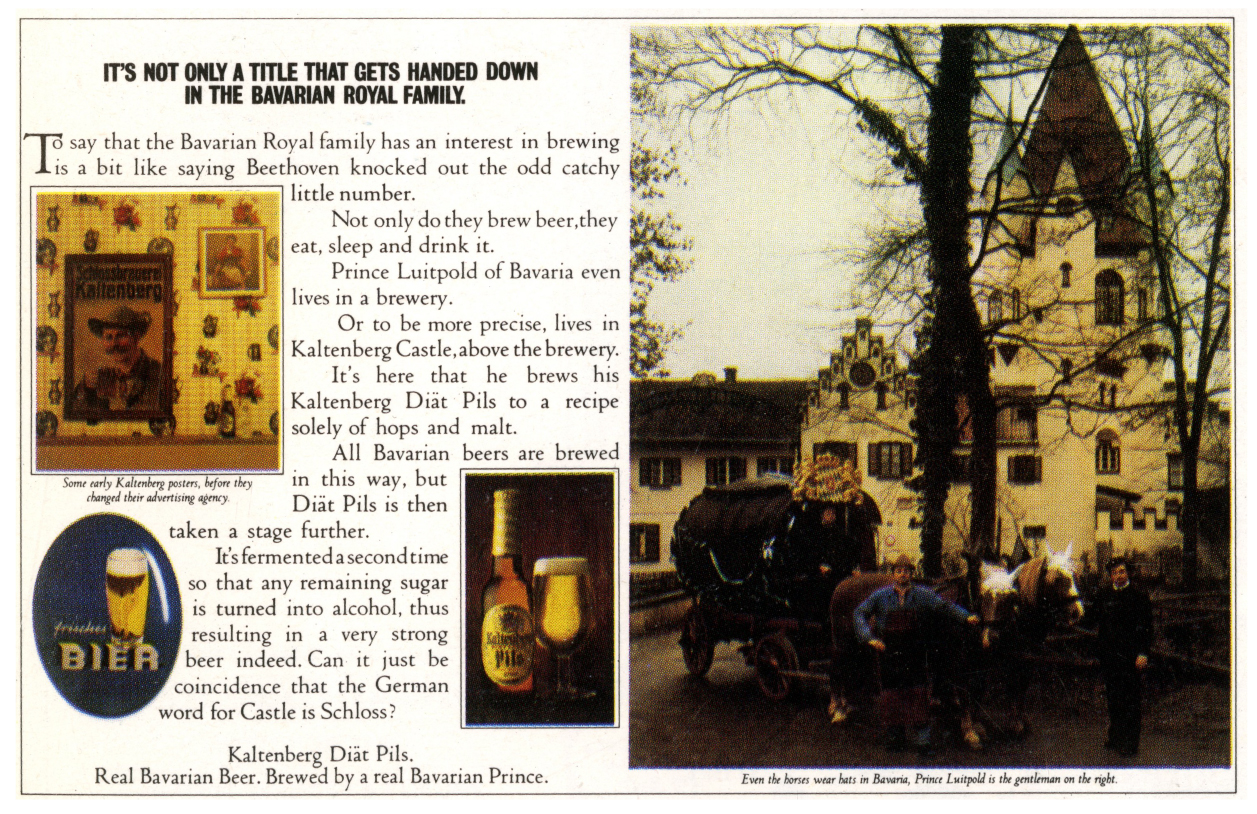
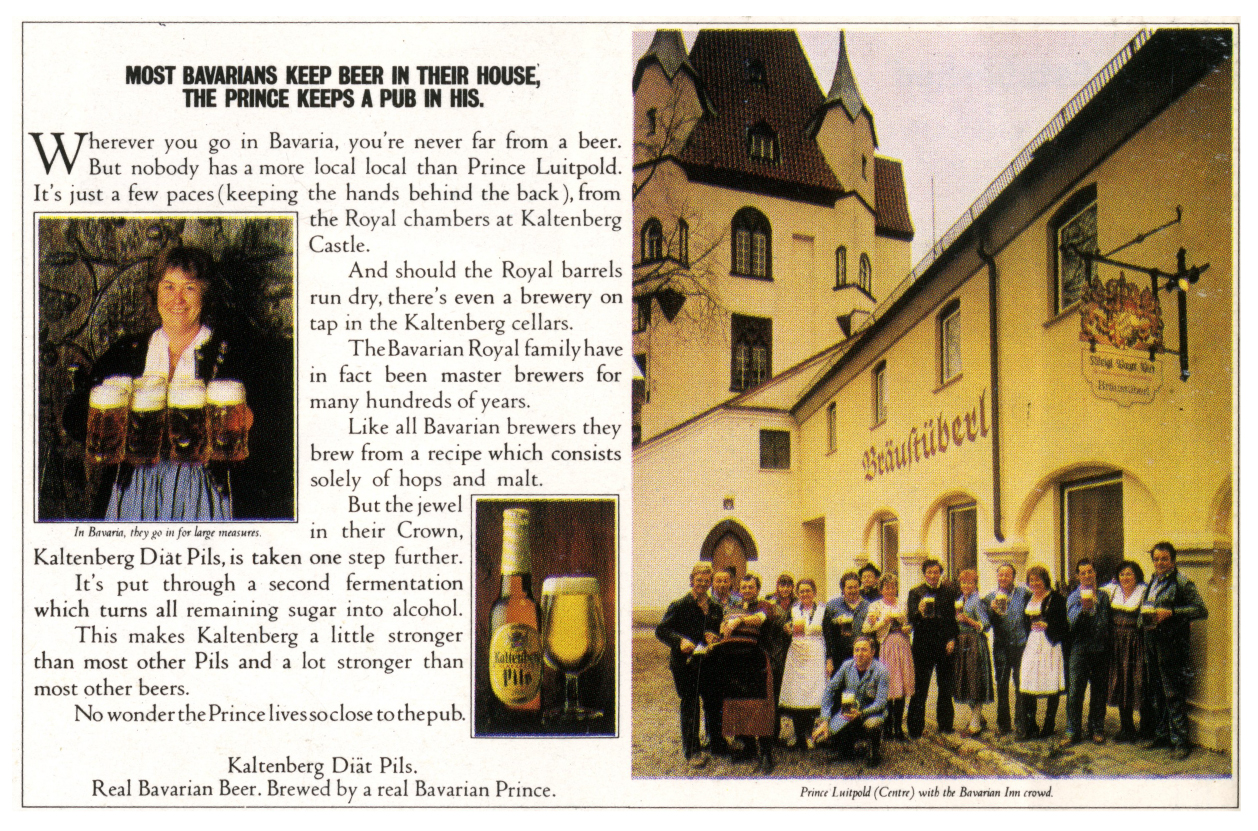
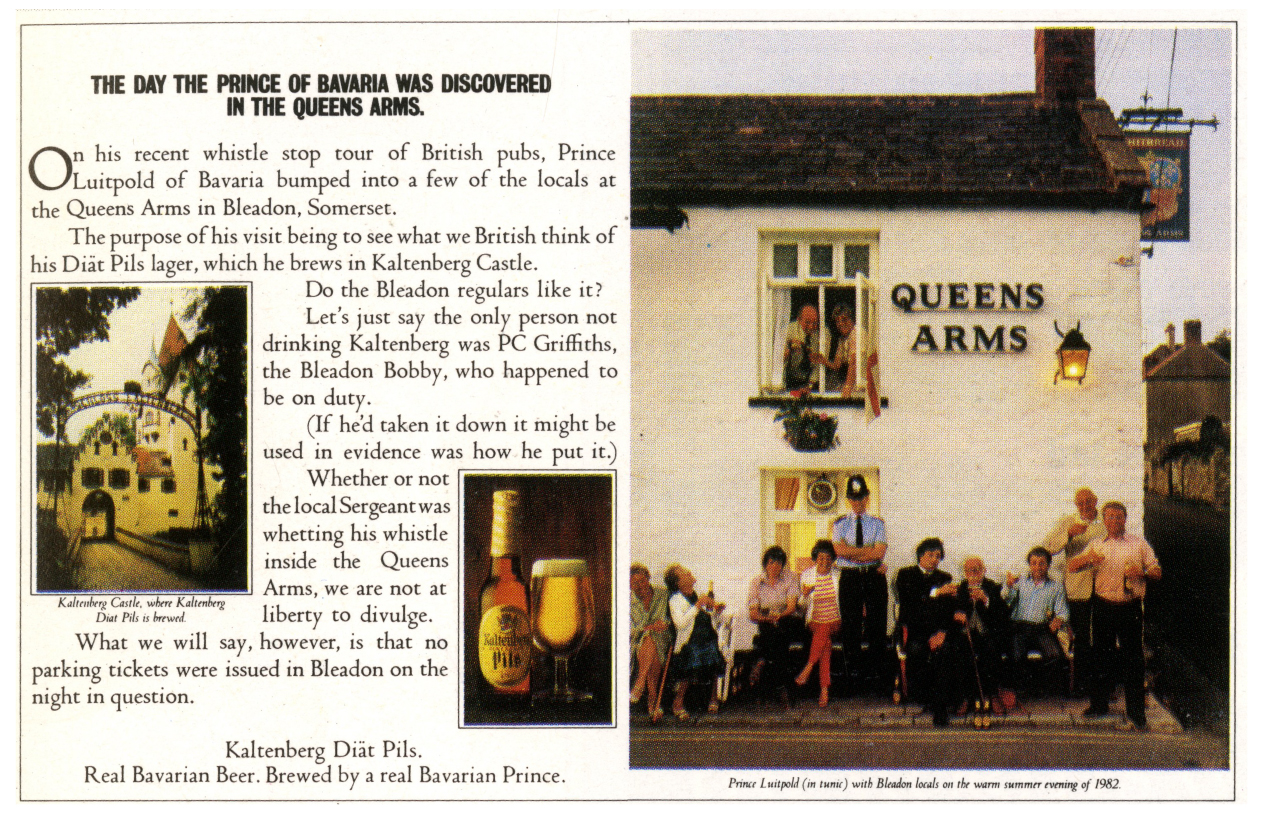
Another trip was organised, this time to visit Prince Luitpold of Baveria (more Royalty) at his Brewery in Kaltenberg, which was pleasantly arrange at the same time as Octoberfest in Munich. We worked out that each of us had consumed 20 litres of beer that day. And no hangovers the next day! Must have been the purity of the beer?
Whitbread had just taken over the license to distribute his Kaltenberg Pils to the UK market. Mike and I then decided to use his Royal connections and photograph him in UK pubs with Royal names. Beautifully photographed by Ken Griffiths.

This became a steady pattern of work, visit the factory and then get briefed.
It happened with Siemens when we visited their microwave factory deep in the Black Forest of Germany.


After a while, Mike started to get itchy feet. He’d been on a lot of shoots and he thought he’d give it a go himself.
As he left, he gave me a small package as a present, with the words: ‘I’m leaving you with the best writer in town’, it was a Mont Blanc pen. I still use it to draw with.
So I teamed up with Chris Herring who was working at FCO and was part of the ‘Boxbusters’ advertising cricket team, which included Alan Midgley and Dave Tyler, old mates of mine. They had recommended him highly.
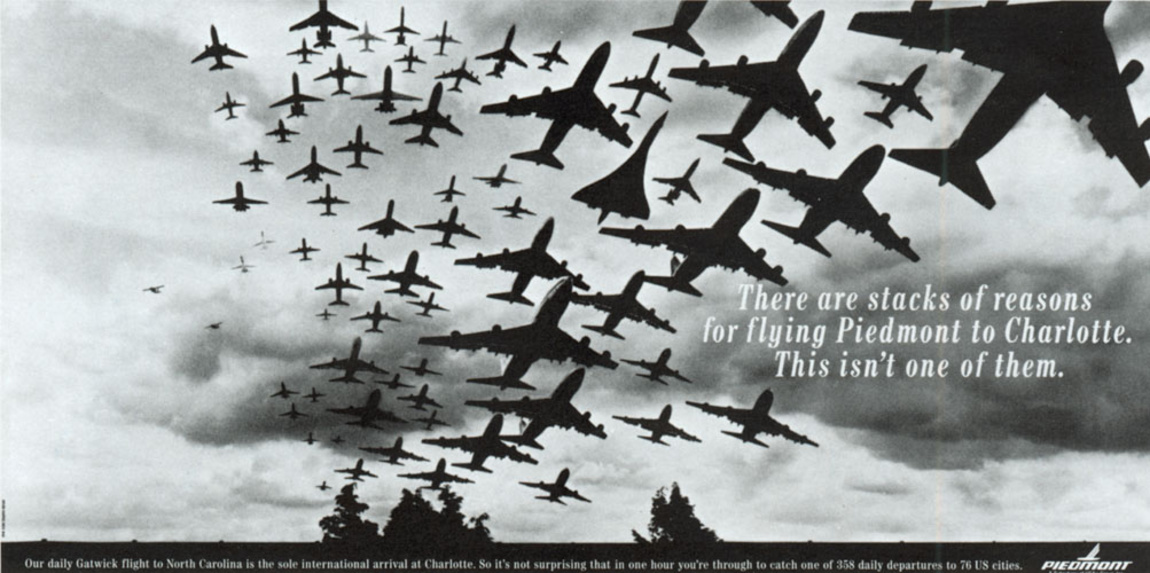
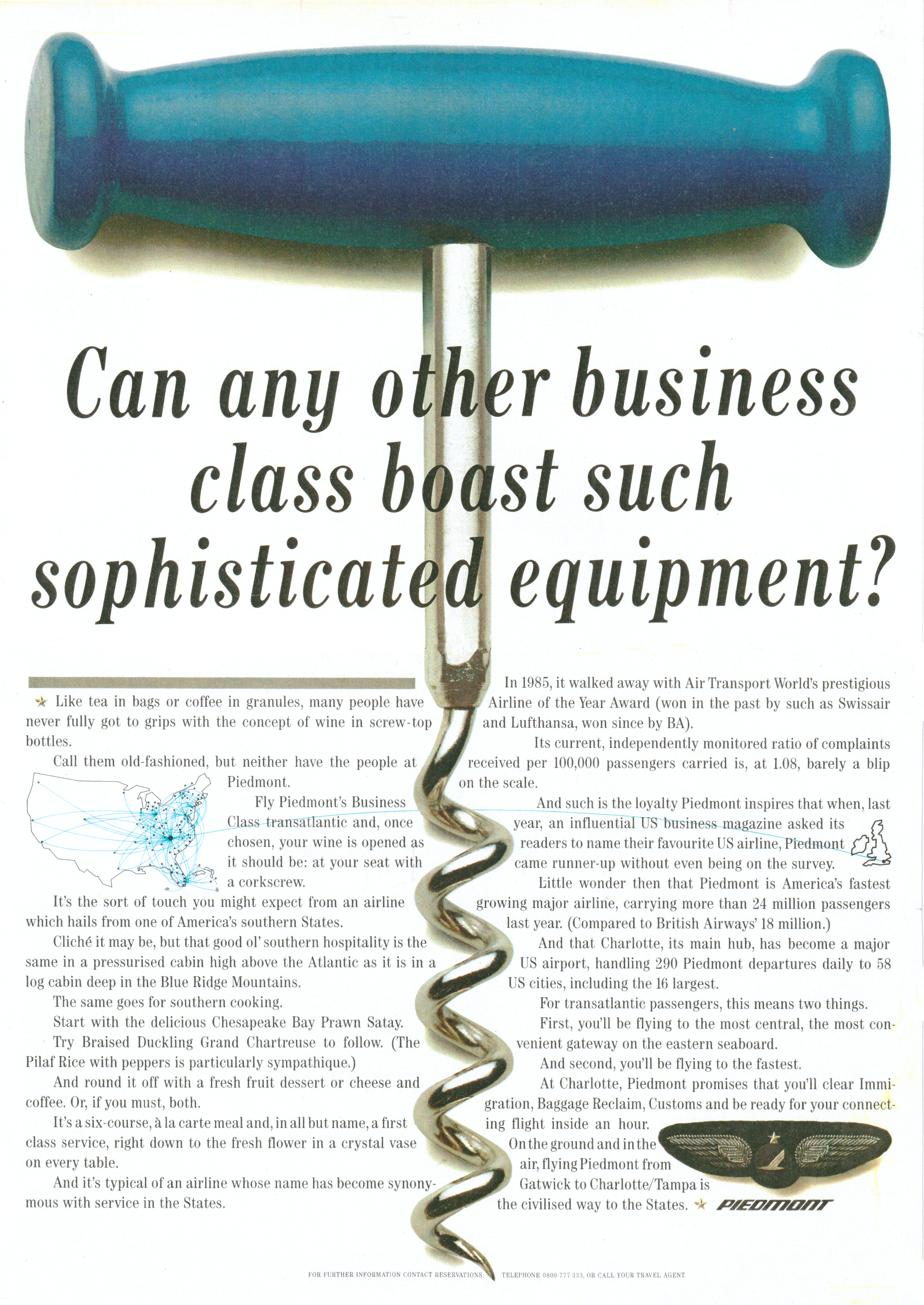
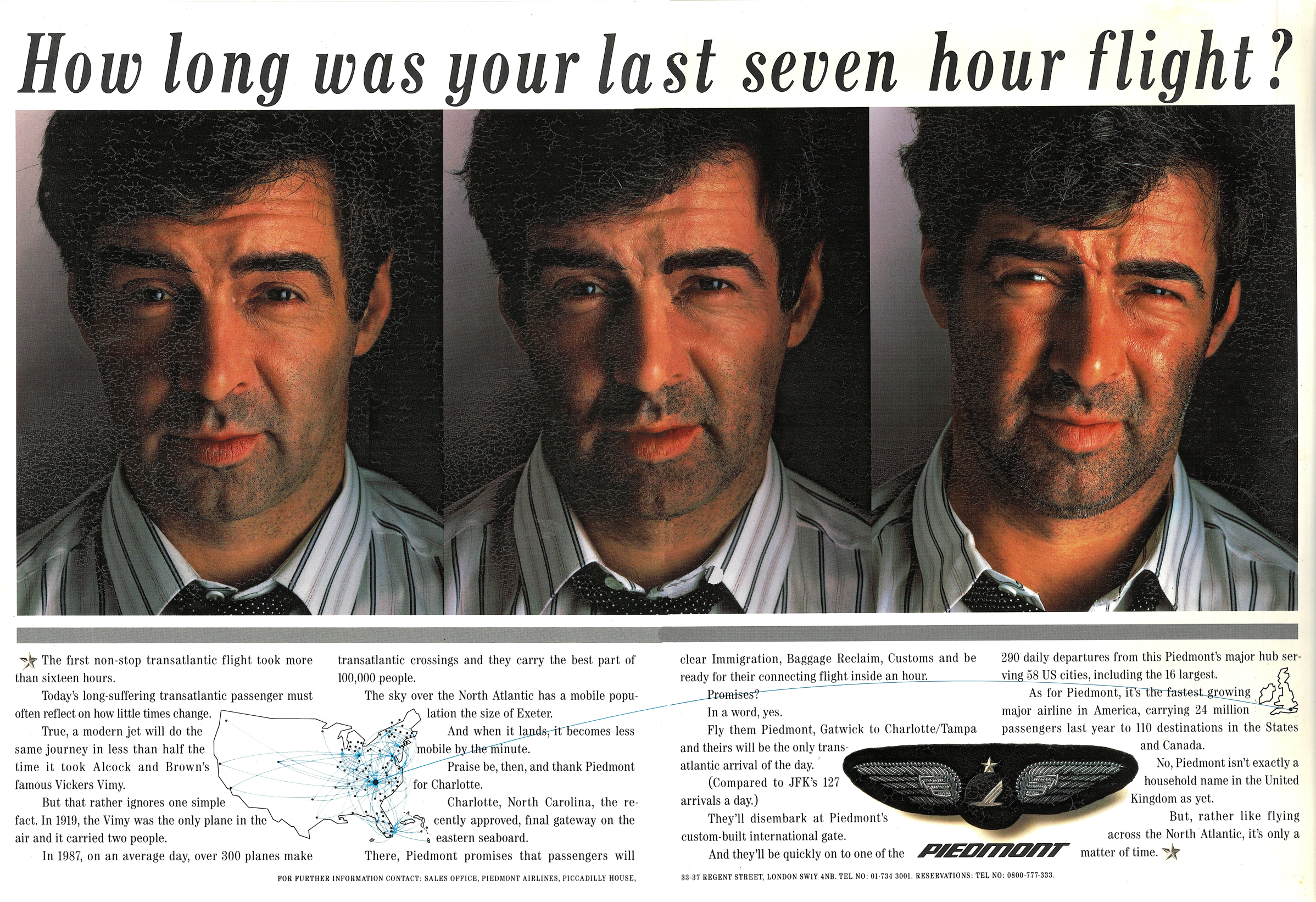
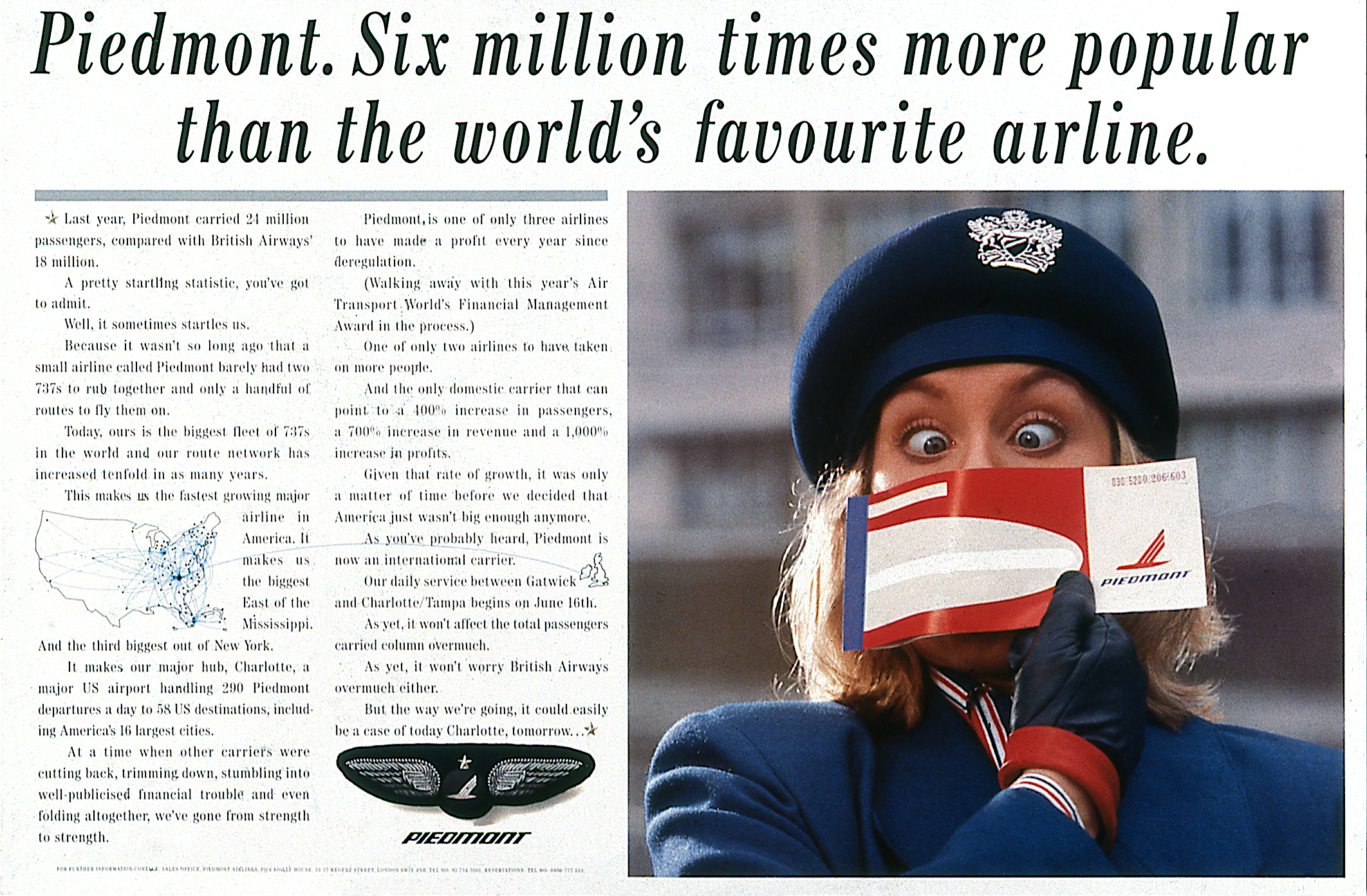
We were immediately briefed on Piedmont Airlines, who had started flying a route from Charlotte, North Carolina to Gatwick.
First thing, a trip to their headquarters. They flew us over to Charlotte, North Carolina and allowed us to fly their Flight Simulator. It was more difficult than we thought, I ran off the runway with my approach. It normally cost about US$20000 an hour to use! Amazing!
But then we got an overzealous client who started to explain the timetable of the airline for about two hours. Someone later asked what I had learnt, and I said I had managed to work out how to fall asleep with my eyes open.
Interestingly enough, my father-in-law, Paddy, had worked with the client, Ron Davis when they were at Pan Am, so we got on really well. The brief was that flying to Charlotte avoided the bottleneck of flying to New York, and with a superb service to boot. On a later trip with visited the Blue Ridge Mountains, which were amazing.
We were then briefed on a Levi’s press campaign, just before I went away on holiday.
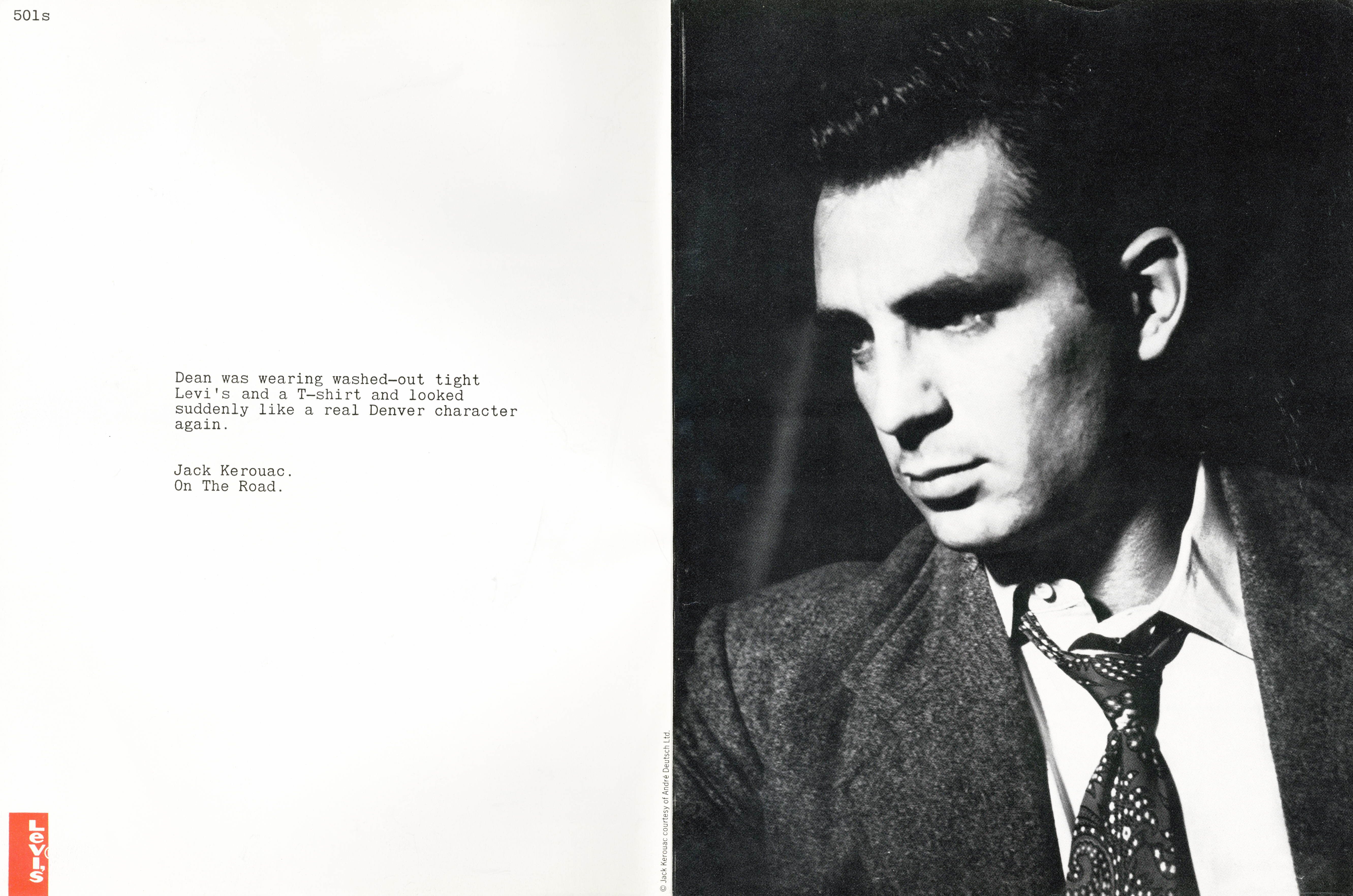
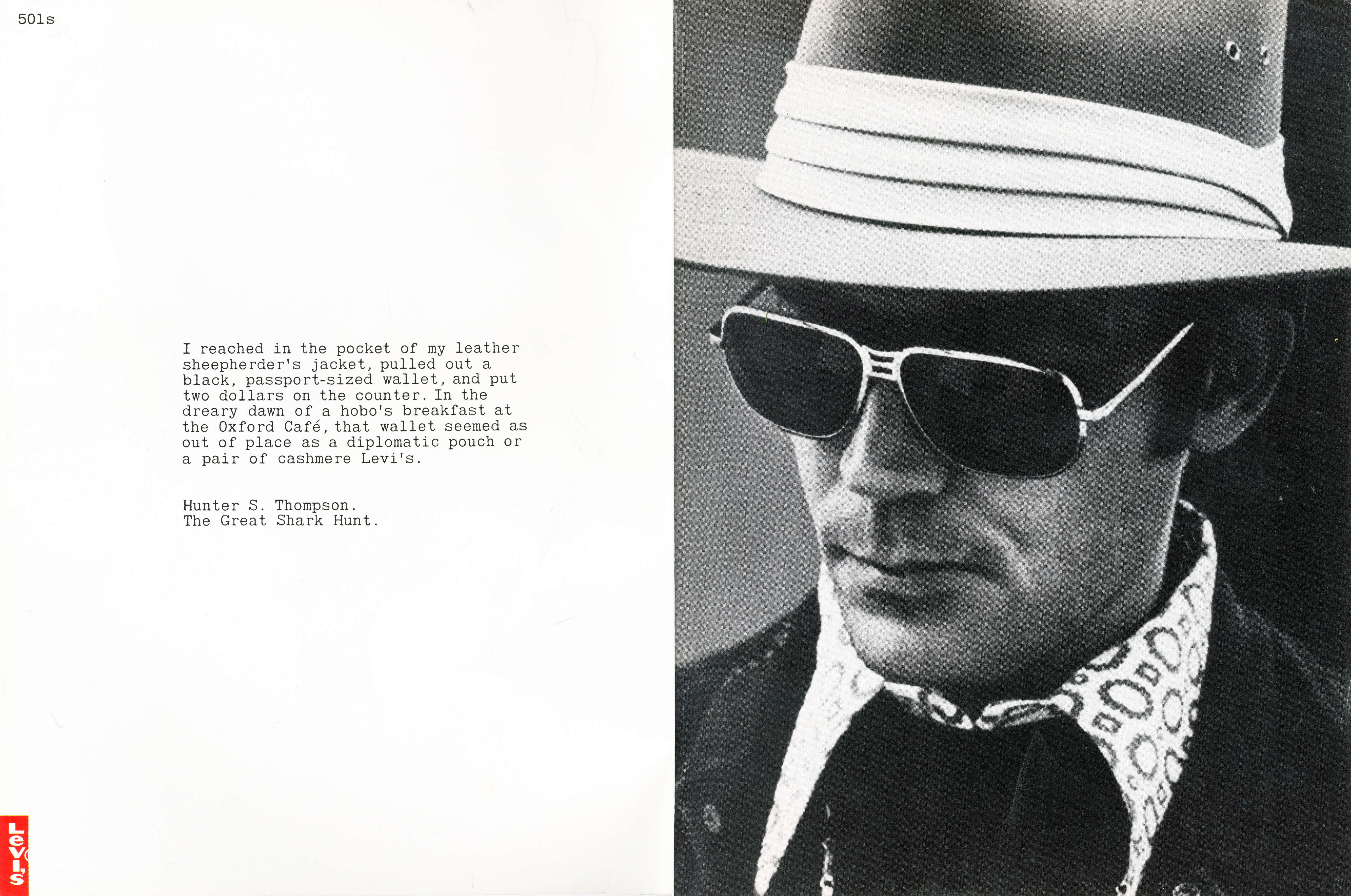
While I was away, I read Jack Kerouac’s “On the road’ and came across a line: ‘he wore washed-out Levi’s and a white T-shirt’. I thought it would make a great campaign, if we could find more reference to Levi’s from other 60’s American authors.
We started reading books backwards in the end (these days you would use an app for the search).
We eventually found about half a dozen examples: Hunter S Thompson, Ken Kesey, Raymond Chandler, William S Burroughs (too many swear words!), even a Johnny Cash song lyric.
The campaign was nominated for a silver award at D&AD.
Nigel Bogle liked it so much that he arranged for us to fly to L.A. to interview a wardrobe designer who had worked on the film ‘Misfits’. The designer confirmed that Marilyn Monroe had worn Levi’s on the shoot.
I mentioned to Nigel that Eve Arnold, who I’d worked with at CDP had taken all the stills on the film. So I organised to have lunch with her in New York on the way back. Over lunch she was very adamant that she thought Marilyn Monroe had been too exploited and refused to let me use any of her photographs, but she did organise for me to meet Kurt Vonnegut and his wife, Jill Krementz, who was a photographer, at their Brownstone house in upper Manhattan. Amazing experience!
Jill even offered to let me use some of her photos of the famous authors she had taken when they had visited the house.


Chris and I were then briefed on a cinema commercial for Speedo, no factory visit, but we did get briefed in a jacuzzi, wearing the swimwear. Just to give us a feel for the product.
Chris was a very talented writer, but if he got any negative comment, like, for instance, when John Hegarty turned down two of our early scripts, he then took a bit of getting motivated again. He became busy writing ‘Boxbusters’ cricket reports. After a couple of weeks, JH came into our office and asked about the new script.
I suggested he gee us up a bit and all three of us worked together for a couple of hours.
We did come up with an interesting idea based on the 0.001 second scenario, (Speedo had tested the swimwear in an Olympic Pool in Belgium and had worked out that swimmers were 0.001 second faster in them), where a swimmer escaped a shark by an extra foot!
We wrote the idea up and John went away on holiday.
At the back of my mind, I thought we could beat it, so I worked all that weekend trying to find something better. I came across a photo in a Japanese book of photography, of a girl on a bike underwater. And I thought she’s not going very far.
So Monday morning I showed it to Chris and he wrote the end line: ‘Cut to cut through water’.
Barbara Nokes was acting creative director and we showed her both scripts. She preferred the ‘Seabed’ one and it was presented to the client.
When John got back from holiday, he queried the new script, but accepted it had been sold to the client. It went on to win two silver awards at D&AD!
Then we were briefed on a Speedo press campaign with the aim of showing more of the different styles of swimwear, but Chris then decided to leave the agency, to work at Lowe’s, so I was working by myself.
I had an idea of showing a swimmer, but there was no water in sight. In the Yorkshire Dales there are rivers that disappear, because of the porous limestone, and it leaves a dry riverbed. I’d been up there walking often and seen it myself. That was the starting point, but I need a line. I was in the pub again over lunch and I was having a drink with Peter Russell and mentioned it to him. We then came up with the line: ‘Just add water’.
The problem was that Peter then went back to the agency and told his art director, Marcus Vinton, who started drawing up the idea.
Next thing I know is when John Hegarty came in to see me and said drop that brief, because Peter and Marcus had cracked it. I showed him my roughs and said I’d just mentioned the idea to Peter in the pub. He said I should concentrate on getting a new writer and give them a chance as a junior team to finish the job off.
No way! I was so pissed-off, when it came to the shoot, I took a week off work as holiday and flew to Las Vegas at my own expense, and caught up with Marcus and Nadav Kander at the start of the shoot in Death Valley.
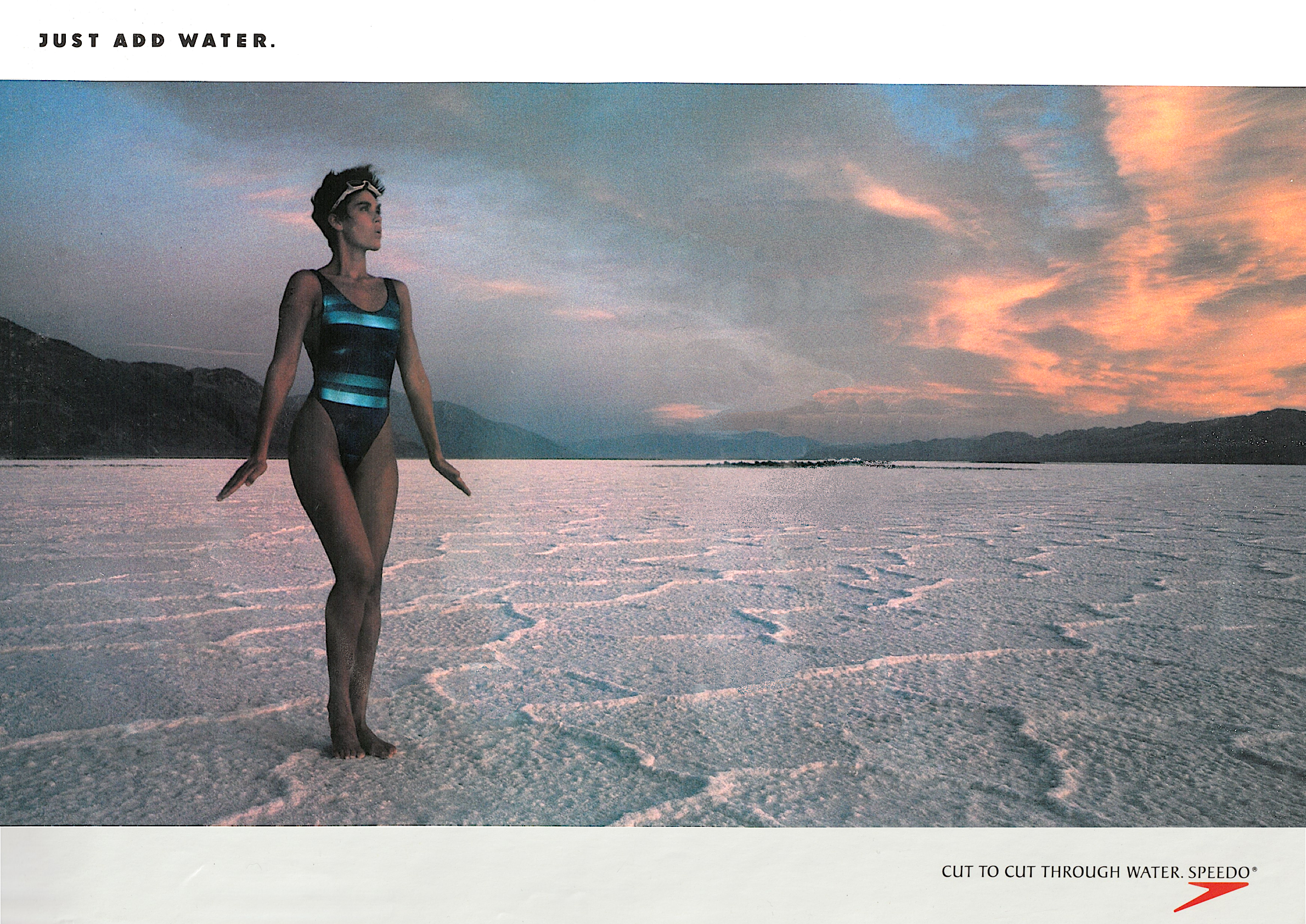

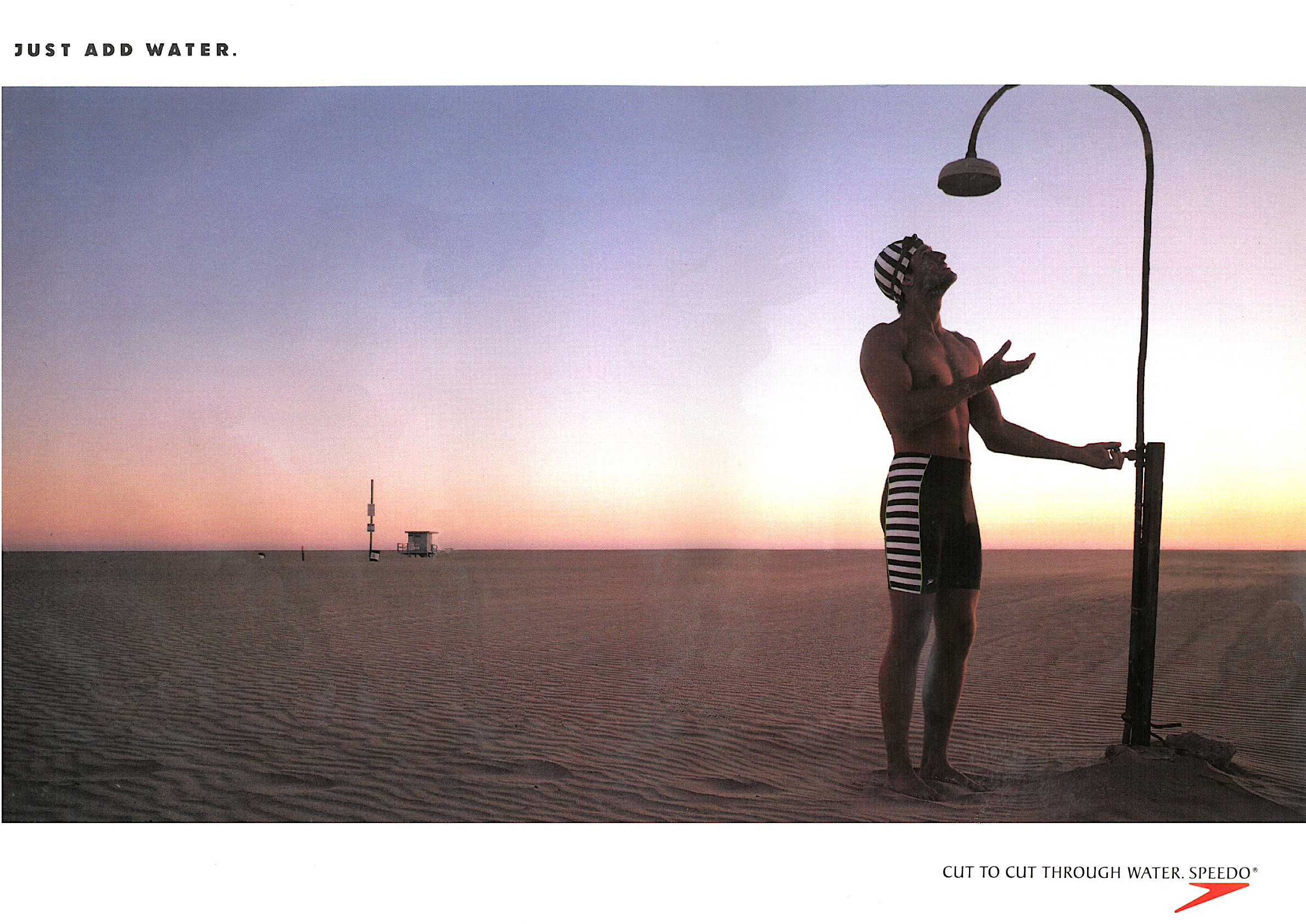

We actually improvised a couple of the shots whilst we were there, like the sign that say: ‘sea level’. 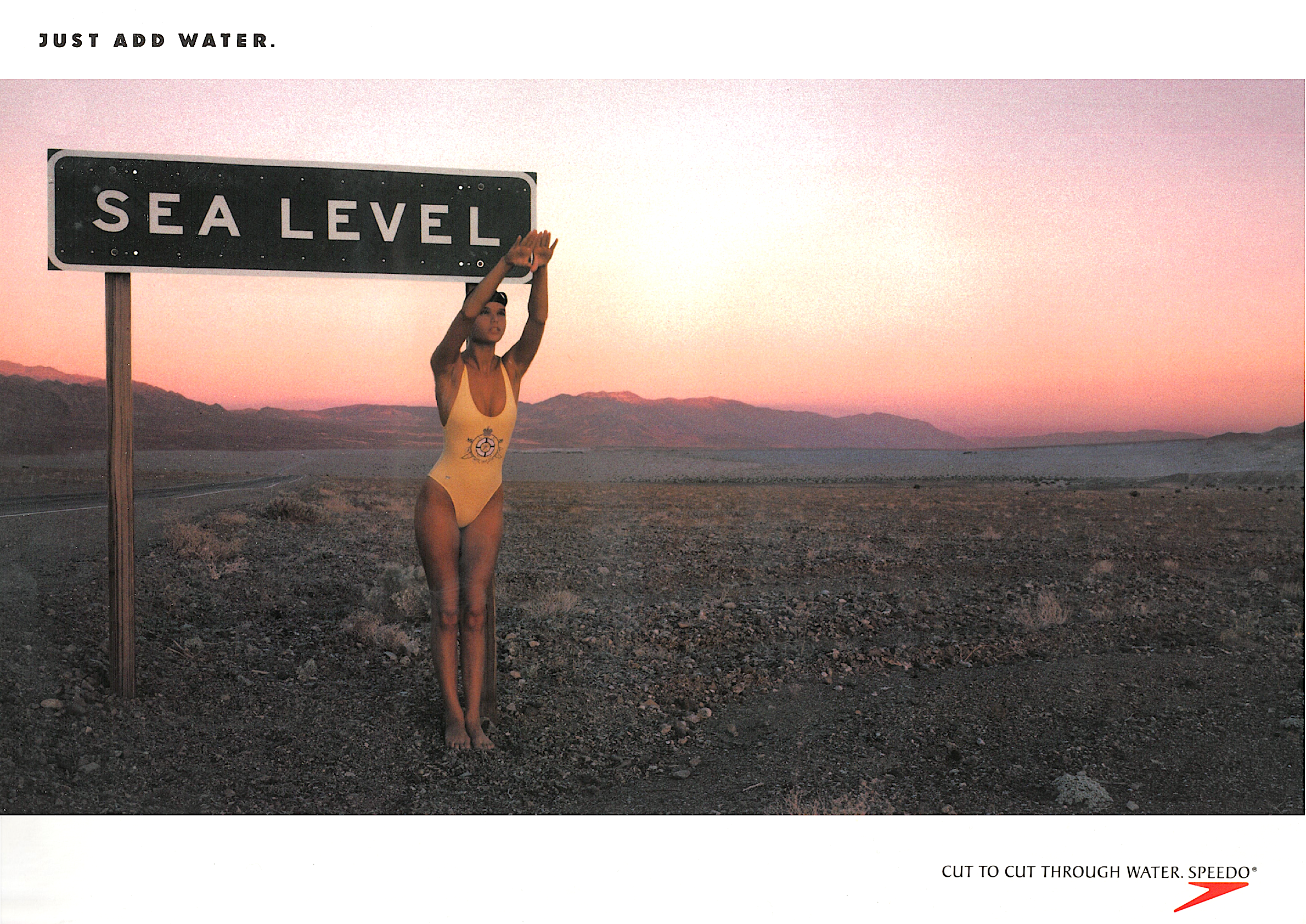 And emptied the swimming pool in Beverley Hills.
 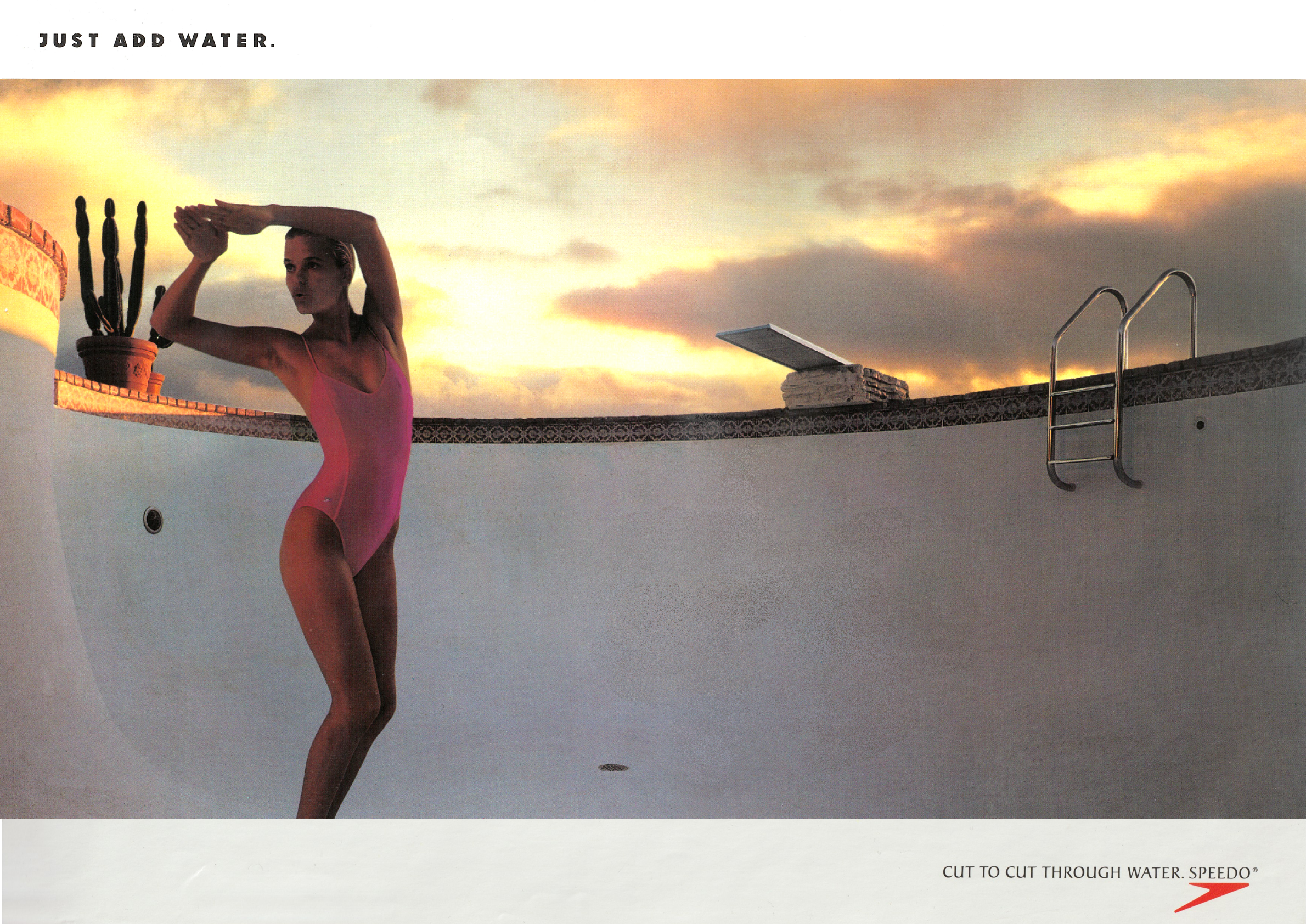 After all that, the ads didn’t even get into the book!’
Audi.


The exception to the factory visit rule, was the first Murphy’s commercial: O’Molloy’, which Mike and I did.
We didn’t have time to do a brewery visit, but we did keep the ‘Irishness’, by filming in an Irish bar in New York.
This was a great shoot, being paid to reccy the Irish Pubs of New York: McSorley’s Old Ale House, Pete’s Tavern (where we filmed), The Old Town Bar, O’Donnell’s Sports Bar, to name a few! (A year later, Rooney Carruthers and Larry Barker filmed a similar story for Cathrey’s in The Old Town Bar.)
After Chris left to work at Lowe’s, we then heard that Mike Cozens wasn’t too happy with the Directing route, mainly because he didn’t like many of the scripts he was being given. So we managed to persuade him to come back and work with me again.
We were immediately given a new brief for a Levi’s commercial. And wrote the ‘Pick-up’ script, featuring an updated version of the two-horse test which is on the back label of the jeans, which we filmed with Paul Weiland in the desert in California.
It got in the book, but actually won the best International TV commercial that ran in Italy. I ended up on stage at the awards in Milan with Sylvester Stallone (Best International actor) and Ruud Gullit (Best International Soccer player)!
Will Awdry sent me a lovely tribute he’d written about Mike and I as a creative team (https://willawdry.blog/2020/09/23/watson-and-cozens/).
Mike was then offered the Creative Directorship of Y&R, so I then again tapped into the FCO creative pool and hired Bruce Crouch as my writer. He’d actually worked with Warren Brown at DDB, and I knew Warren from BBH.
While I was waiting for Bruce to arrive, I did a campaign with Barbara Nokes for the Brewer’s Society. There was a movement around threatening to close down old pubs and this was to counter it. This is when I first met George Underwood, the artist who did the decapitated pub signs.
He became a great friend and used to come on our painting trips. He’s a really good artist. He’d been at Bromley Art School with David Bowie (David Jones), and he played rhythm guitar in the David Jones quartet. He once had a fight with Bowie, when they were about 16 years old, and hit him in the eye over a girl and that was how Bowie ended up with two different coloured eyes!
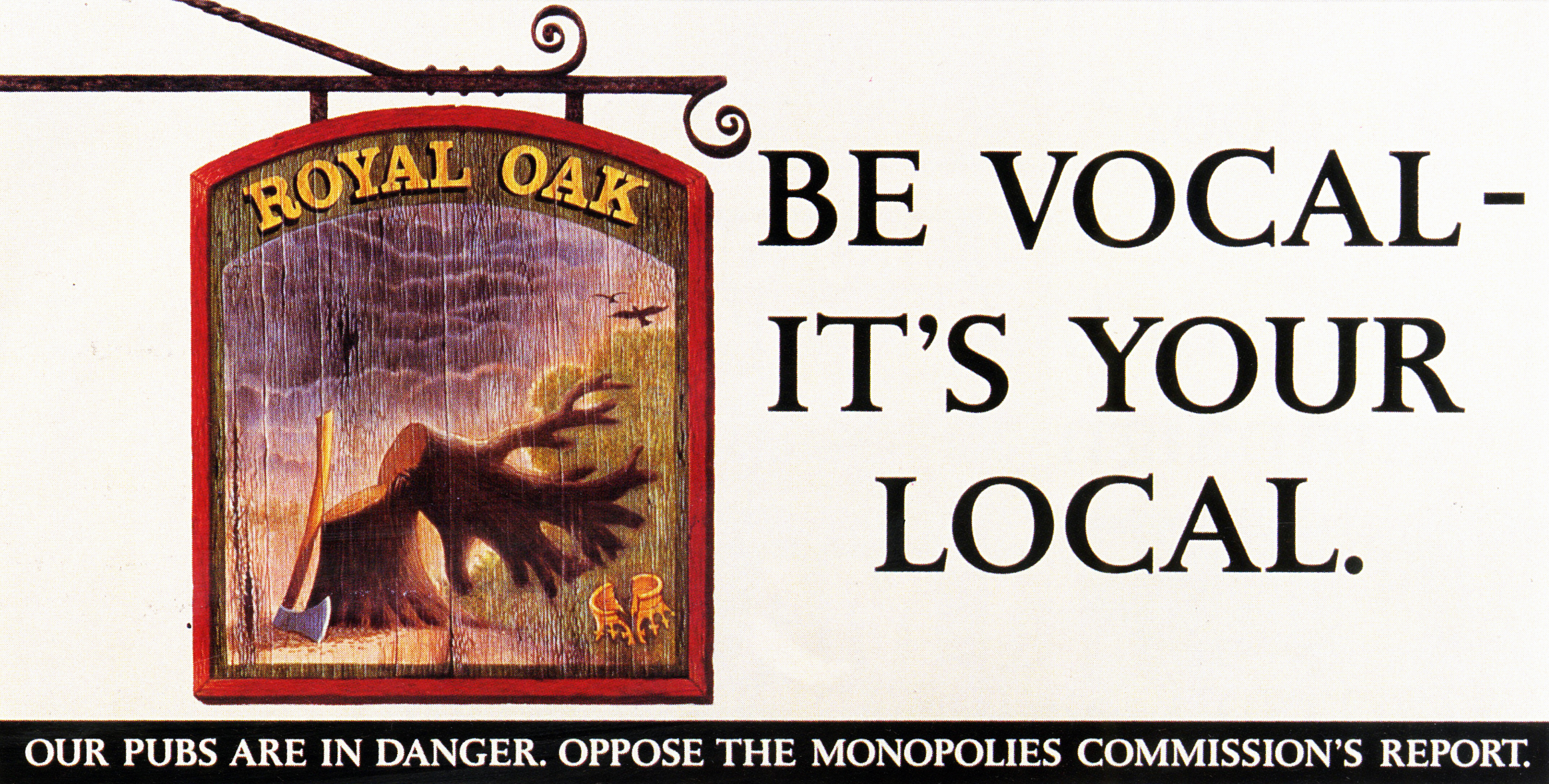


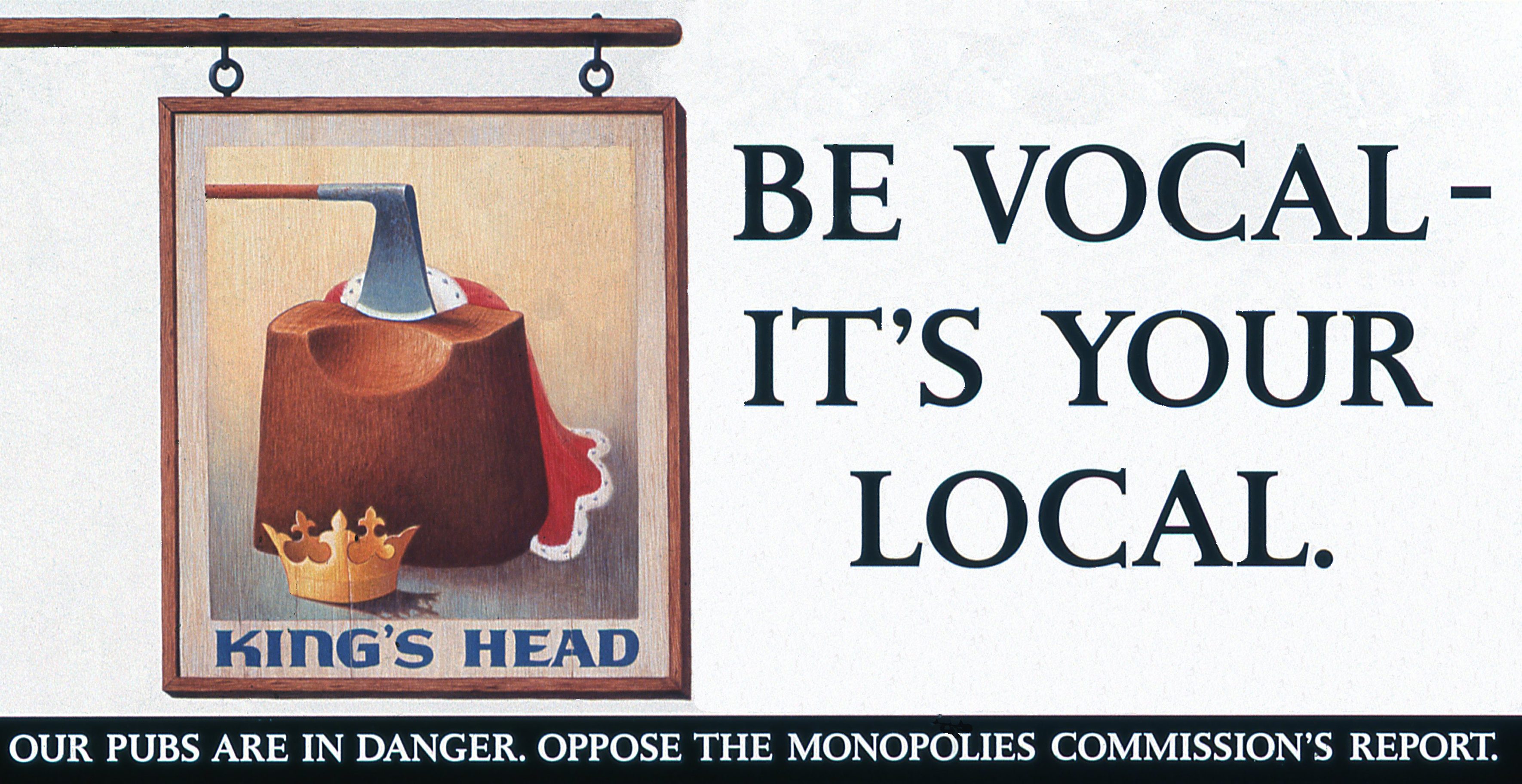
Bruce and I started off being briefed on an International Levi’s press campaign, and we thought we would try and keep it as simple as possible and produced concepts that were factual for the translation issues, and we did a mad visual campaign, that actually got into the book.
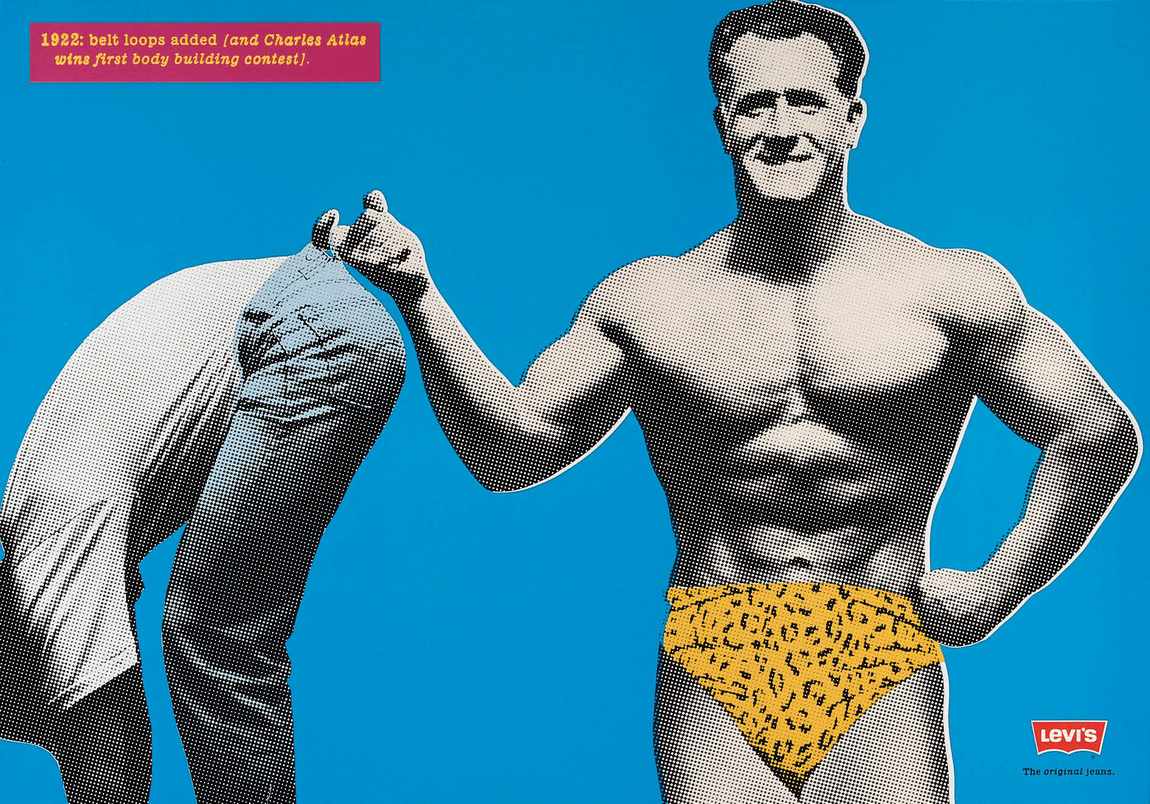
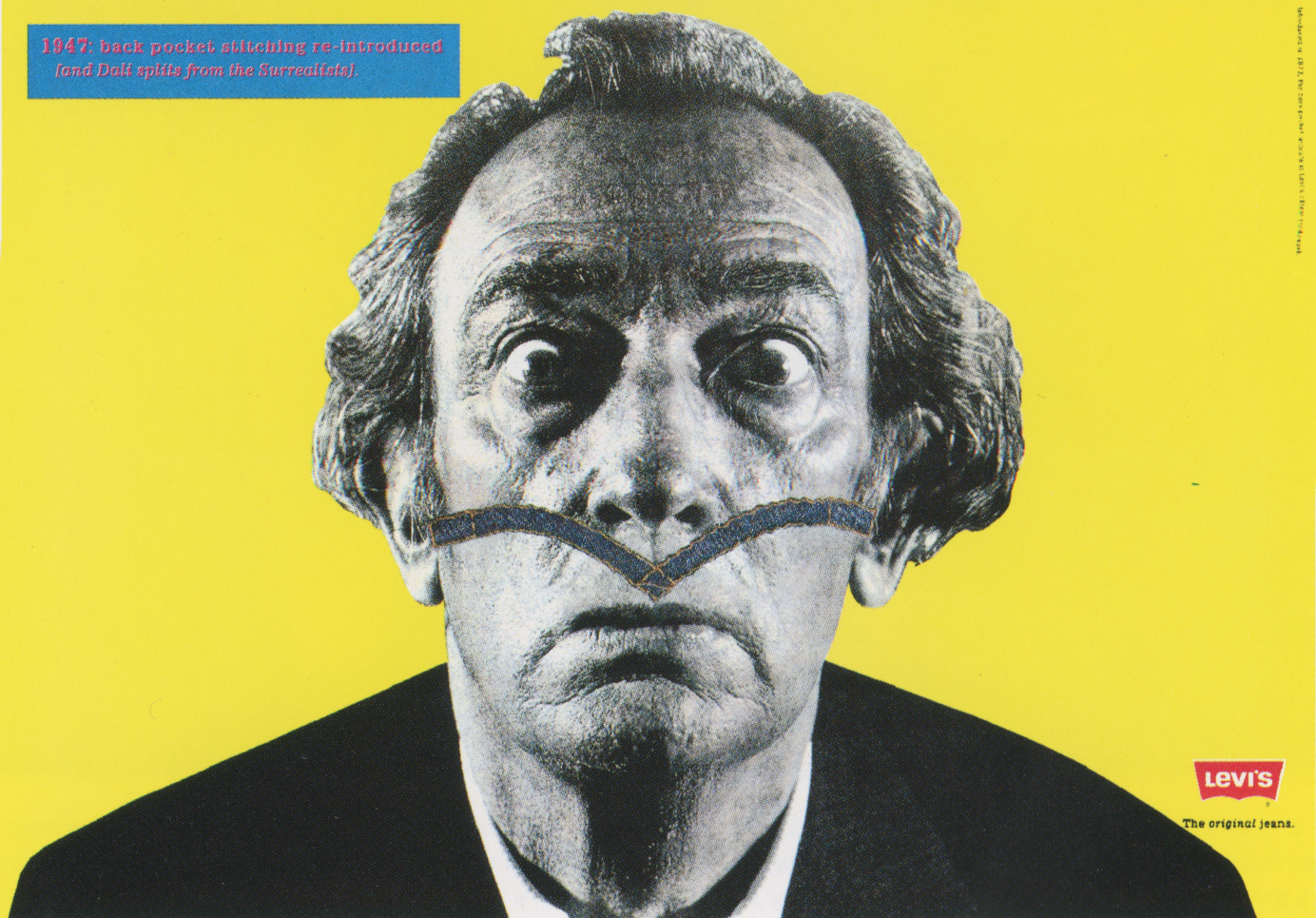


Unfortunately, these two didn’t run.
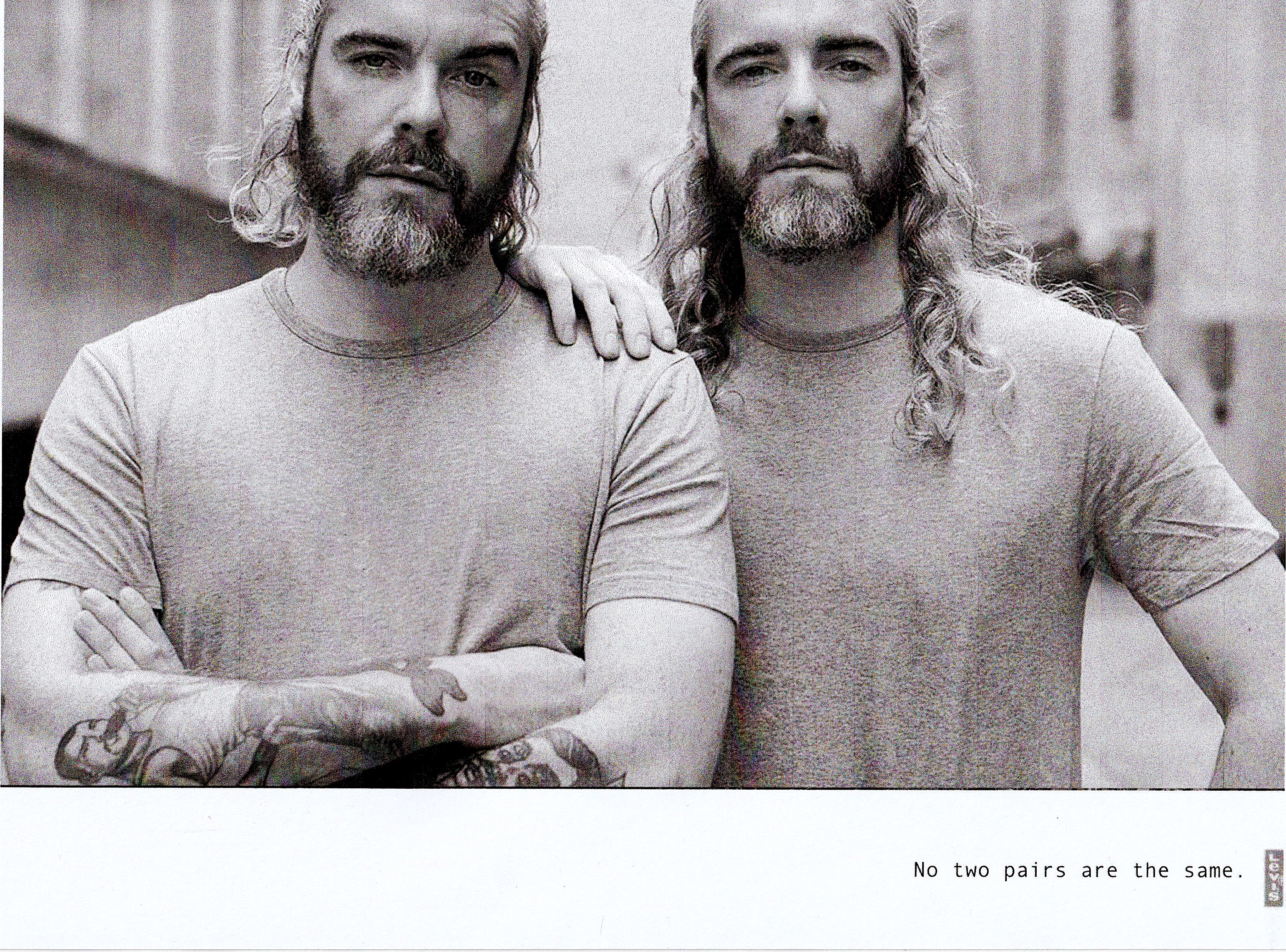

Bruce and I were then briefed on a campaign for Natwest Bank. This was partly because I knew the client, Ian Scholar from my days at CDP, where he was an account man.
It was a difficult brief that had to work across all the divisions of Natwest – banking, mortgages, loans, etc. I was a bit reluctant to work on it, but John Bartle persuaded me ‘for the good of the agency’.
We decided to create a family who would bridge the gap, and have them move from the city to the countryside.
We hired Richard Loncraine to direct and cast Timothy Spall as the father, because of his dry sense of humour.
We filmed three teasers commercials in black and white to establish the family, which worked really well. Father, mother, and the three kids, including a teenage daughter, and we became a bit more excited about the project.
Then, disaster struck, Timothy Spall was diagnosed with Leukemia and he had to abandon the shoot.
We re-cast with another actor, but he didn’t quite live up to Spall’s performance.
We ended up shooting about 12 commercials over a two-year period. They were entertaining, but I did say to Bruce, at the time, that we weren’t going to win any awards with them and we should concentrate on doing a charity ad in-between just in case.
So we did the ‘Bed and Breakfast’ commercial with Roger Lyons, which got into the book. Sadly, Roger died in an accident on a shoot in Italy not long afterwards.
Bruce and I did finally do a to the Murphy’s brewery in Cork, to taste the difference between the three competitors: Beamish (sweet), Guinness (bitter) and Murphy’s (in between).
I was on an Audi stills shoot in Cornwall and got a phone call from John Hegarty to say get straight over to Cork, so I had to fly from Bristol Airport to Dublin, then onto Cork.
I couldn’t believe people were drinking alcohol at 9am on the flight. That’s the Irish for you!
We knew we were in for a bit of a night, because there were five of us from the agency and six from the client side. We lost our taste buds around midnight, but the next morning, the Head Brewer at the Brewery explained the difference, and when he said Murphy’s wasn’t as bitter as Guinness, Bruce and I looked at each other and said: “Like the Murphy’s, we’re not bitter.”
That was the start of a multi-award winning campaign. We wrote the script first, then, started on the press. We thought we would do a re-make of ‘The Commitments’ for the TV. And low and behold, we had to go to Los Angeles on a Swinton Insurance campaign, where we were making another re-make, this time using the studio of Hanna-Barbera and starring Fred Flintstone. What a privilege. We were shown around the studio where they were still painting on cels. They were so chuffed that we were resurrecting The Flintstones.
We were staying at the Mondrian in West Hollywood and when we went down for breakfast the next day, who’s sitting on the next table, but Alan Parker and his partner, Lisa Moran. We had a good reminisce about the old times at CDP. Then I asked him if he still shot commercials? He said it depended on the script and the location.
We contacted him later with our Murphy’s script, when it had been approved. He agreed to do it only if we filmed it in Ireland. No problem!
We also filmed Lady Penelope from Thunderbirds for Swinton Insurance, she took out the roller, because the chauffeur had the day off and she caused a massive crash. Gerry Anderson, on day one of the shoot, told us to come back in a couple of days time, when he would be shooting the explosion. He said that would be the interesting bit!
The Murphy’s press was a bit more difficult, we had the ideas and I had drawn them up with big heads, because I’d always been a fan of Gerald Scarf and his caricatures.
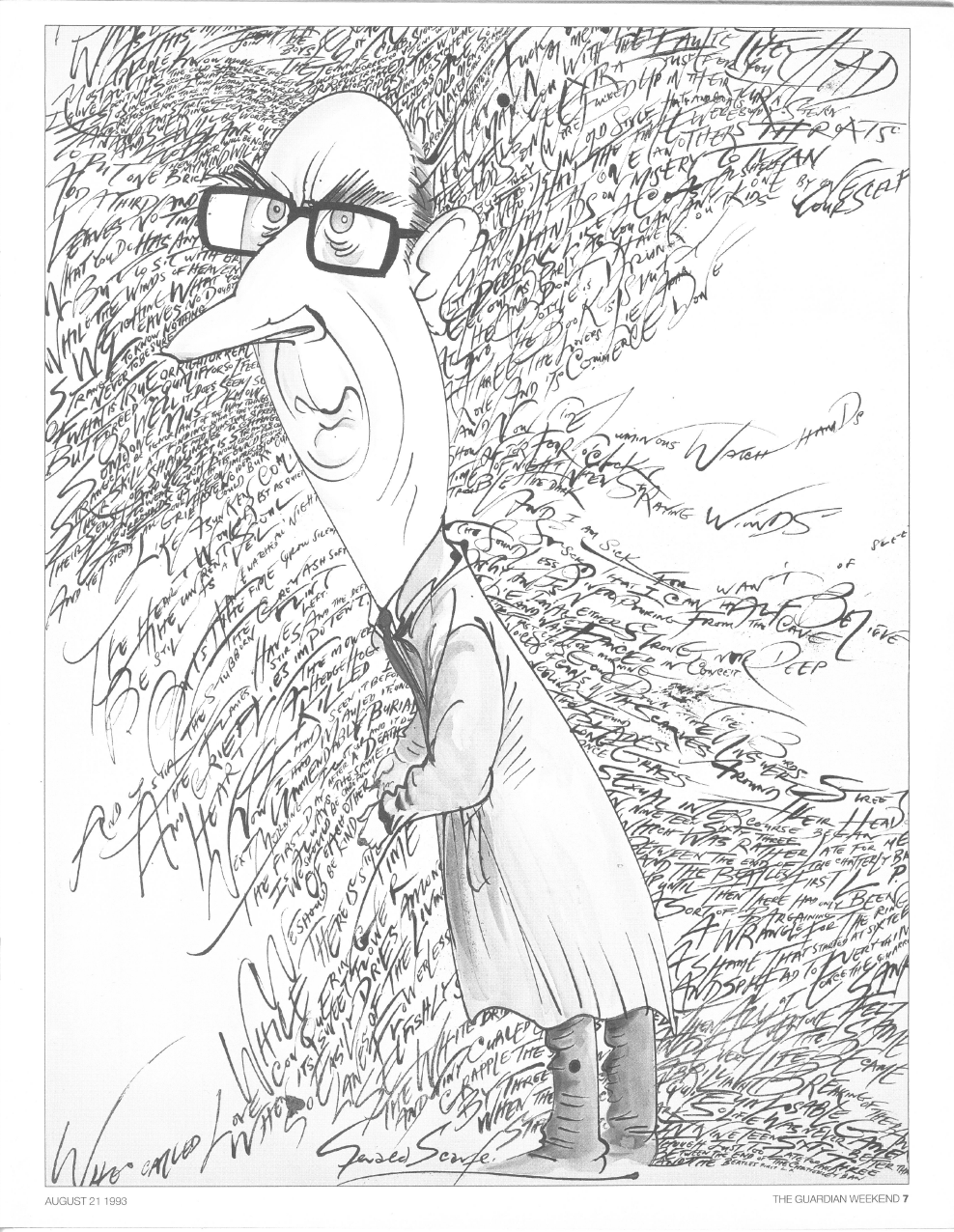

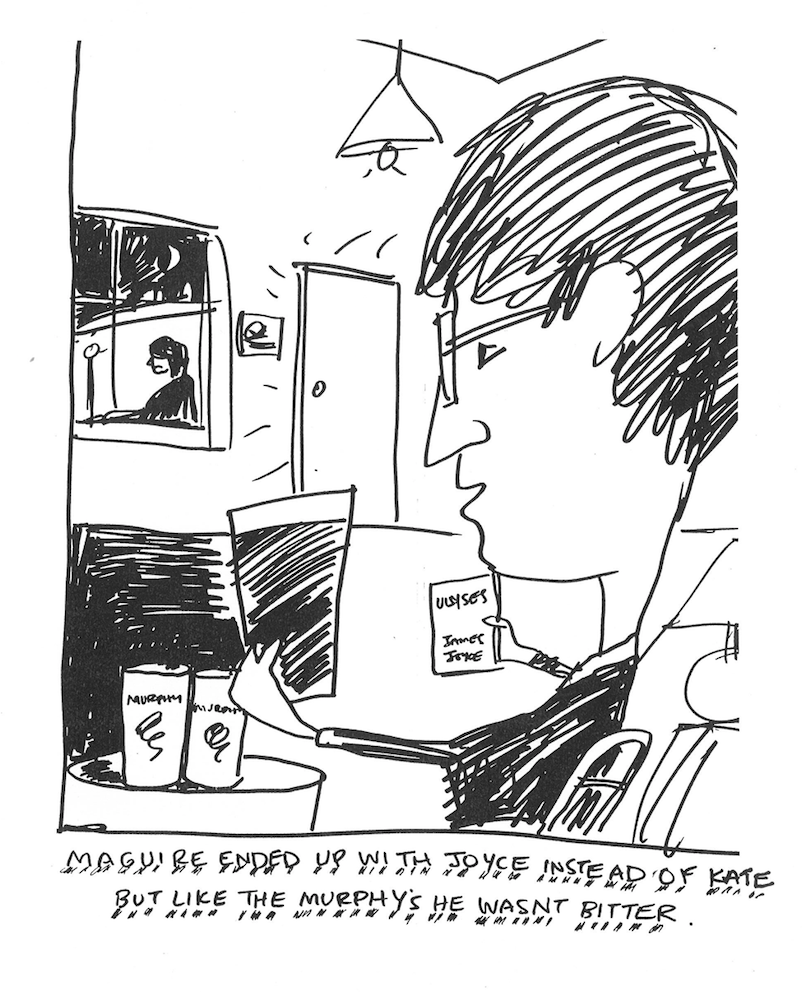
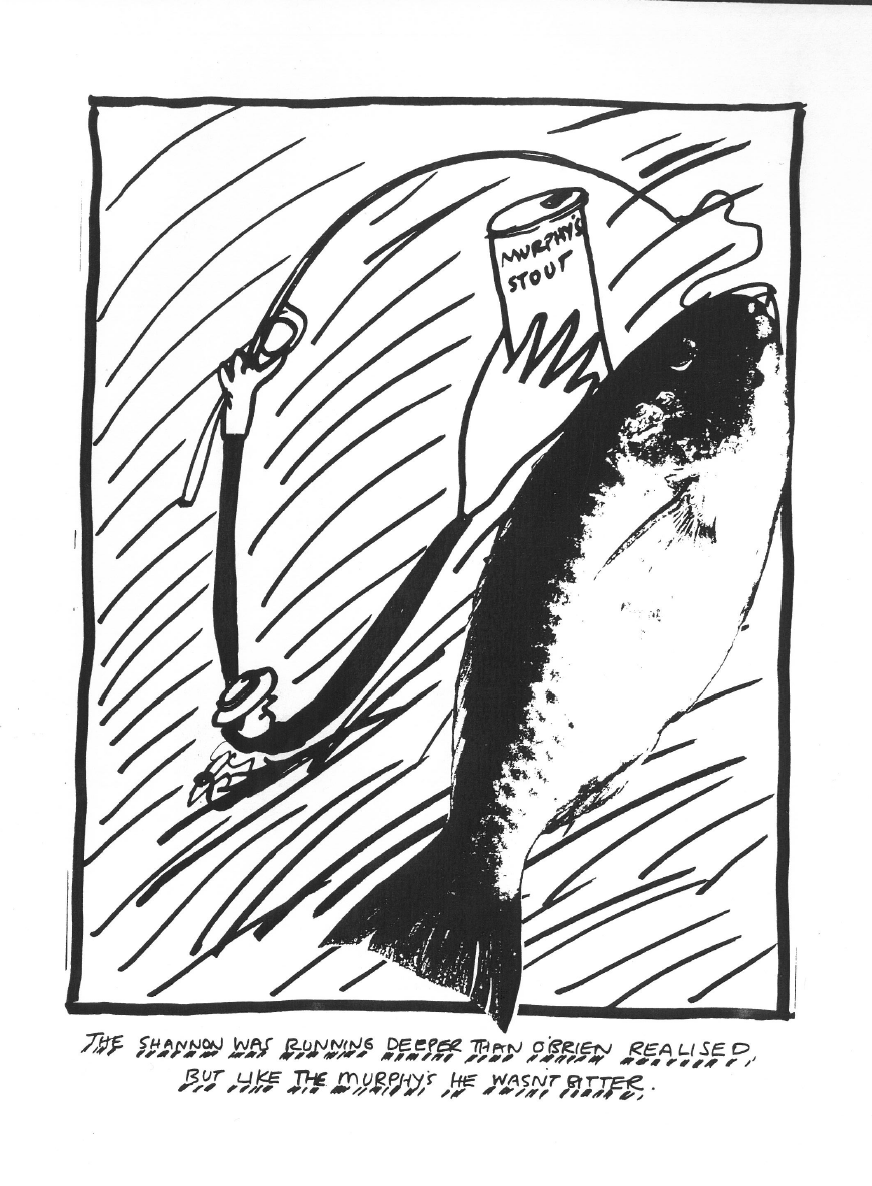

I’d also seen this painting/collage by the artist Raoul Hausmann on one of my many visits to the Tate Gallery.

The problem was, I couldn’t find an artist style I liked.
I wanted them in colour, and I spent a couple of weeks scouring the world looking for the right style. I did find someone in New York, but not quite right.
In the end, I was in the pub with Simon Robinson and Jo Moore and mentioned the problem to them. They told me about someone they knew from St. Martin’s College of Art – Janet Woolley, she was perfect.

She did me a couple of examples, but they were a bit severe, so I asked her to make them more friendly.
We featured the actor from the TV, Gerrard Rooney, in one.
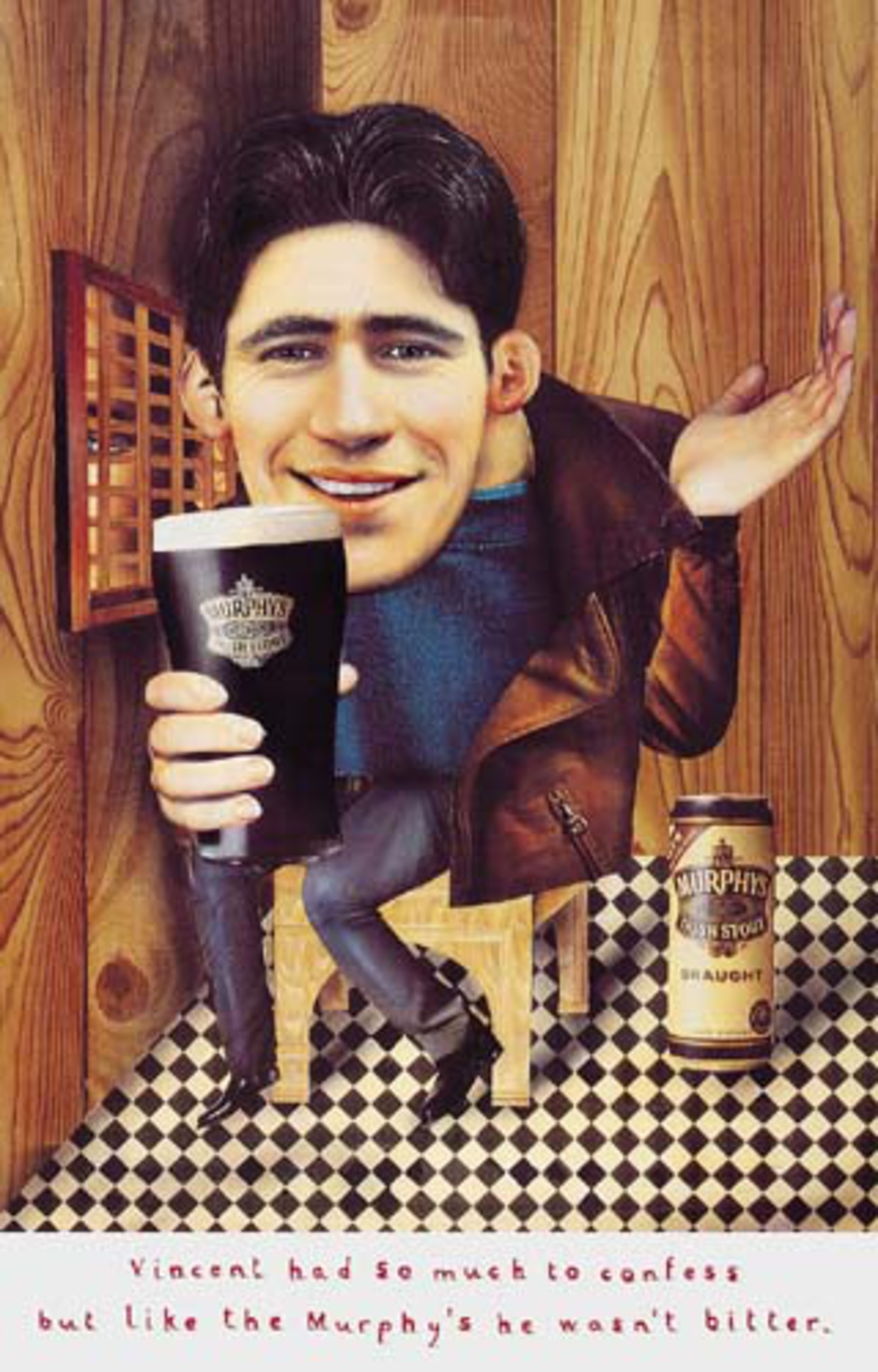
Then I used to take photos of people in the agency and send them over to Janet to weave her magic.
I used Bruce as ‘the Priest’

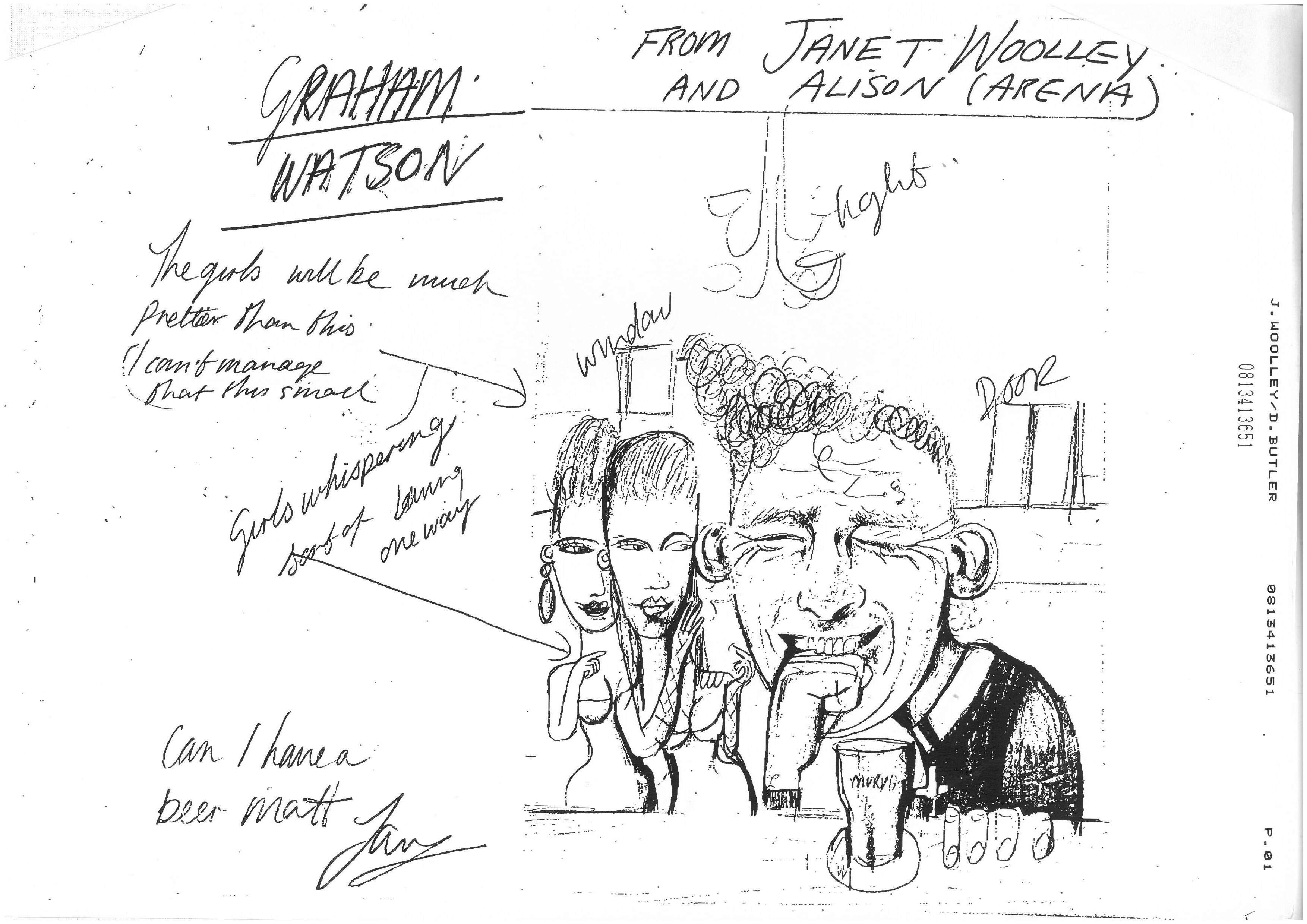

Nick Worthington as ‘Joyce’.

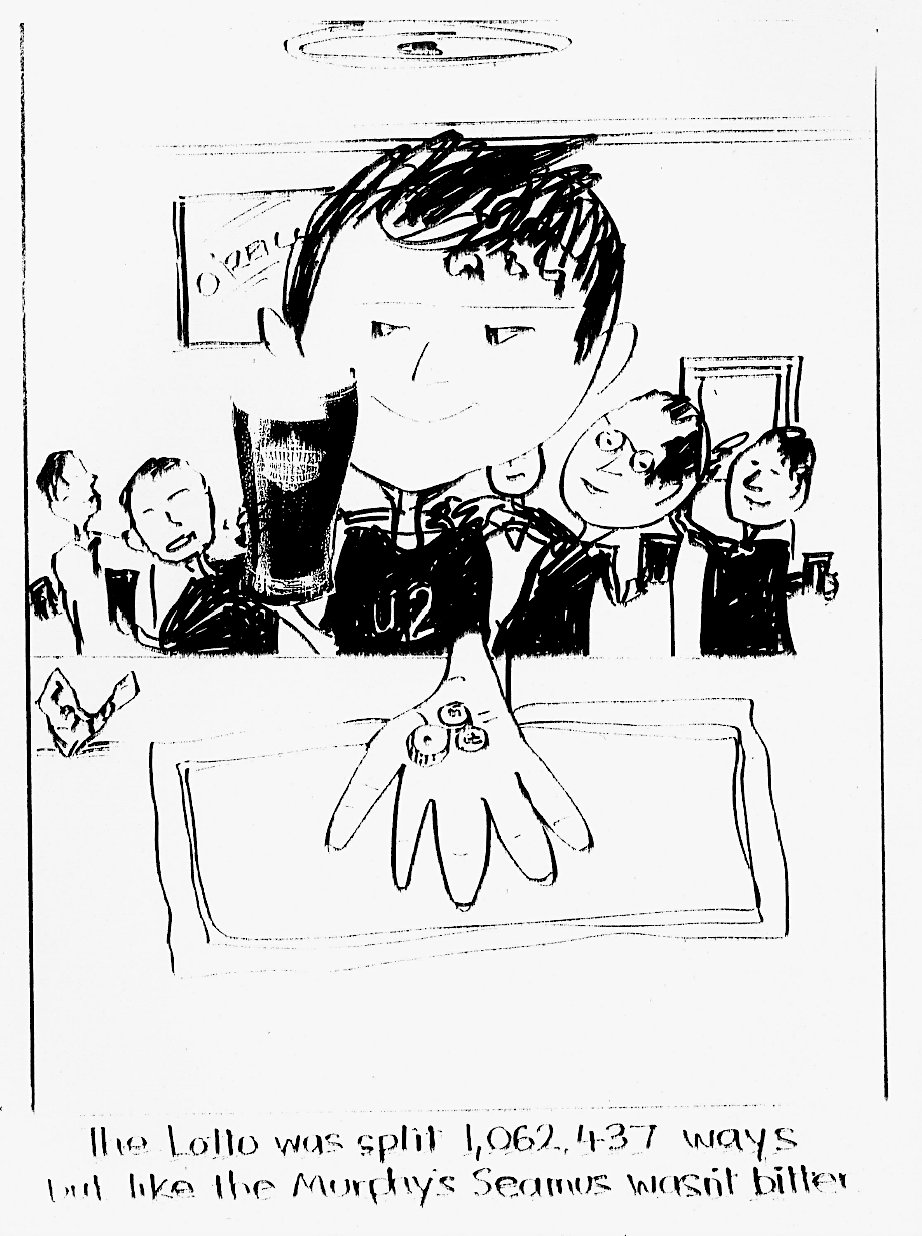
Paddy Morahan as ‘Lotto’.
 Tim Riley as ‘Fore’.


We must have done about 12 of them.

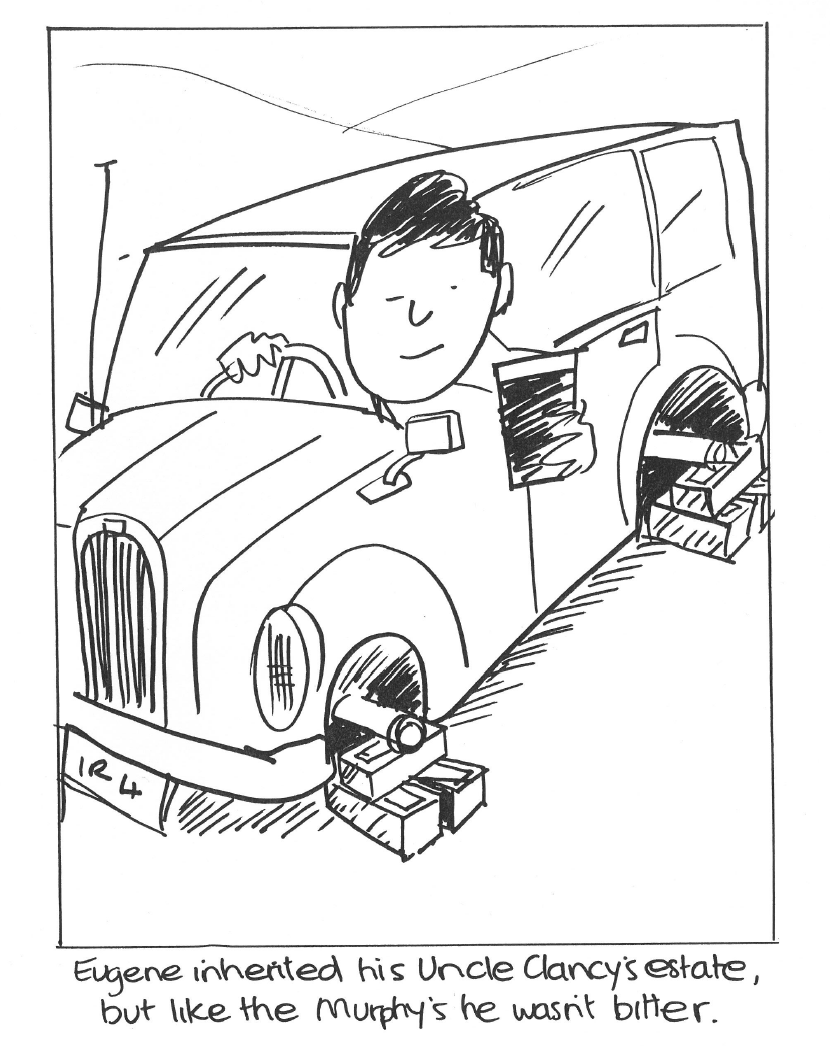
Then I found a student from St. Martin’s at the graduation show, called Sara Hodge, who did these quirky mini-sets with people sticking their heads through a hole.

We used Mark Denton for ‘Finbar’.
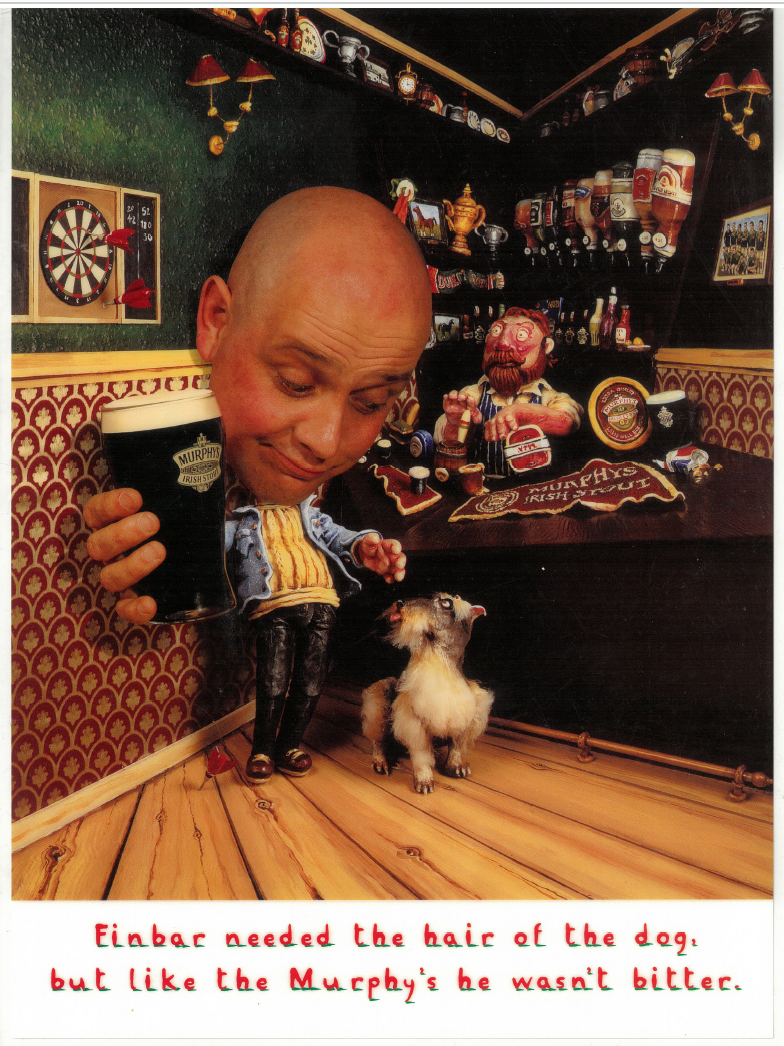
Kevin Brown (BBH Media Department. It was Kevin’s idea to buy the double page spread, where the viewer had to turn the magazine on it’s side to view the portrait shaped ad) for ‘Estate’.

And Andy Smart for ‘Charity jump.
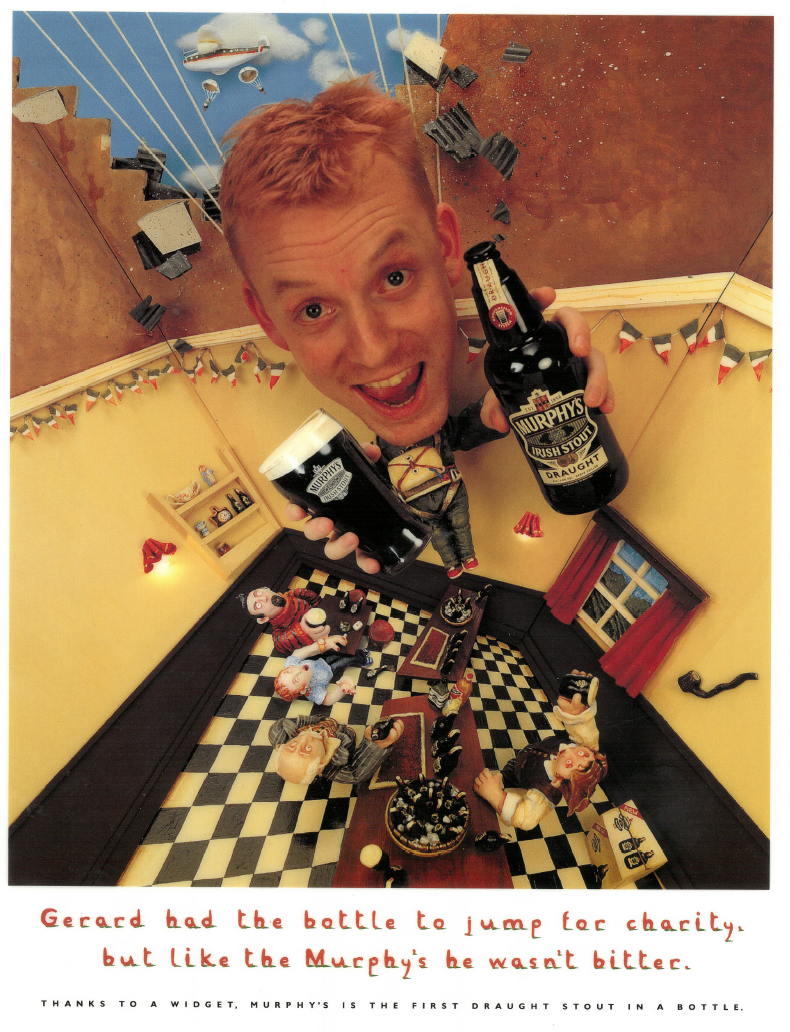
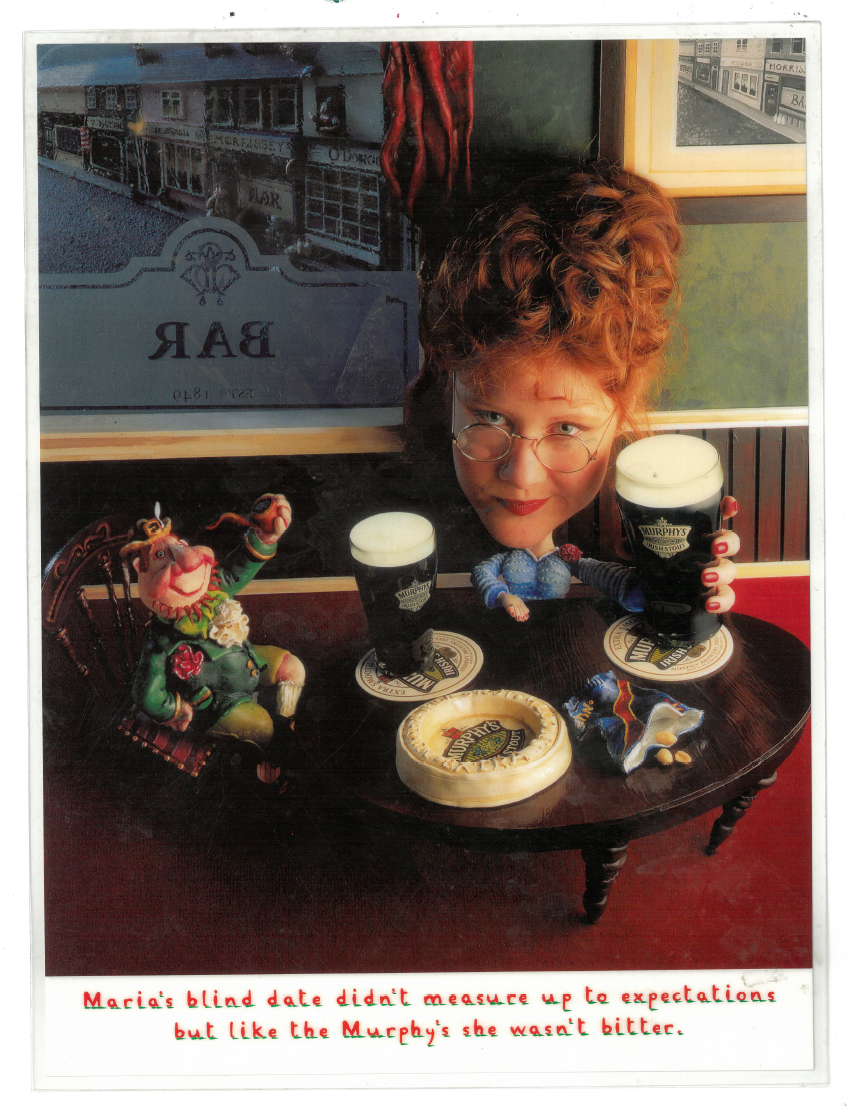
We did get a professional photographer, called Mike Parsons to shoot the sets which Sara made up.
I actually designed the typeface, which was influenced by David Hockney.
There’s a gallery in Saltaire, Yorkshire, dedicated to his work. Hockney used to fax them illustrations he did in L.A, with hand-drawn type messages.
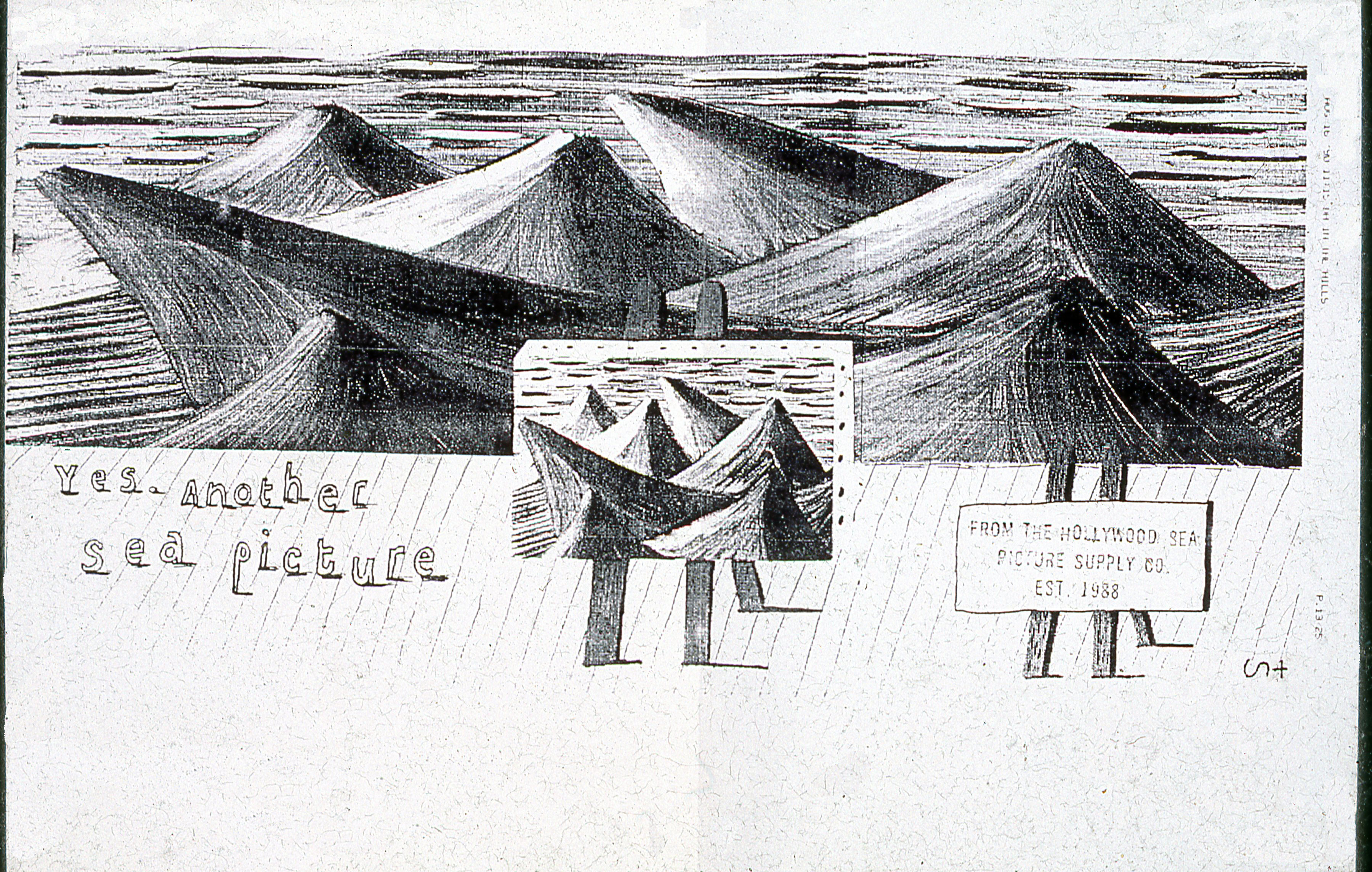 I adapted this and got the BBH Typo, Sid Russell to draw up the whole alphabet.
I don’t think we ever got round to registering it.
I also started assessing the Advertising work at various art colleges. Ironically, I worked with Ben Casey of The Chase Design Group, assessing the Advertising course (Ben did the Design course), at Manchester Art College, who had turned me down for their advertising course in 1966! ‘What goes around comes around.’
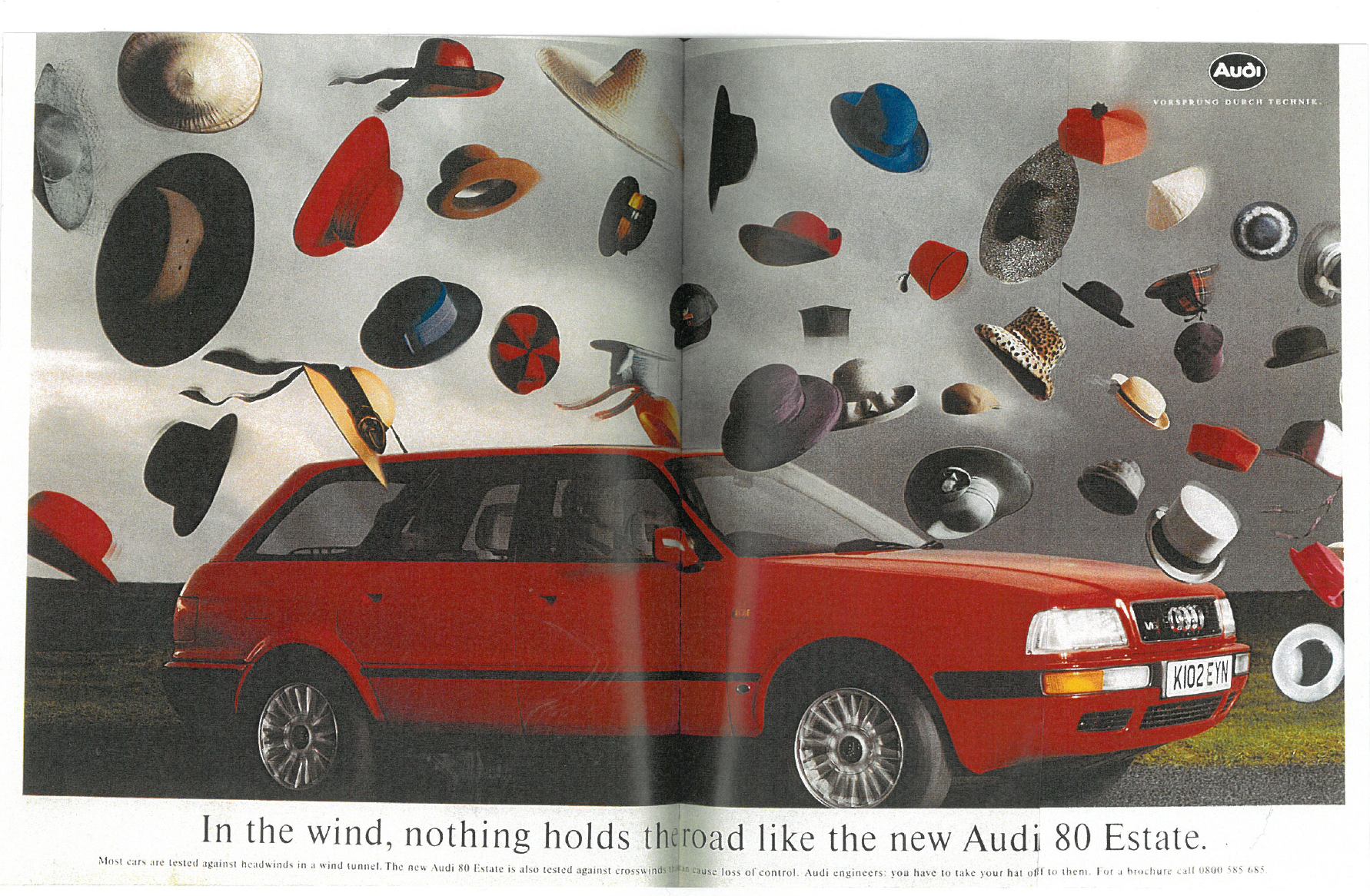
In between, we did a couple of press ads for Audi, which had become a sort of floating account in the Creative Department. ‘
which was one of the best stills shoots I’d been on.

Bruce and I flew down to Nice (we actually did it in reverse to the ad, which was beautifully written by Bruce) and picked up a new Audi diesel car, which was the hero car for the shoot, and we met up with Ken Griffiths and set off on a brilliant drive through France, stopping off at various very stylish locations to photograph the car.
The stand out of course was Paul Bocuse’s restaurant in Lyon.
We had to kill some time, because Ken wanted to reccy a Casino further afield, so we had to slum it in the restaurant. And a bottle of Chateau Petrus didn’t look out of place at lunch. We even had a visit to the table by the great man himself! The ad was quite urgent, so I was sending pictures to Nigel Dawson (Brain) so he could craft the typography.
That’s a fax of the completed job.’
We were then briefed on a campaign for Olivio olive oil spread. The brief said that the spread was healthy for you, but didn’t really explain why. So Bruce and I went around the corner from the agency to the font of knowledge – Foyle’s Book Shop, which was in the Charing Cross Road in Soho, looking for books on olive oil.
One of the books said people lived longer in Europe because of their daily use of olive oil in their diet. So we decided to do an ageist campaign, where people were still healthy, into their 80’s.
Starting with the ‘Hand-me-down’ commercial.
We were just about to start a Group Head system, because the BBH Creative Department had got too big for one person to handle, and we then briefed one of our teams: Andy Smart and Roger Beckett and they did a cracking script around an old persons football team. We filmed these two together in Spain.’’
For the press, I really liked Tessa Traeger’s photo’s of old people holding vegetables and we went off to Italy to capture a few for the press ads, with a bit of tongue-in-cheek humour and great typography from Matt Kemsley.
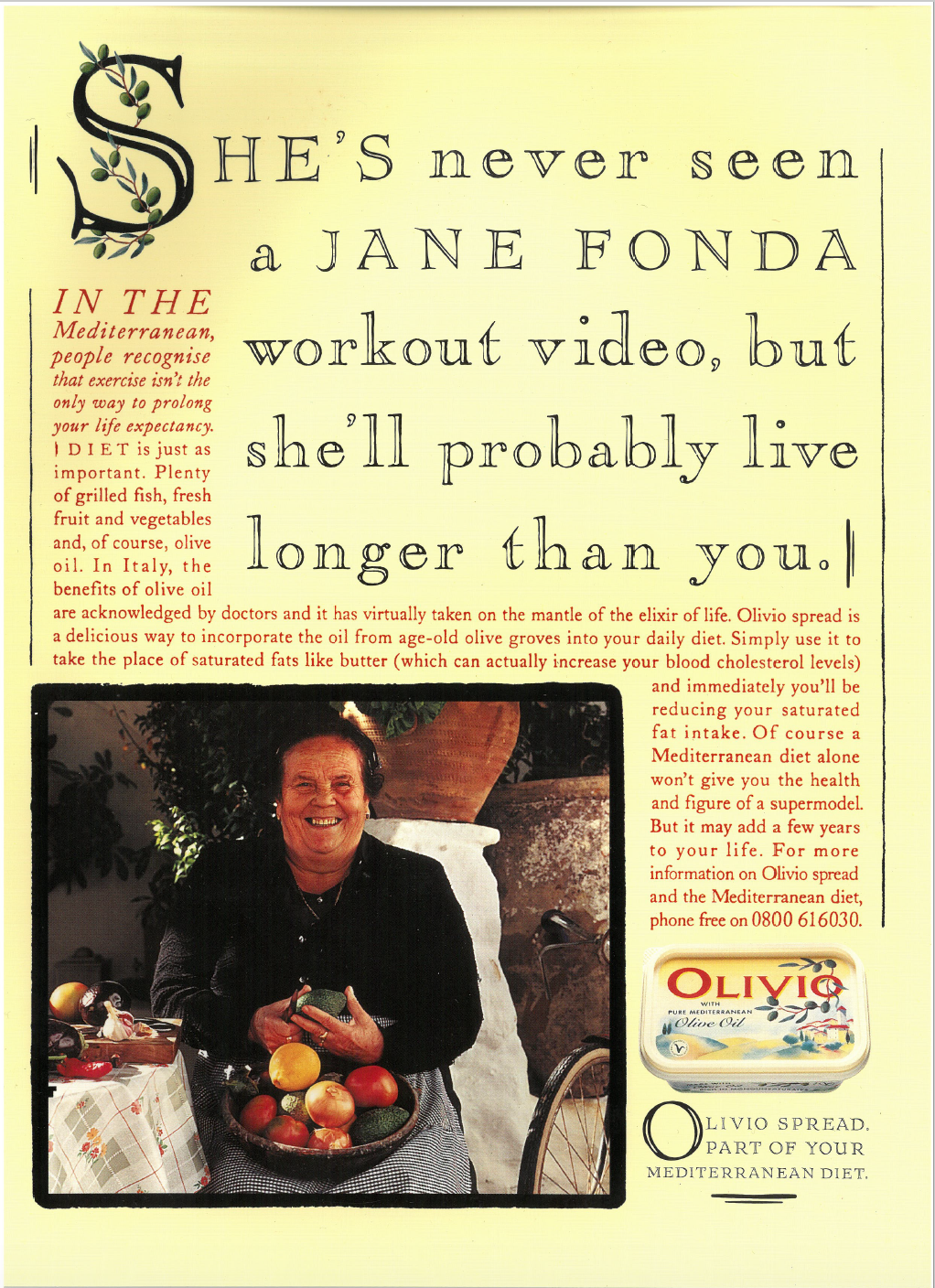
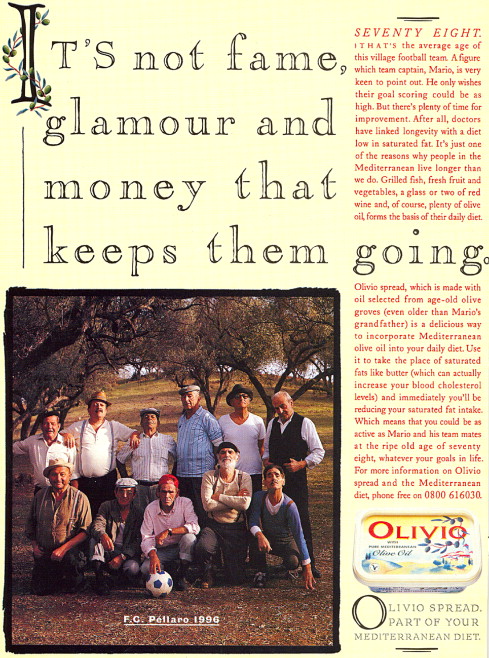

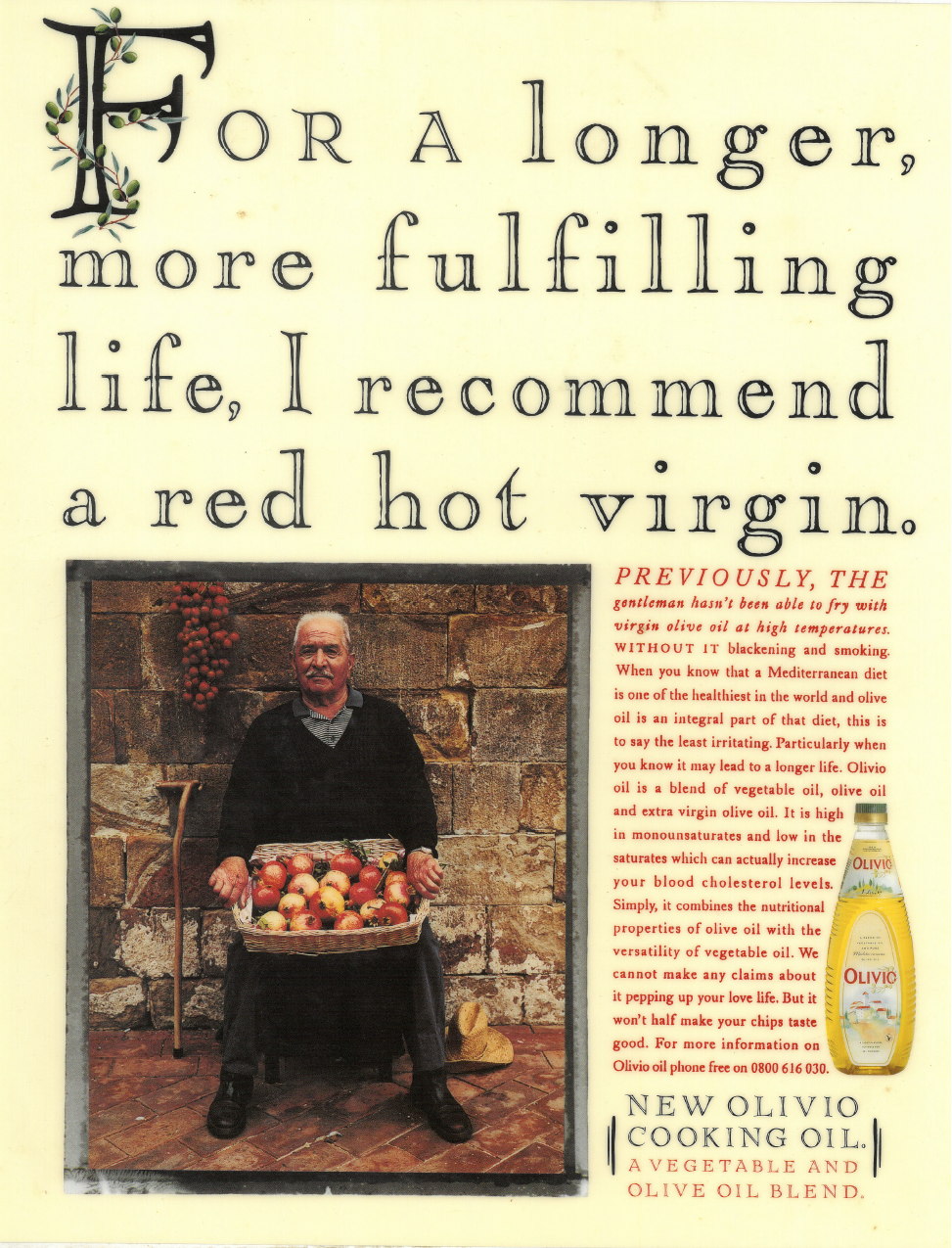
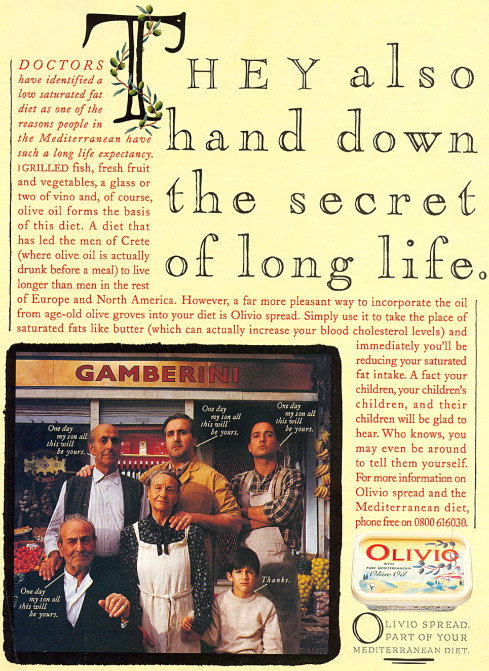
I never understood why they didn’t get in the book.
Sometimes there was no rhyme or reason why some ads won awards and others didn’t. I can’t complain though, I still managed to win a few.
At CDP, we hadn’t really heard of the Cannes Festival, we just thought it was a sort of JWT/McCann’s event. D&AD was our benchmark, I was eventually involved in work that won a gold, seven silvers and 3 silver nominations.
When the Lego ‘Kipper’ film won the Grande Prix in Cannes, we became instant converts. This was very glamourous. I’ve no idea what else I won at Cannes, but when Bruce and I won a gold for our Boddington’s press campaign, we were there like a shot!
The other team in our group, were Mike Wells and Tom Hudson.
They had been briefed on Boddington’s, which had been bought by Whitbread.
At the time, it was a small regional beer based in Manchester with a popular local fan base.
The brief was to rejuvenate it.
Whitbread had already started by putting a widget in the cans to give it a more creamy head. They had done the same with the draught beer. So the brief was to do a campaign around the ‘smoothest drinking beer’, honing on to the word: ‘cream’, owning the generic became a powerful marketing tool.
After a couple of weeks we went into Mike and Tom’s room to review their concepts. The room was plastered with visual puns around the word ‘cream’. We loved them, but at the bottom of each concept, all they had was just the Boddington’s logo. So I said to them that they needed a line to encapsulate the thought and off the top of my head I said, “like for instance: ‘The Cream of Manchester’”.
The next step was for the four of us to present to John Hegarty, which we arranged to do the next day.
Later that same day John came into our office and said Mike and Tom and shown him the campaign and he loved it. Not a mention of our input!
The campaign was so effective that Boddington’s became market leaders in the take-home trade, and won the IPA Effectiveness Award.
And the TV won the BAFTA award. The then Lord Mayor of Manchester said that the campaign had completely rejuvenated the City and put it squarely on the map!


We also did some work on BSB and in one commercial we used Henry Cooper, who had knocked down Muhammad Ali in a World Heavyweight bout, The World Featherweight boxer, Barry McGuigan and the World light-heavyweight boxer, John Conteh, Directed by John Marles.’
After that, Bruce and I were promoted to Creative Directors, and we had Steve Hudson and Victoria Fallon in our team.
They had been briefed on Wallis fashion house. Wallis had never advertised before so it was virgin territory. Steve and Victoria came up with the idea of ‘dress to kill’, which we thought had a real cutting edge to it.
Once we had sold it to the client, we locked in Bob Carlos Clarke to take the photographs (We had approached Helmut Newton, who really loved the campaign, but he wanted to do it in a Weegee style with real dead bodies! Helmut had missed the point, we wanted the viewer to be left with a question mark, did he die or didn’t he?). Steve was a bit worried about Bob’s reputation for being a bit awkward, so I volunteered to go along on the shoots with him. Bob was excellent and we got some great shots.’’
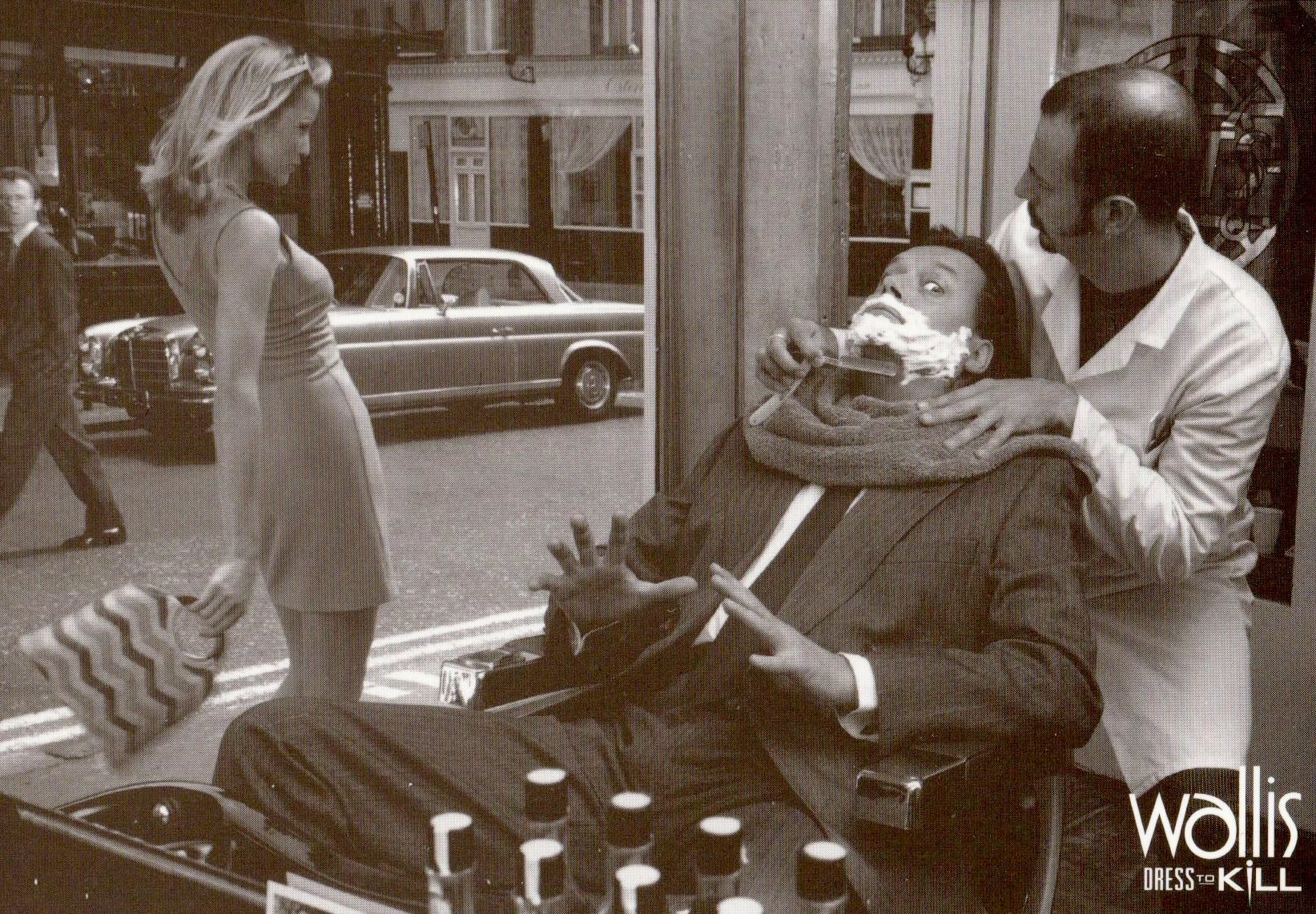
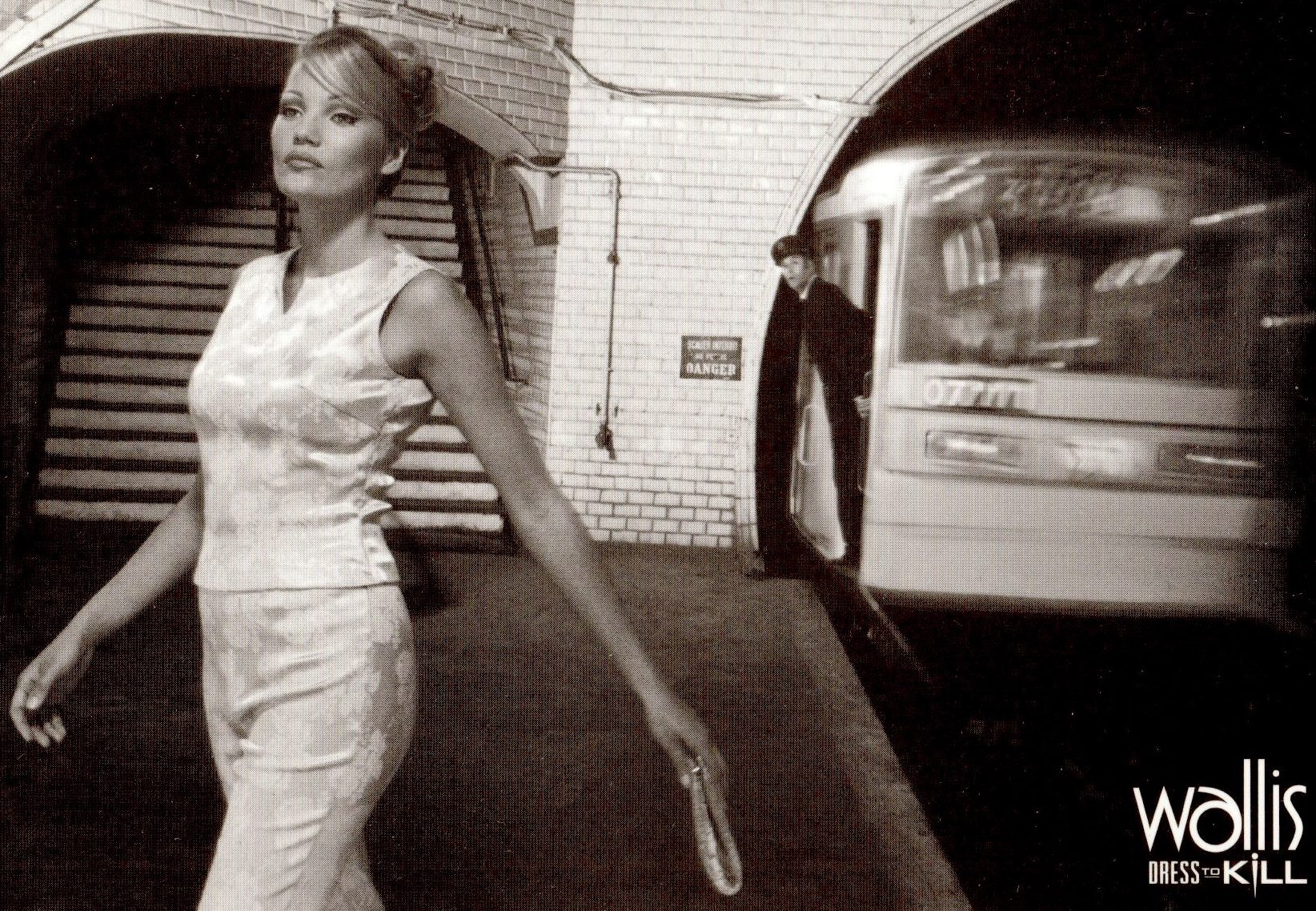

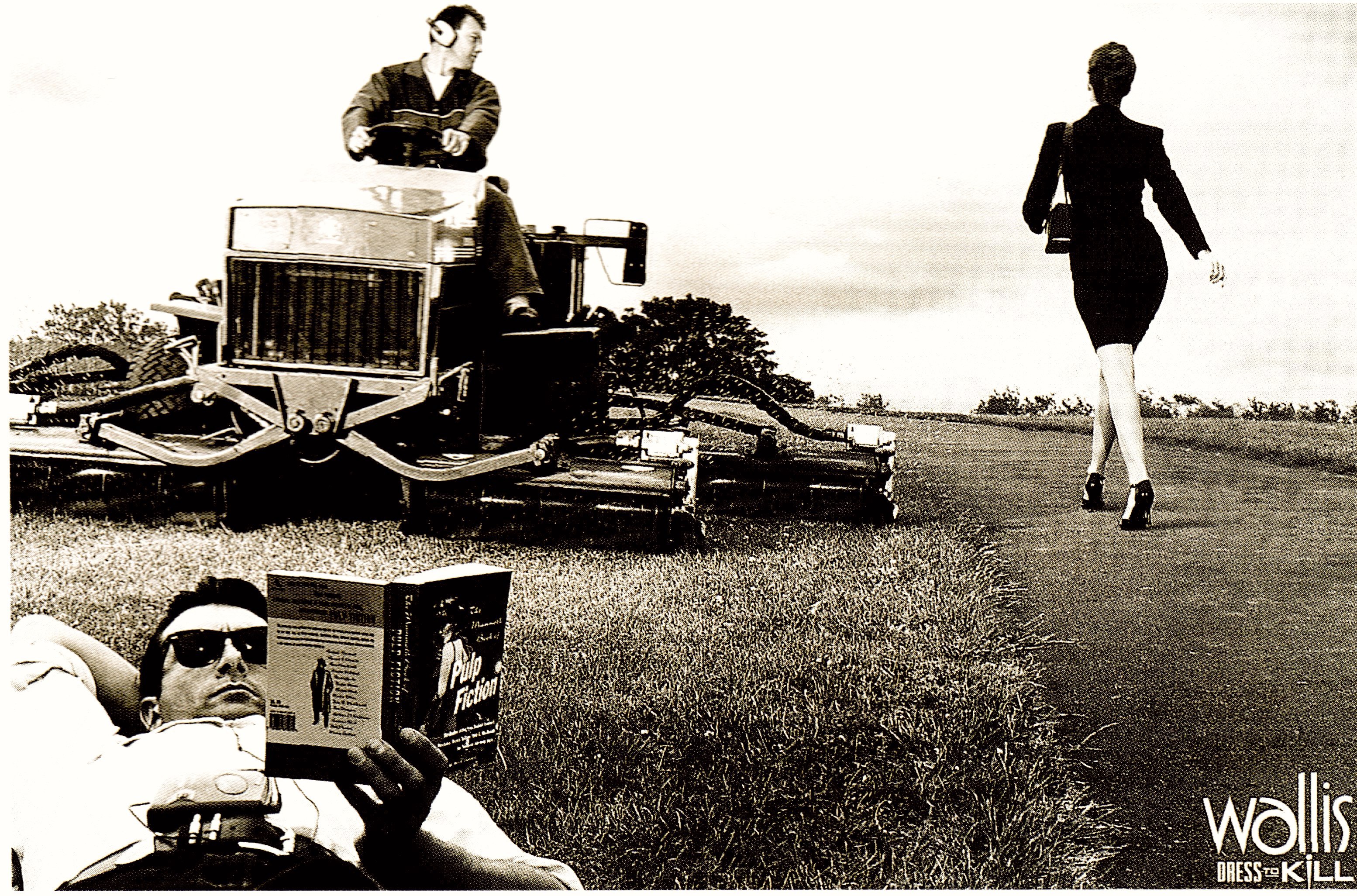
Then Steve and Victoria left the agency and we were briefed to do a TV commercial.
Bruce was loving the Creative Director’s job, but I must admit, I preferred to do ideas and art direct them, so I said to Bruce I would have a crack at the TV, and ended up making the ‘Helicopter’ idea, which Jo Godman managed to pull together for free with a new French Director called, Oliver Venturini, who did a very atmospheric treatment. In a film noir style. As a first time advertiser, Wallis were given the first burst of advertising in Cinema for free. Talk about doing things by the seats of your pants! Sales went up 13%, and the campaign won a gold at Cannes, and was in the book.
I also fitted in a press ad for IFAW, which never ran in the end, I think the client found it a bit confronting!’’
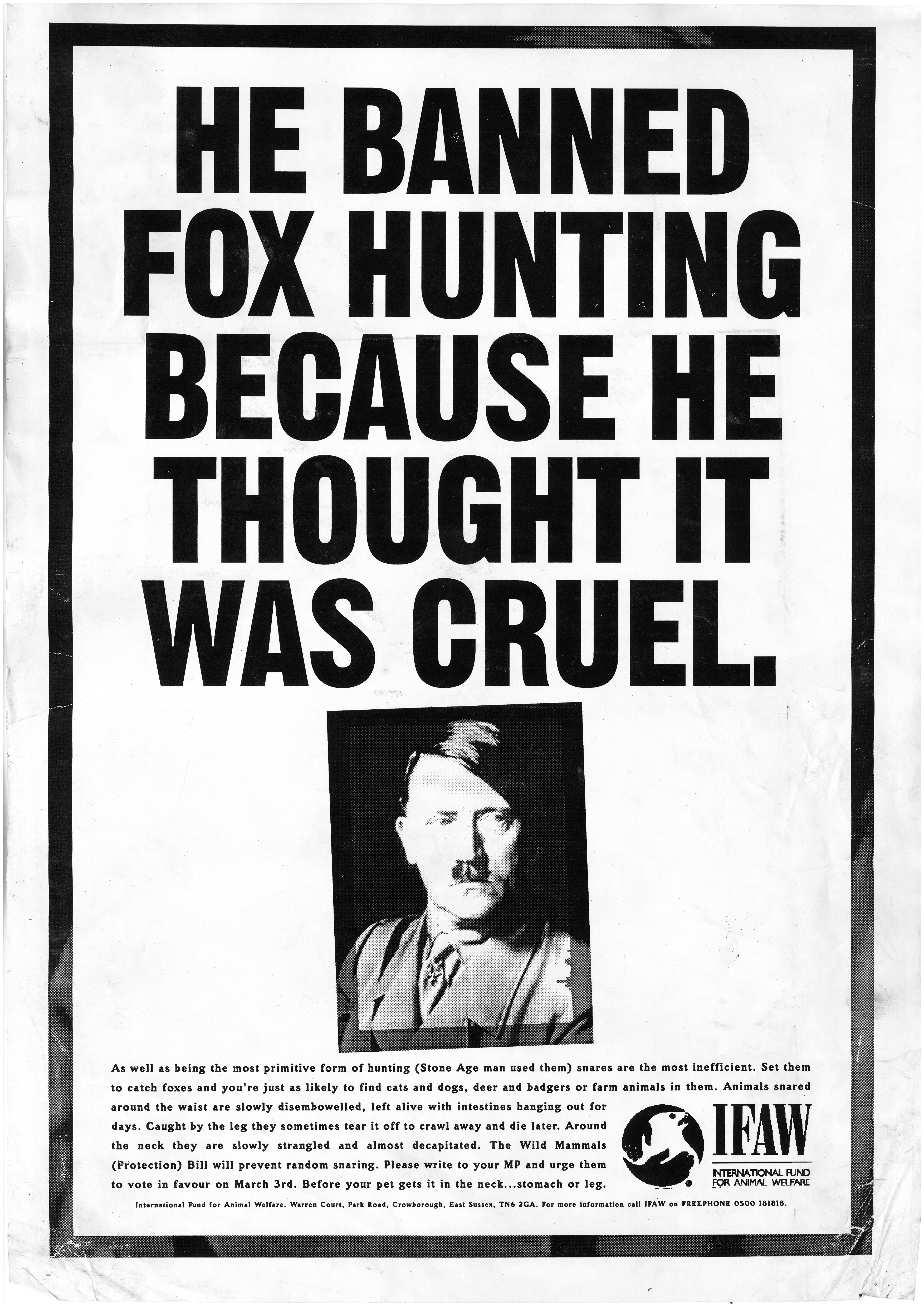
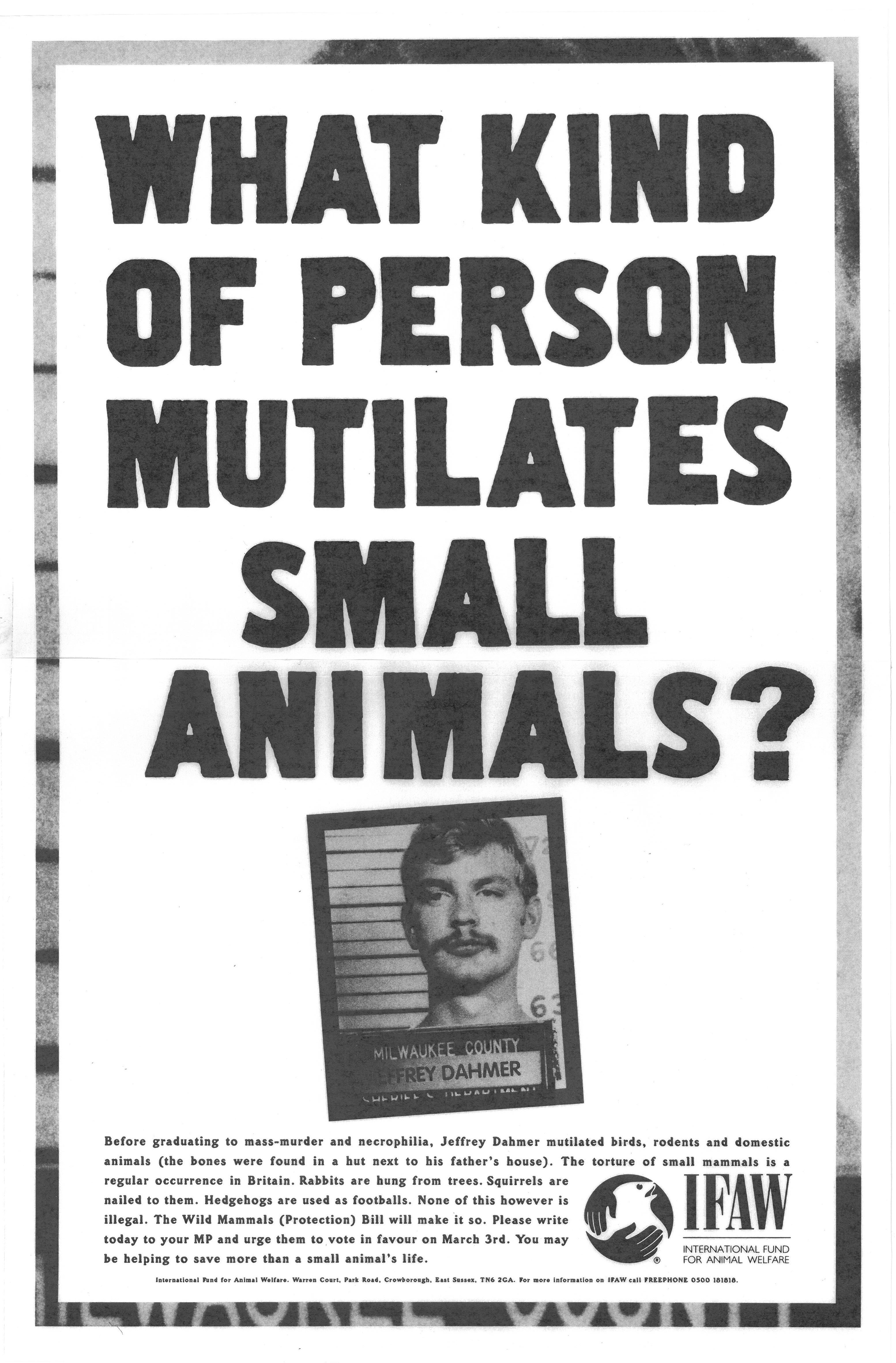

 Around this time BBH decided to sell the agency to Leo Burnett, and I got a payday from my shares.
I was having a game of golf with Paul Weinberger one weekend and he said what were my plans now that I’d made some money? I said maybe see a bit more of the world. I’d visited most of Europe and the USA, Mexico, Canada and the Caribbean and Africa, but I had only made couple of trip to the Far East, when I had filmed in the Maldives and the Seychelles. And one trip Down-Under to do a campaign for Babycham (Yes, Babycham!) in New Zealand. Their summer, our winter, and I’d called into Sydney on the way back and ended up at Paul Walter’s wedding in Melbourne with John Marles. I was amazed how cosmopolitan the cities were.
Paul Weinberger said would I be interested in setting up Lowe’s in Sydney, working with Lionel Hunt? And I thought it would be a great way of visiting the area I really wanted to see, which was the South Pacific – Tahiti, Bora Bora, Hawaii, and Fiji.
So in 1999, I ended up in Sydney, with my new wife, Trish and kids on a two-year contract.
Trouble is, I couldn’t get the kids to go back to the UK, they loved it in Australia, and so did we.
We’ve now been to China, Japan, Vietnam, Cambodia, Thailand, Malaysia, Indonesia, Sri Lanka, Singapore, and South America including the Galapagos Islands. Plus the South Pacific, via New Zealand!

And now I’ve gone back to Art College and I’m a Director of one based in Bondi. So I’ve come full circle!
Another example of an Art Director who can out-write most copywriters qv. the late Messrs. Horry and Webster. The crafty buggers.